
21 Pixie Cuts for Thin Wavy Hair That Add Bounce and Body

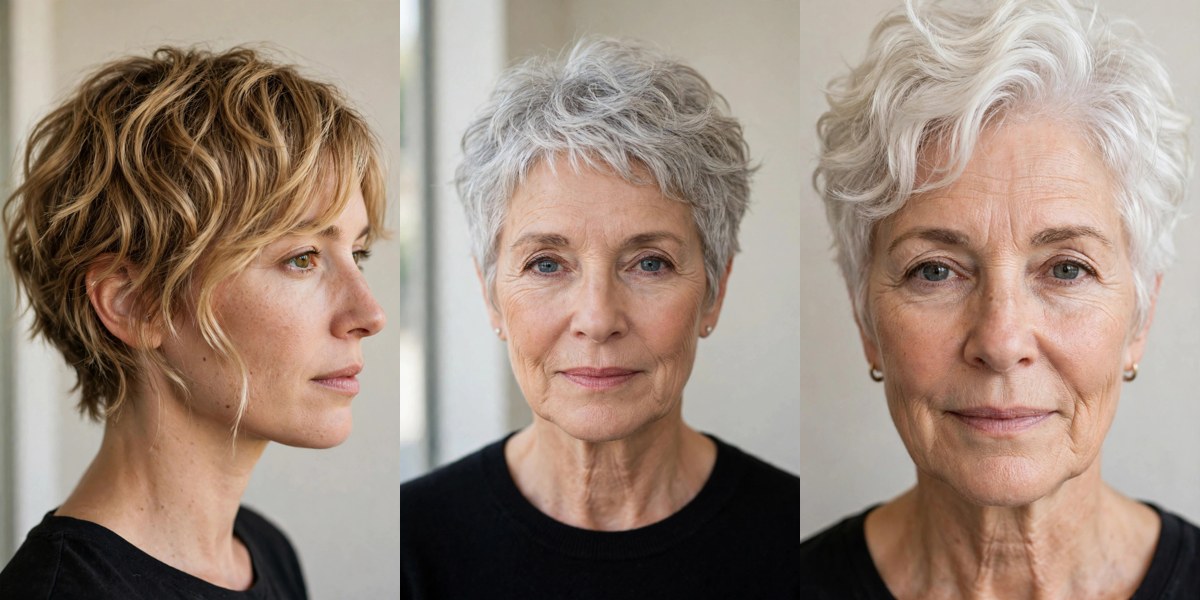
Thin wavy hair has a mind of its own. One morning it falls soft and full, the next it sits flat at the roots with ends that puff out in all the wrong places. If you have ever grown your hair longer hoping the weight would “calm it down,” you already know extra length usually does the opposite: the waves stretch out, the top collapses, and the whole style starts to look thinner than it really is.
That is exactly why the pixie is such a smart answer for this hair type. Cropping the length removes the weight that drags waves down, so your natural bend can spring back up and do the volumizing work for you. The trick is choosing the right version. Crown length, layer placement, fringe shape, and even the way the nape is tapered all decide whether a pixie looks bouncy and full — or wispy and flat.
Below you will find 21 pixie cuts chosen specifically for thin wavy hair. Some are soft and romantic, some are choppy and edgy, and all of them are built to add bounce, movement, and the look of thicker hair. Save the photos you love and show them to your stylist — a picture really is worth a thousand words at the salon.
A quick note before we start: every cut here works best when it is shaped around your own wave pattern rather than forced into a copy of the photo. Bring two or three favorites, and let your stylist adapt the length and layers to your hair’s density and your face shape.
1. Tousled Wavy Pixie with a Long Side Fringe
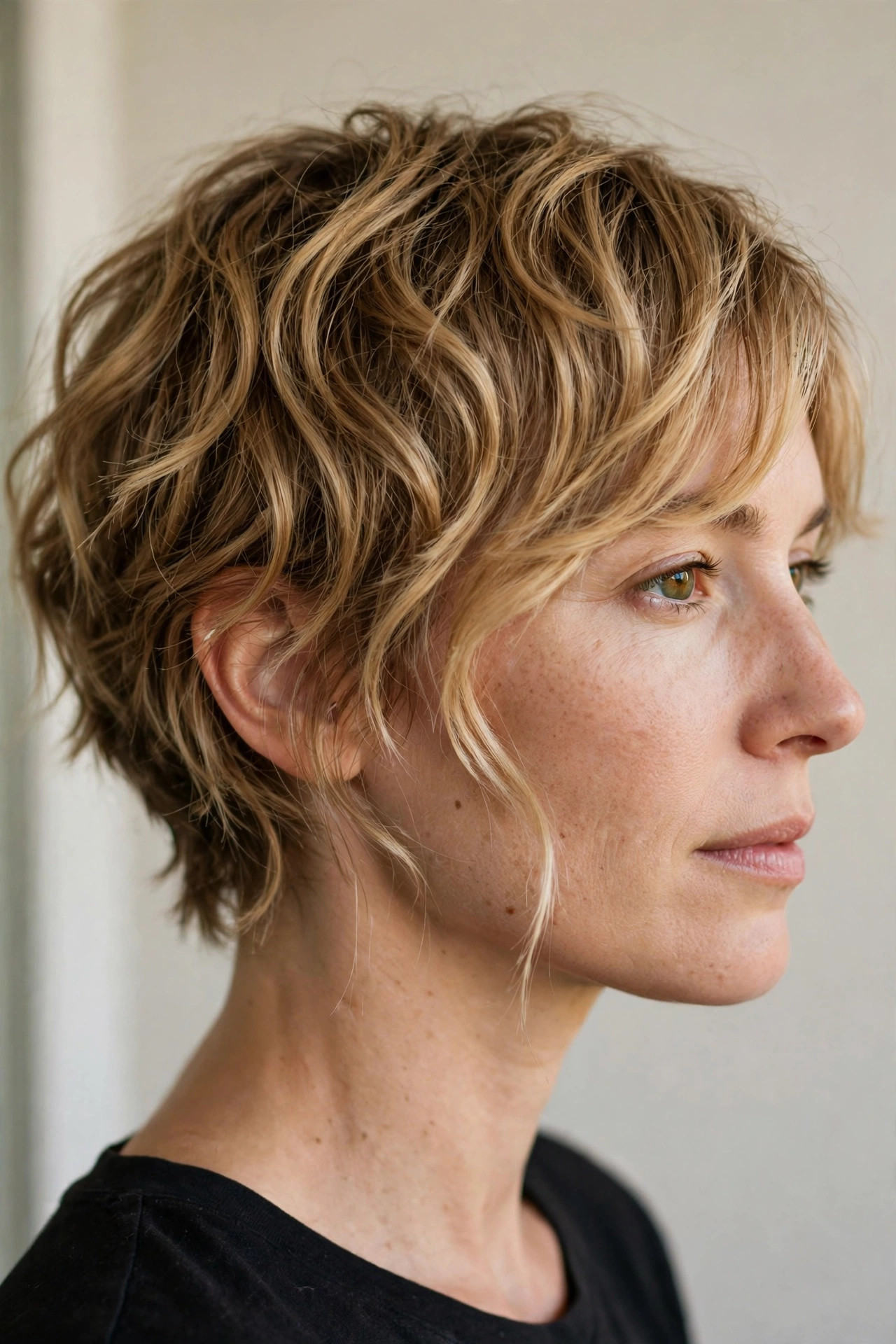
This honey-blonde pixie keeps generous length on top and sweeps it into a long side fringe that skims the cheekbone. The back and sides are cropped close but not tight, which keeps the silhouette soft, while the longer crown waves are left to fall in loose, touchable pieces. That contrast — neat underneath, flowing on top — is what makes thin hair look instantly thicker, because all the visible volume is concentrated where the eye lands first.
Ask your stylist for a pixie with four to five inches of length through the crown, scissor-cut sides, and a long diagonal fringe you can sweep either way. At home, work a pea-sized amount of lightweight mousse through damp hair, scrunch the top with your fingers, and let it air-dry. Finish by pushing the fringe across your forehead — the diagonal line flatters almost every face shape.
2. Choppy Pixie with a Curtain Fringe
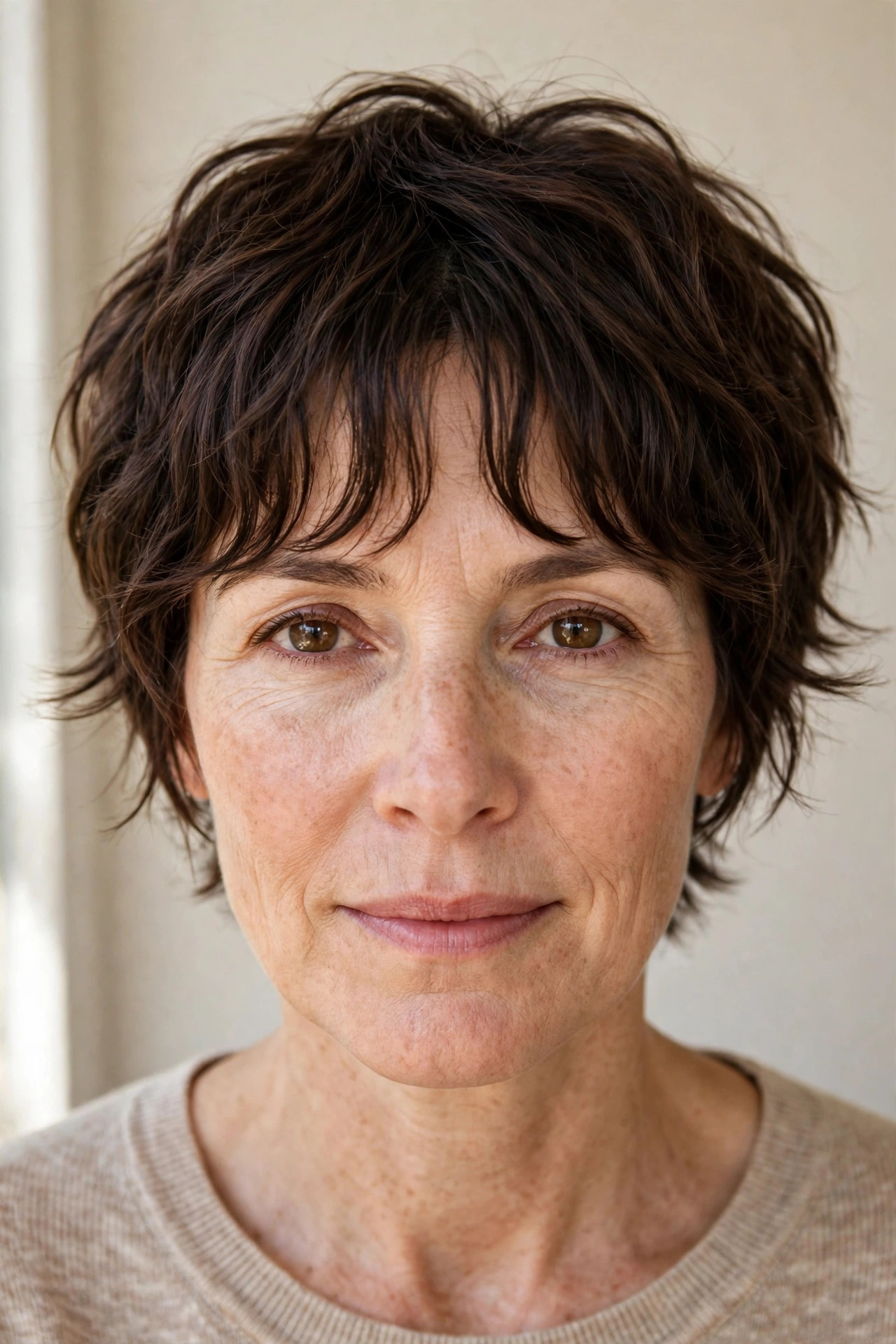
Choppy, point-cut ends are a fine-hair hero, and this brunette pixie shows why. Instead of one blunt line — which can make thin waves look stringy — the ends are cut into soft, uneven pieces that separate and stack, faking fullness at every edge. The curtain fringe parts in the middle and opens like a frame around the eyes, drawing attention to the face while the waves on top stay loose and piecey.
Ask your stylist for point cutting throughout, a curtain fringe that hits around the cheekbones, and enough length on top to show your natural wave. For styling, mist a sea-salt spray onto dry hair and pinch the ends with your fingertips to wake up the piecey texture. This one grows out gracefully, so it is a kind choice if you like stretching salon visits to eight weeks.
3. Layered Pixie with Airy Crown Lift
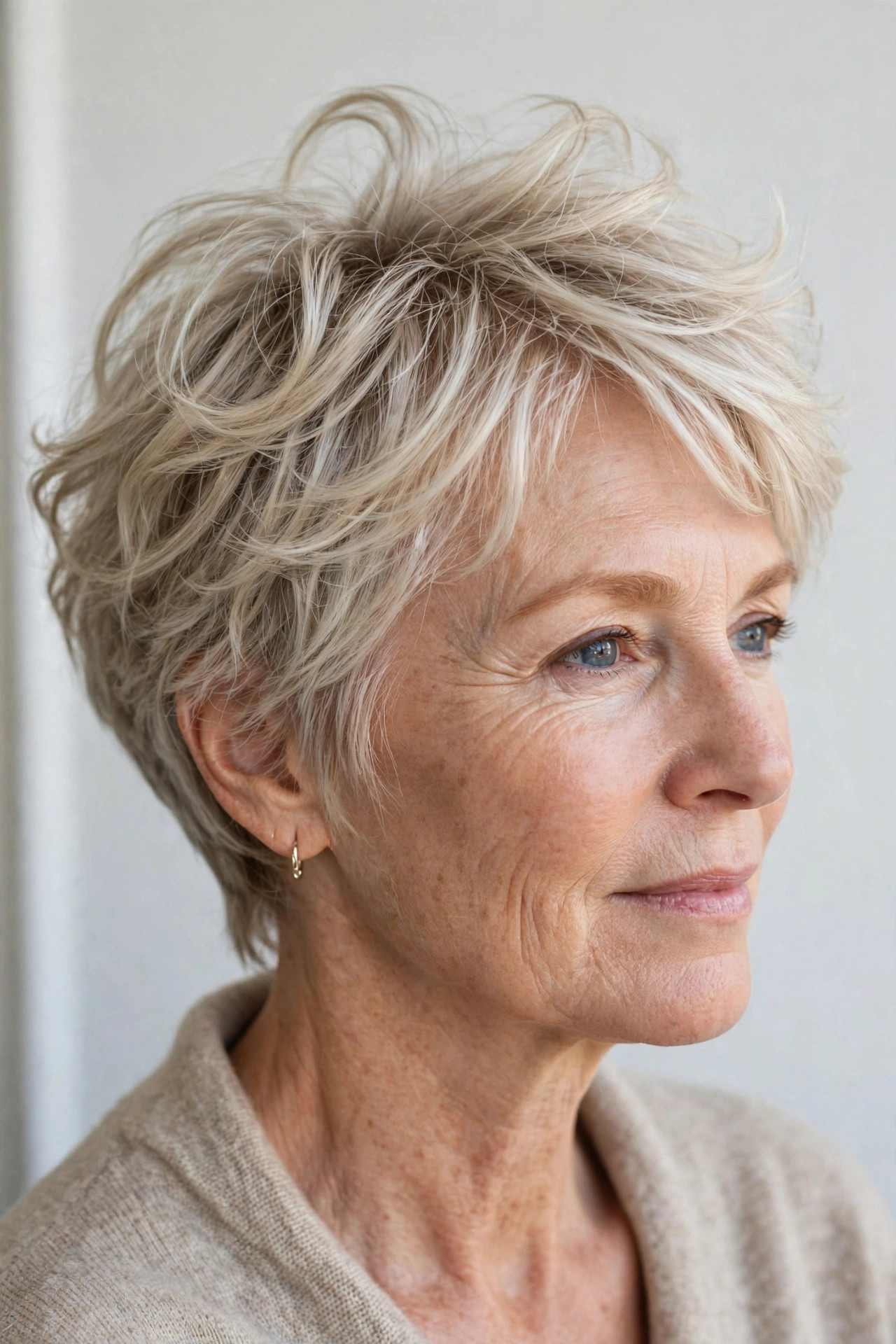
If your waves always fall flat by lunchtime, the problem is usually the crown — and this ash-blonde pixie is built to fix it. Short, airy layers are stacked through the top so each wave sits on the one below it, creating lift that lasts instead of collapsing. The sides stay softly tapered, the fringe is light and feathery, and the cool ash tone adds a modern, polished finish that makes fine strands look sleek rather than sparse.
Ask your stylist for graduated layers through the crown with the longest point at the front, and point-cut ends so the lift stays soft, not spiky. At home, blow-dry the crown forward first, then flip it back — that simple direction change doubles your root lift. A sprinkle of volumizing powder at the roots on day two brings it straight back to life.
4. Soft Feathered Pixie Bob
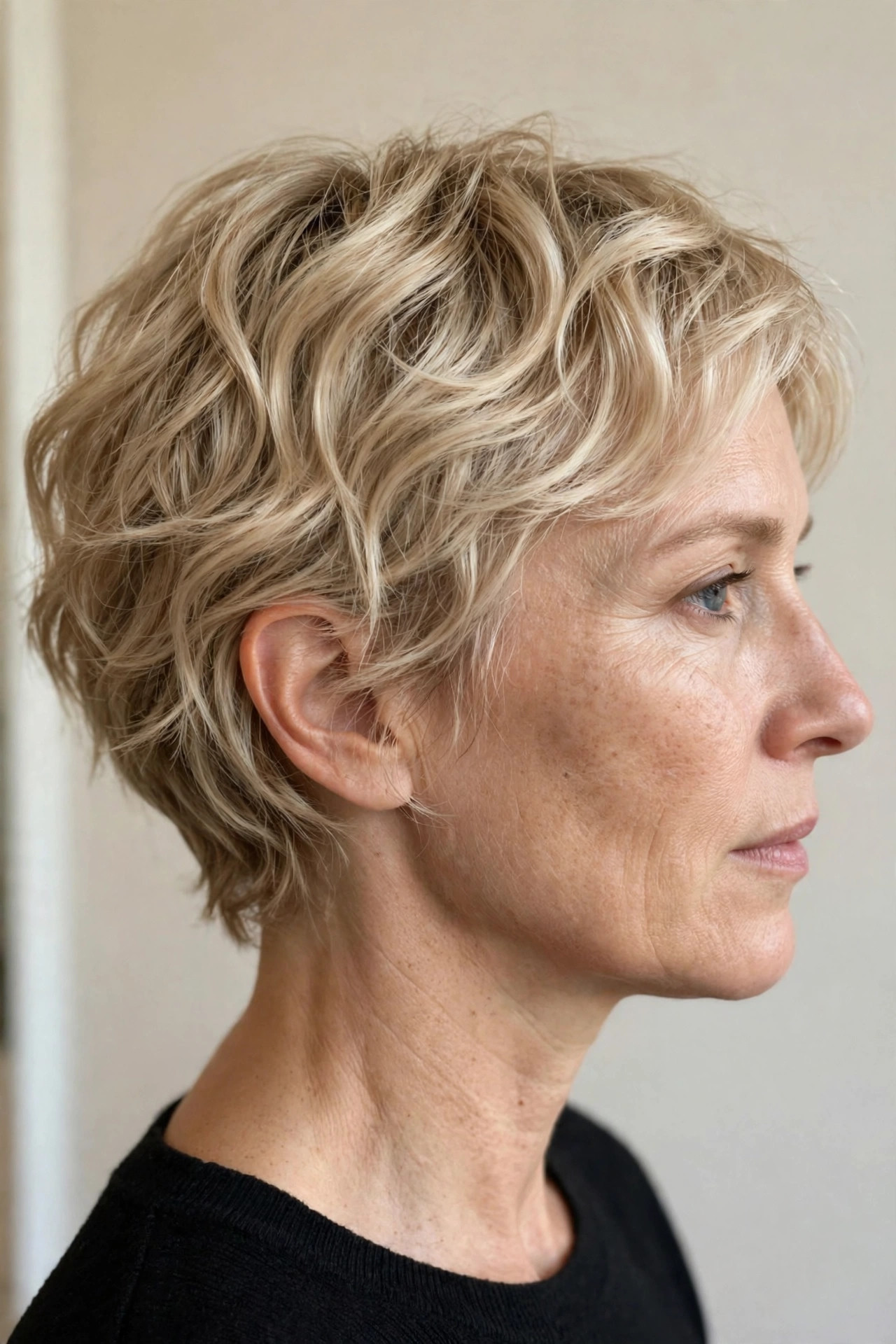
Part pixie, part bob, the bixie is the perfect halfway house if you are cutting long hair short for the first time. This champagne-blonde version keeps bob-like length around the ears and jaw, with feathered layers flicking out softly at the ends. Those flicks are doing real work: they kick the silhouette outward, so thin hair reads as full and swingy instead of flat against the head.
Ask your stylist for a pixie bob with feathered layering, length that brushes the jaw at the front, and a tapered but not exposed nape. Style it by blow-drying with a small round brush, rolling the ends outward as you go — or simply tuck one side behind your ear for an instantly sleeker look. It is one of the lowest-maintenance shapes on this list.
5. Tapered Pixie with Loose Crown Waves
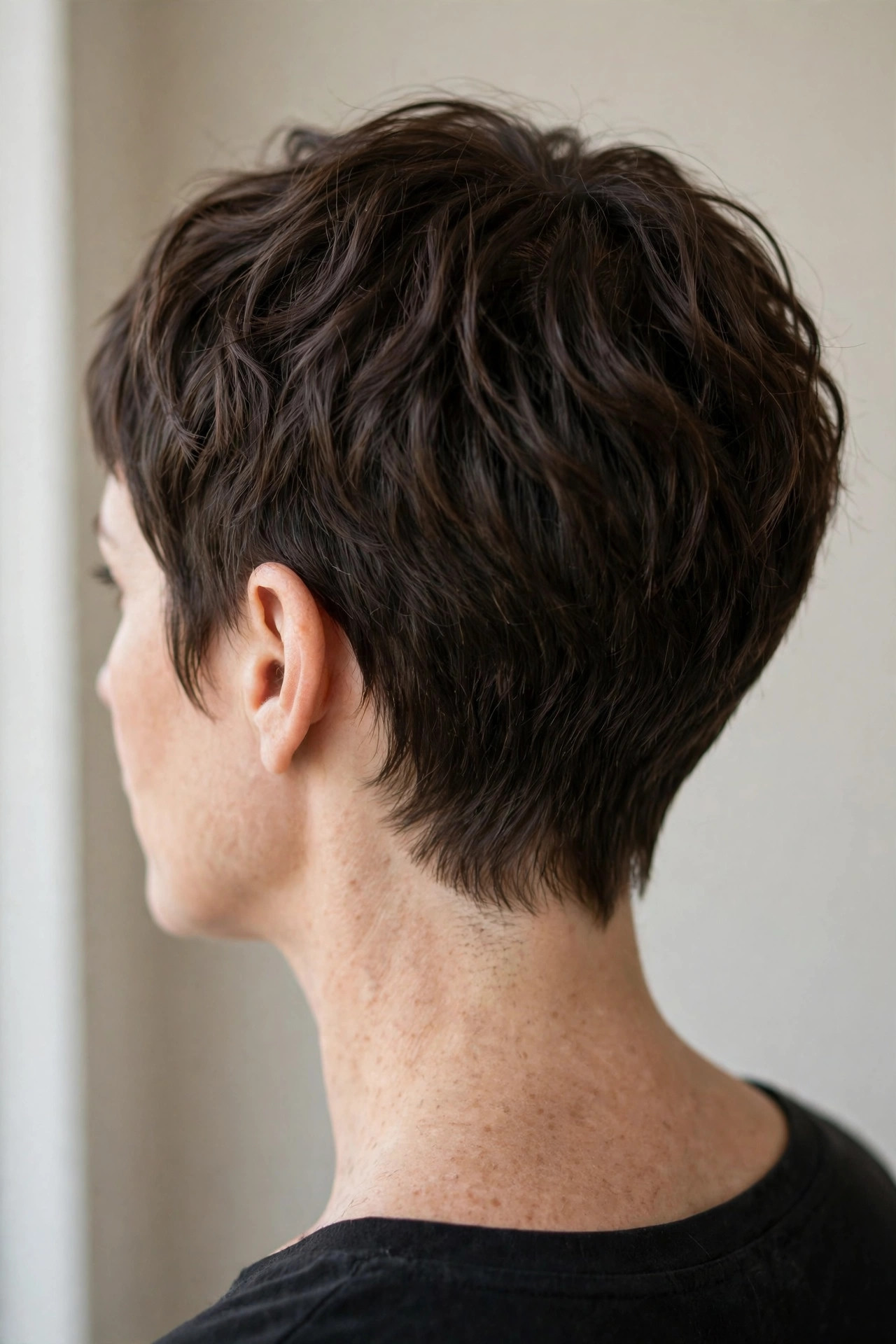
Seen from the back, this dark-brown pixie is all about the gradient: a clean, closely tapered nape that blooms upward into loose, open waves at the crown. That shape is brilliant for thin hair because the shortest part of the cut is hidden at the back, while all the length — and therefore all the wave and body — sits exactly where fullness counts. From the front, it reads as a classic, feminine pixie with a soft fringe.
Ask your stylist for a scissor-tapered nape (ask them to skip the clippers for the softest finish), building to three or four inches of wavy length on top. At home this cut needs almost nothing: a drop of leave-in conditioner, a scrunch, and you are done. Book a quick nape tidy every four to five weeks to keep the back looking sharp.
6. Textured Pixie with Long Crown Layers
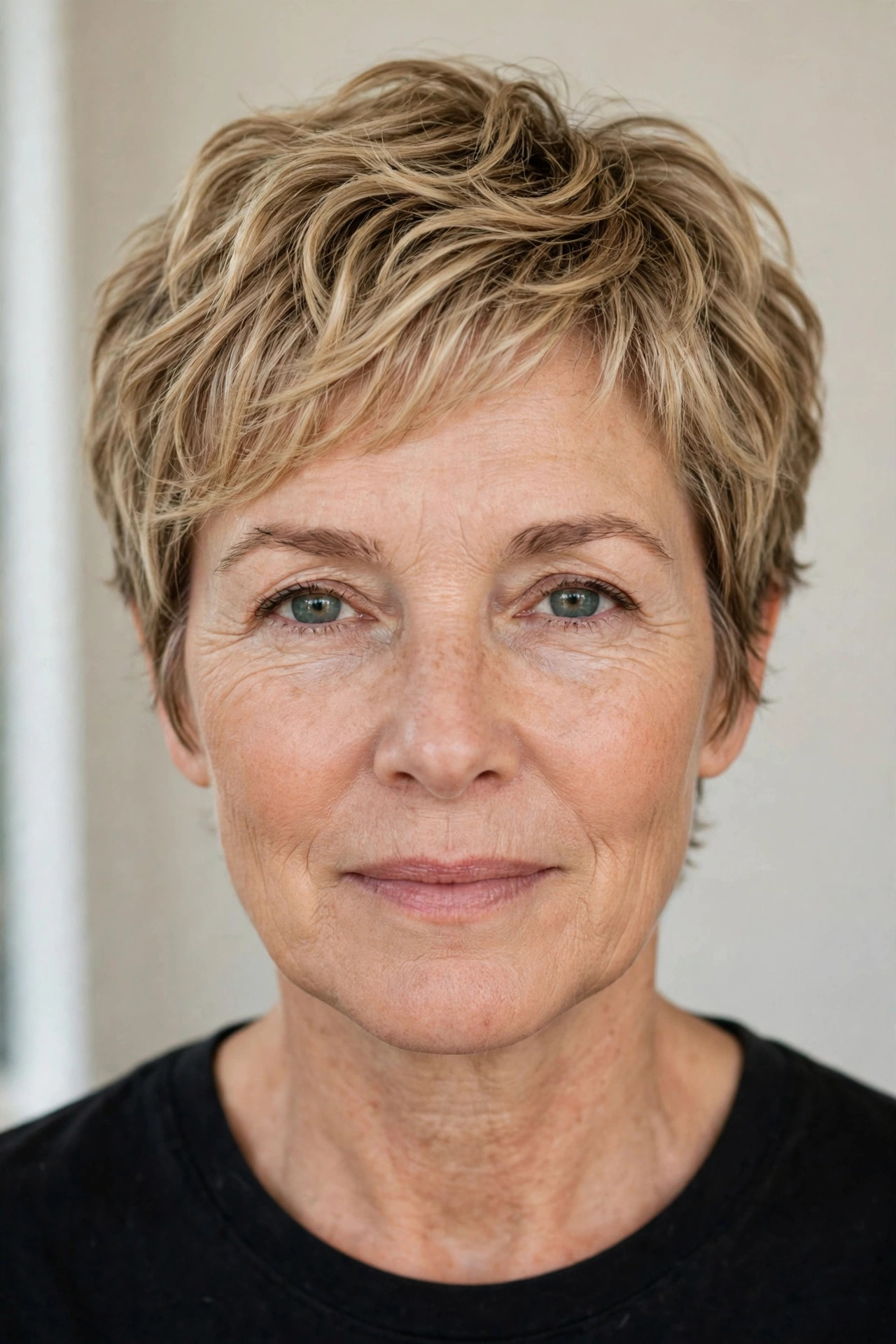
Long crown layers are the stylist’s secret for making one head of hair look like two. On this sandy-blonde pixie, the top layers are kept noticeably longer than the sides and allowed to overlap in loose waves, so strands stack and shadow each other — instant visual density. The fringe blends into the layers rather than sitting as a separate block, which keeps the whole style flowing and modern.
Ask your stylist for disconnected but blendable length on top — around five inches — with textured ends and short, neat sides you can tuck behind your ears. For styling, diffuse the crown on low heat with your head tipped forward, then shake the roots with your fingers. Avoid heavy creams here; they will separate the layers too much and undo the fullness you just built.
7. Shaggy Pixie with a Broken Fringe
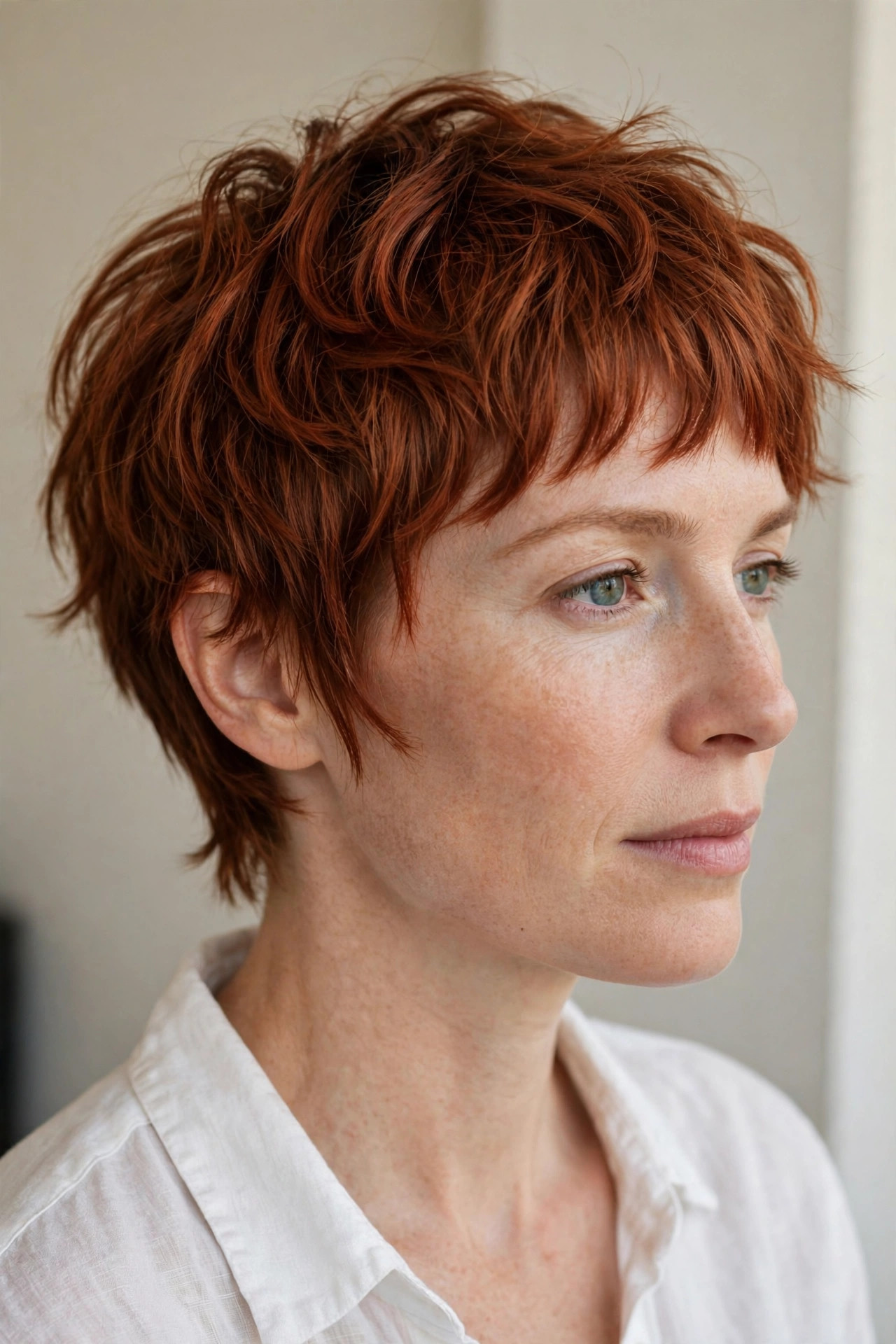
A little bit rock and roll, the shaggy pixie uses razored, uneven layers to give thin waves a wild, touchable texture that always looks full. The broken fringe — short pieces in varying lengths across the forehead — breaks up the hairline so no single sparse spot can catch the eye. In warm copper, the whole cut glows; dimensional color like this adds yet another layer of depth, which is gold for fine hair.
Ask your stylist for razor cutting or deep point cutting to create the shag, with a choppy, uneven fringe and plenty of movement through the crown. At home, this is a true wash-and-wear cut: scrunch in a curl cream, let it dry, then break it up with dry texture spray. The messier it looks, the better it is working — embrace it.
8. Ear-Length Wavy Pixie Bob
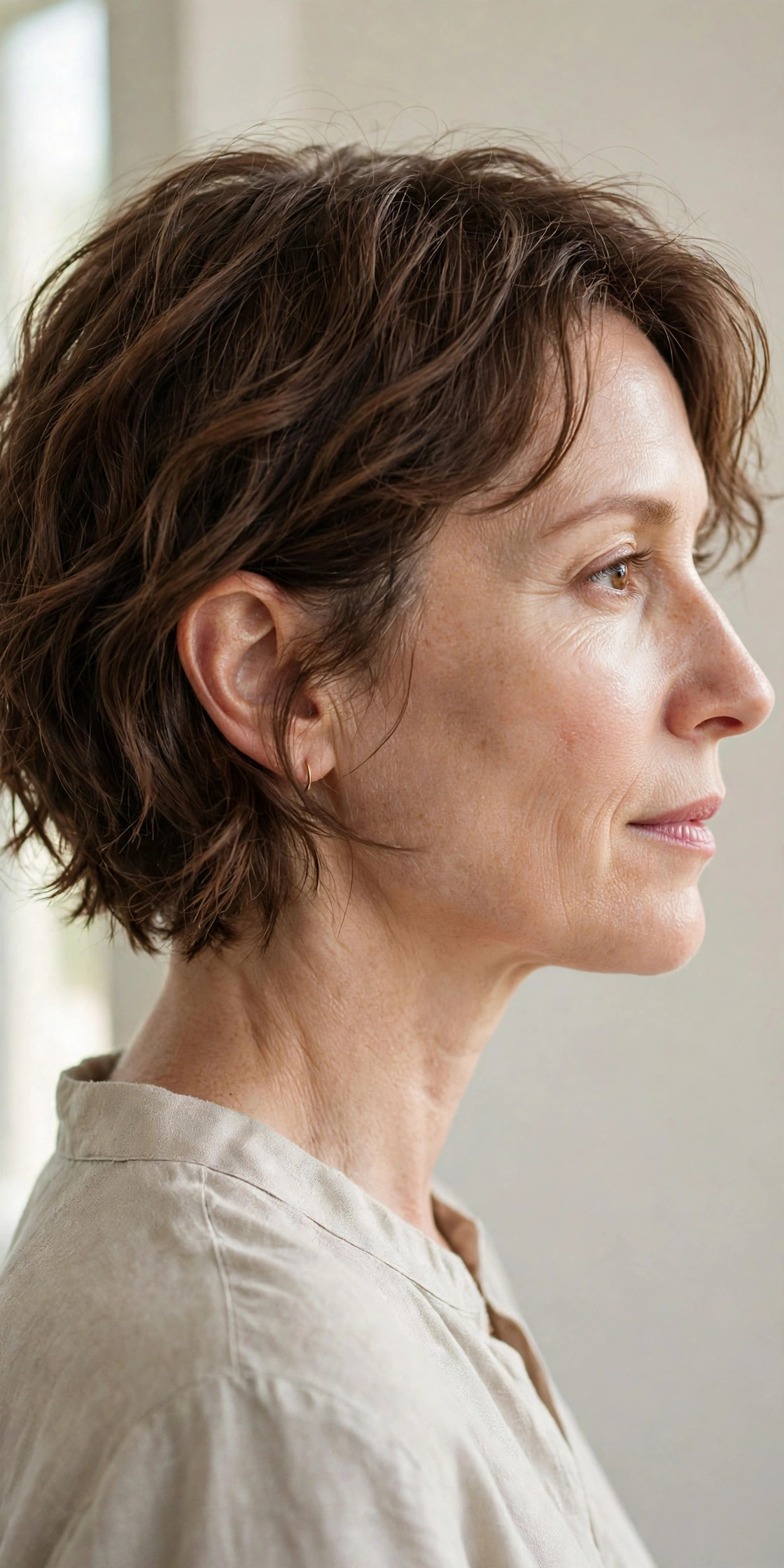
Sitting right at the ears, this chestnut pixie bob hits the sweet spot between short and shorter. The length is long enough for your waves to form a proper S-shape — which is where the bounce comes from — but short enough that thin ends never get a chance to look wispy. A slight stack at the back pushes the shape forward, and the clean line around the face keeps it looking polished rather than grown-out.
Ask your stylist for an ear-length bob-pixie hybrid with a gentle stack at the back and soft, point-cut ends. Because the shape is simple, it flatters glasses beautifully and never fights with earrings or collars. Style with a light gel scrunched through wet hair, then hands off while it dries — touching wavy hair mid-dry is the fastest route to frizz.
9. Piecey Razor Pixie
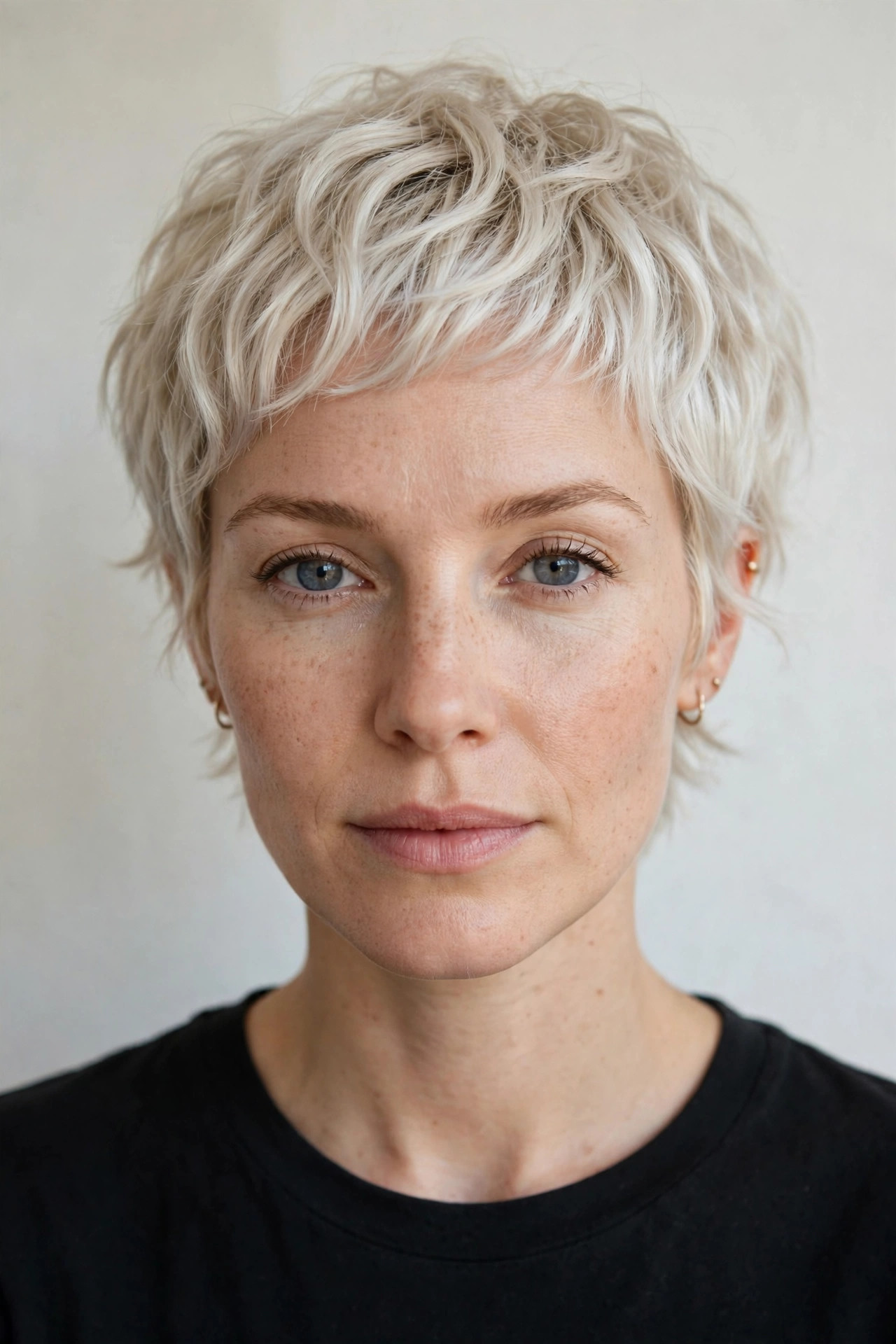
Razor cutting gives fine hair something scissors alone cannot: wispy, separated ends that look deliberately undone. On this platinum pixie, each section falls in distinct pieces, and that separation tricks the eye into seeing more hair than there is. The icy blonde shade amplifies the effect — light colors reflect more light, so the style looks bright and full from every angle. It is bold, but the grow-out is surprisingly forgiving.
Ask your stylist for a razor-cut pixie with piecey texture throughout and a soft, broken hairline around the face. Platinum needs commitment, so talk through a toning routine before you take the plunge: a purple shampoo once a week keeps the color icy. For daily styling, a dab of matte paste warmed between your palms and pinched through the ends is all it takes.
10. Rounded Pixie with Wispy Bangs

A rounded silhouette is one of the most forgiving shapes for thin hair, because the fullness is distributed evenly around the head instead of piled in one spot. This soft brunette pixie curves gently over the ears and through the back, and the wispy bangs are kept deliberately see-through — a feather-light fringe adds softness without stealing density from the top, which is a mistake heavier bangs often make on fine hair.
Ask your stylist for a rounded pixie with a curved outline, soft layering through the back, and a wispy, textured fringe. This cut loves a round or heart-shaped face, since the curve of the cut echoes the curve of the cheeks. Blow-dry with a paddle brush following the round shape, and the whole style takes about five minutes.
11. Side-Parted Pixie with Sculpted Waves
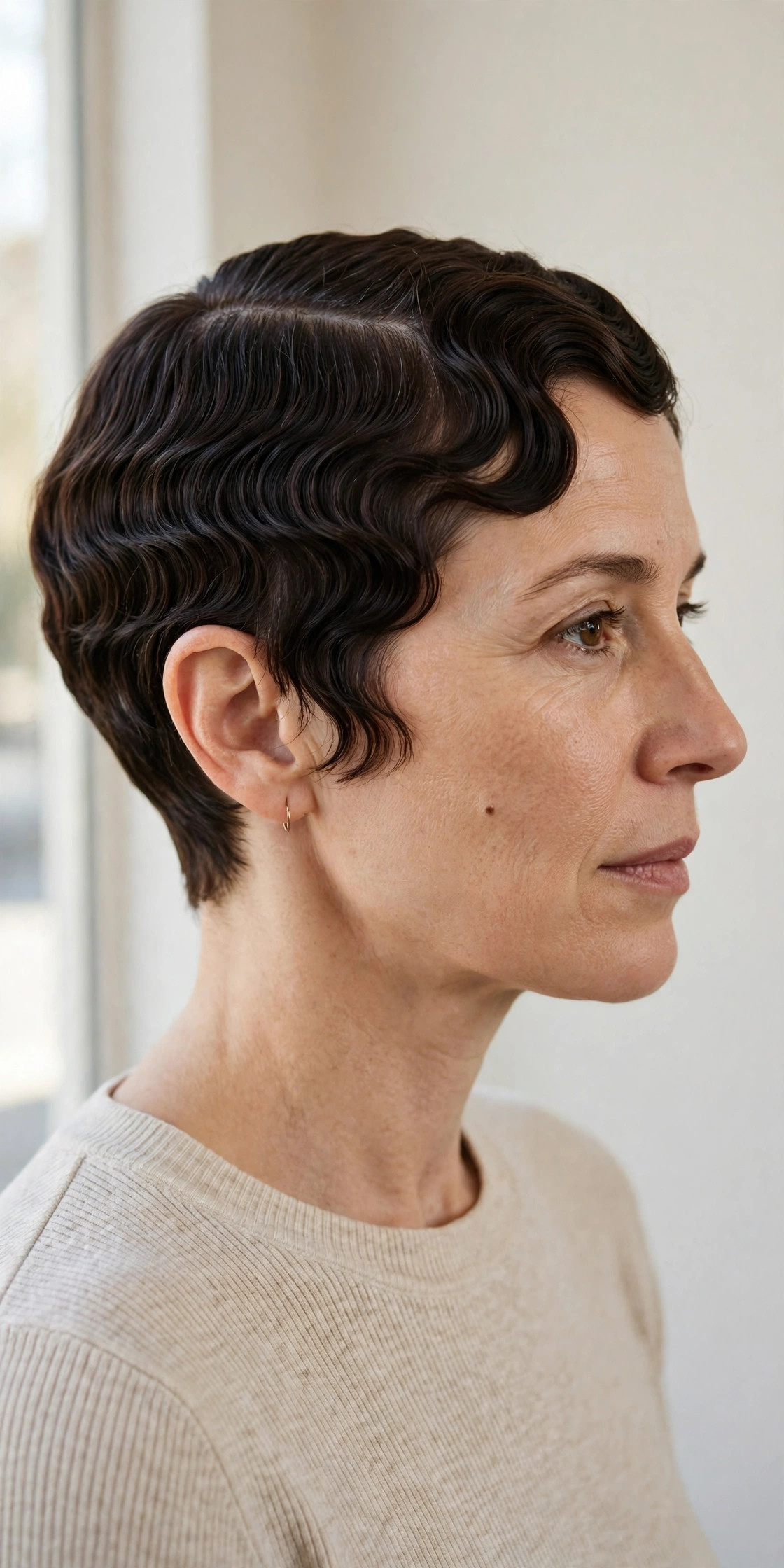
A deep side part is the oldest volume trick in the book, and this deep-brunette pixie uses it beautifully. Sweeping all the top length to one side creates a lifted wave that crests over the crown like a soft sculpture, while the shorter side keeps everything neat and intentional. The glossy brunette finish makes the waves look rich and healthy — shine is a fullness signal, and this cut uses it well.
Ask your stylist for an asymmetric pixie with a long top section styled into a deep side part, and let them map the part to your natural cowlick so it stays put. At home, dry the top in the opposite direction first, then flip it into the part for maximum lift. A shine spray as the final step makes those sculpted waves catch the light.
12. Modern Wavy Bixie
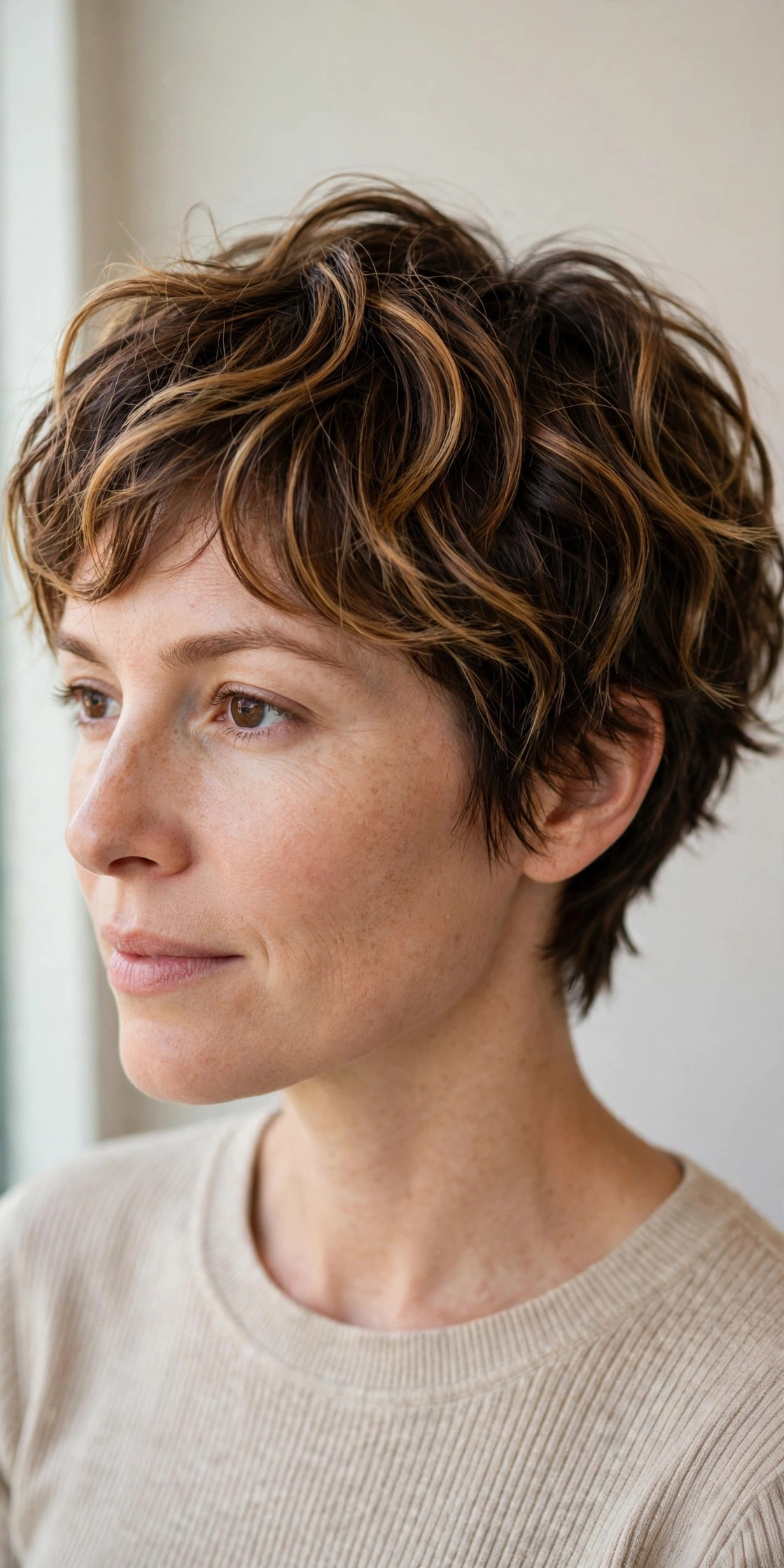
The bixie — bob meets pixie — has become the cut of the moment for good reason: it gives you a pixie’s easy upkeep with a bob’s softness around the face. This modern version leans into loose, undone waves, with caramel highlights threaded through the top layers. Those ribbons of lighter color sit right where the waves bend, so every curve catches the light and the hair looks twice as thick.
Ask your stylist for a wavy bixie with length between the ears and jaw, long layers, and face-framing highlights if you want the color effect too. It suits almost everyone, but especially women whose thin hair has a natural bend they have been fighting with straighteners for years — this cut finally lets the wave be the style instead of the problem.
13. Cropped Pixie with Fluffy Texture
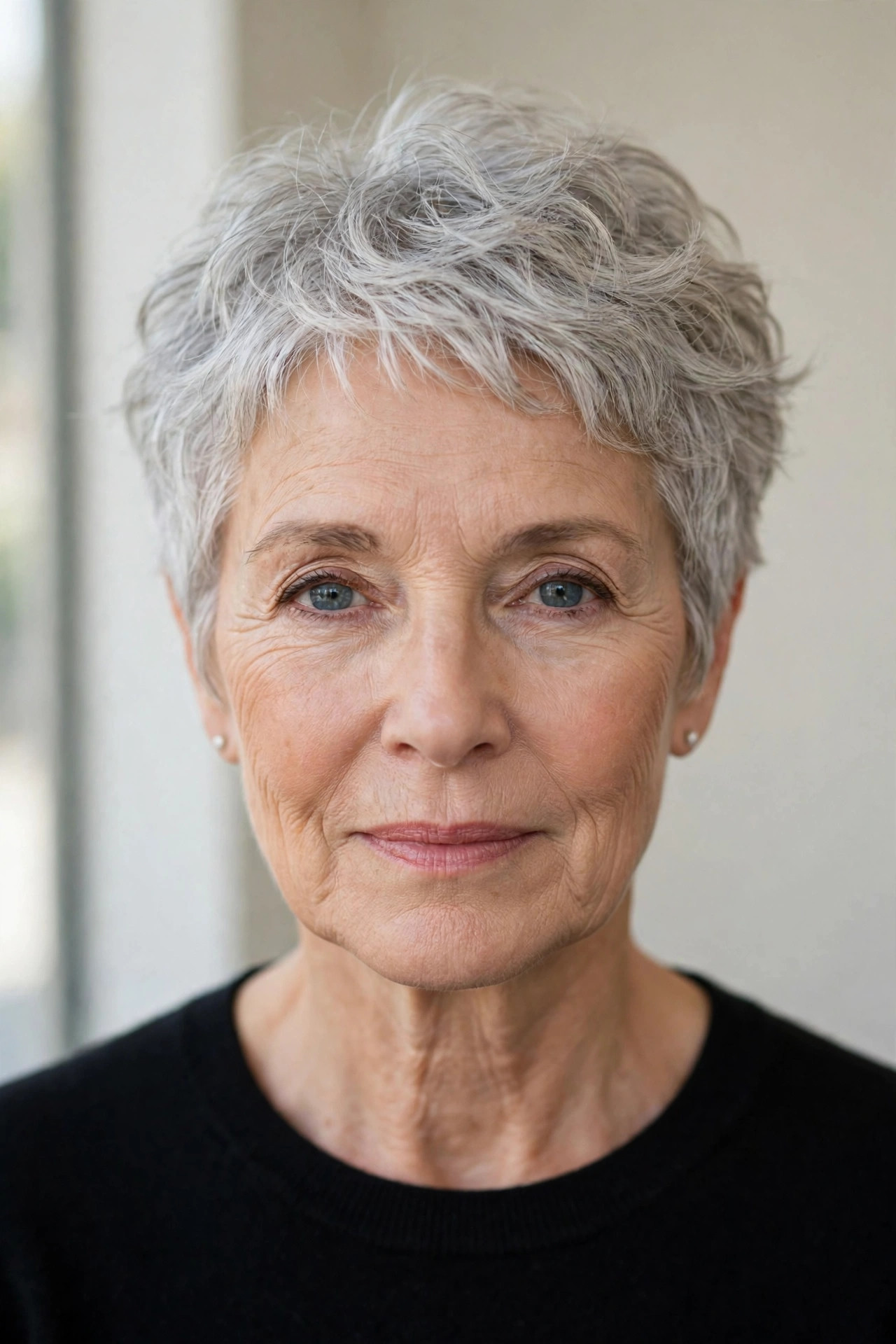
Silver hair is often finer and drier in texture, and this cropped pixie works with that instead of against it. The length is kept short and even, then styled up and airy so the natural fluff of gray hair becomes a soft, cloud-like texture. There is no fringe to manage and no heavy layering — just a clean, confident crop that looks elegant with minimal effort and lets beautiful silver tones be the whole story.
Ask your stylist for a short crop with soft, even layers and a feathered hairline — no hard lines anywhere. Gray hair drinks up moisture, so a weekly hydrating mask and a violet-toned shampoo to keep the silver bright (never brassy) are your two non-negotiables. A tiny amount of lightweight oil on the ends keeps the fluff looking like texture, not frizz.
14. Soft Curved Pixie with a Tapered Neckline
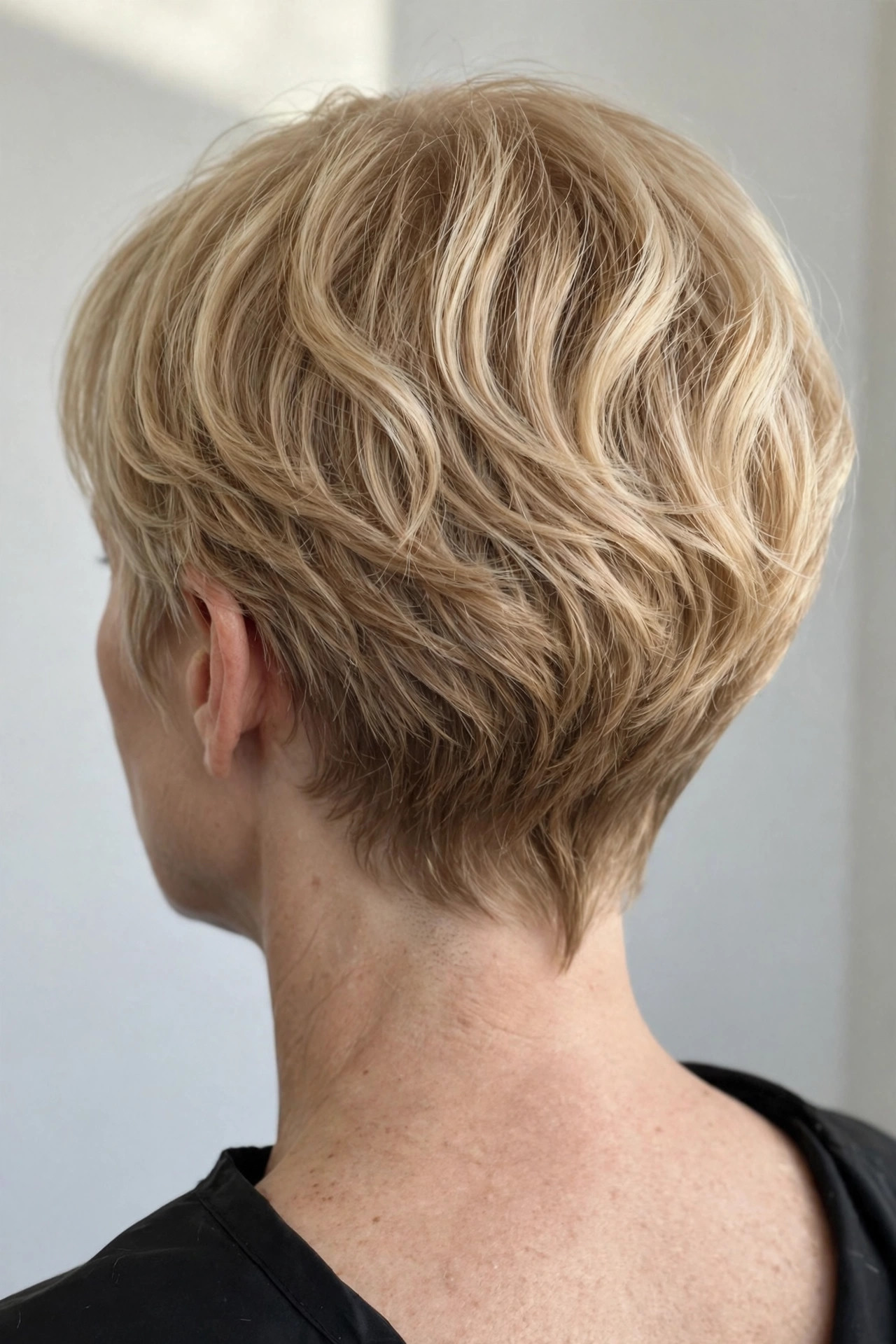
Sometimes the back of the cut matters as much as the front. This blonde pixie curves softly over the crown and melts into a tapered neckline that follows the natural hairline — no harsh lines, no exposed clippers marks. From behind, the curved shape makes the hair look like a smooth, full shell, which is exactly the illusion thin hair needs. From the front, it is a classic soft pixie that frames the face gently.
Ask your stylist for a curved pixie silhouette with a scissor-tapered neckline blended into your natural growth pattern. This is a lovely choice if your hair grows in swirls at the nape, because the taper works with them instead of fighting them. It grows out softly, so you can comfortably stretch trims to six or even eight weeks.
15. Relaxed Italian Pixie Crop
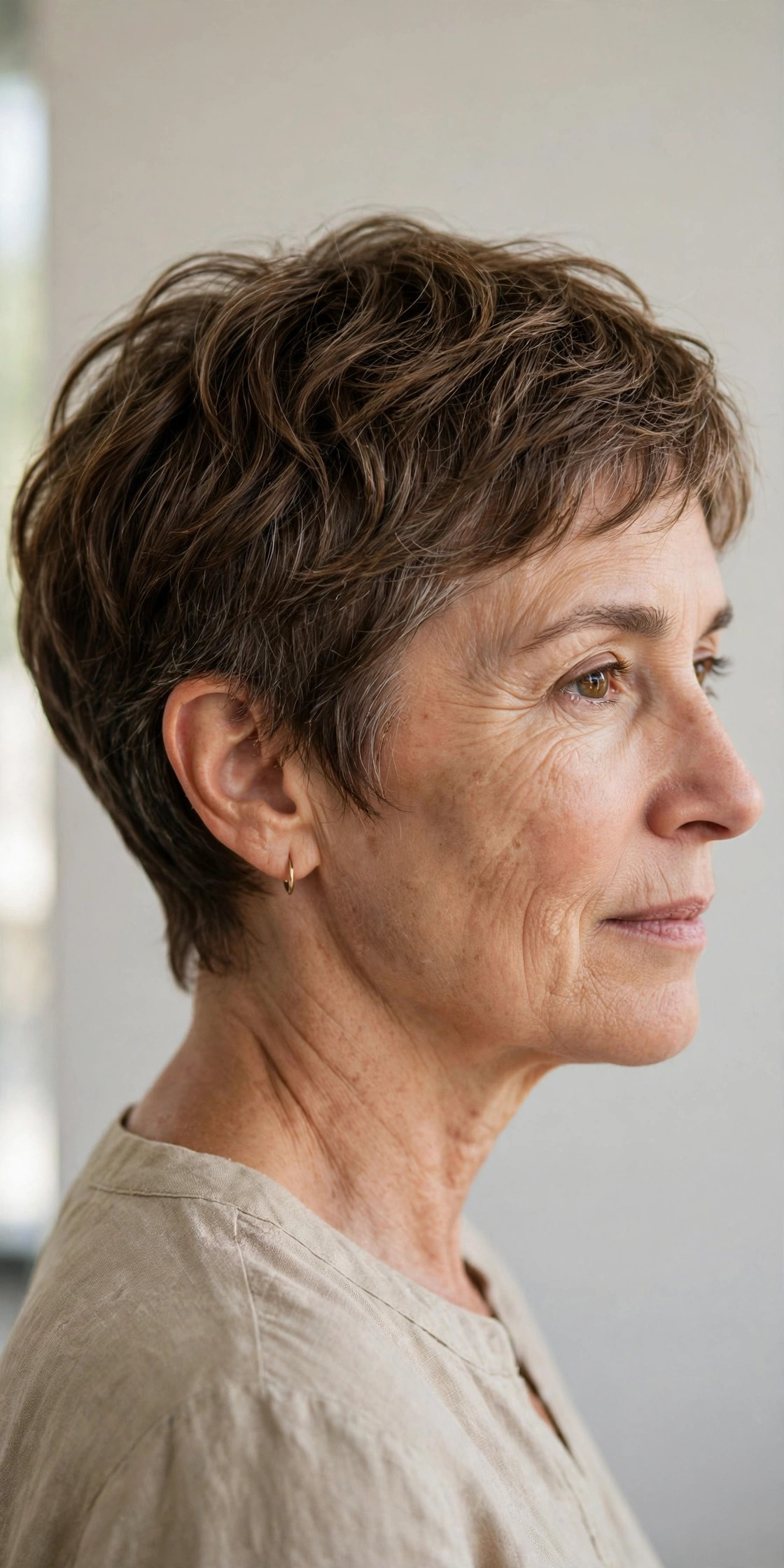
Inspired by the effortless crops seen all over Milan, the Italian pixie is soft, grown-in, and quietly glamorous. Nothing here is sharp: the edges are diffused, the fringe melts into the sides, and the warm brunette waves are styled loose, as if they simply fell that way. For thin hair, that softness is strategy — hard lines expose sparseness, while diffused edges make every strand look like part of a fuller whole.
Ask your stylist for an Italian-style crop with soft, blended edges, slightly longer length around the ears, and a loose natural fringe. Skip the heavy products with this one; a light styling milk scrunched in and left to air-dry is the whole routine. It pairs beautifully with gold earrings and a bold lip — the ultimate low-effort, high-polish combination.
16. Soft Wolf Pixie

The wolf cut’s shaggy layers translate surprisingly well to pixie length. This softer version keeps choppy, mullet-inspired layering around the crown and sides, but tames it with a gentle fringe and feathery ends, so it reads playful rather than punk. The caramel-dipped tips are a clever touch for thin hair: lightening just the ends makes each piece stand out, multiplying the look of texture without adding a single strand.
Ask your stylist for a soft wolf pixie with choppy crown layers, a light fringe, and — if you like the effect — balayage tips on the longest pieces only. This is the most “styled-looking” cut on the list with the least daily effort: texture spray and a quick scrunch, done. It is especially fun if your style leans creative or casual.
17. Wispy Pixie with Face-Framing Layers

If you want one cut that flatters nearly everyone, this is it. The golden-blonde pixie is kept soft all over, but the real magic sits at the front: two longer, wispy layers curve in along the cheekbones, framing the face the way a good picture frame sets off a painting. Those face-framers also serve thin hair well, because they concentrate soft, visible length at the front where hair often looks sparsest.
Ask your stylist for a soft pixie with cheekbone-length face-framing layers and a light, blended fringe. Tell them how you usually part your hair, because the framing pieces are cut to fall from your natural part. Styling is simple: dry the front pieces forward with your fingers, curving them slightly inward at the ends.
18. Wavy Pixie with a Long Side Fringe in Auburn
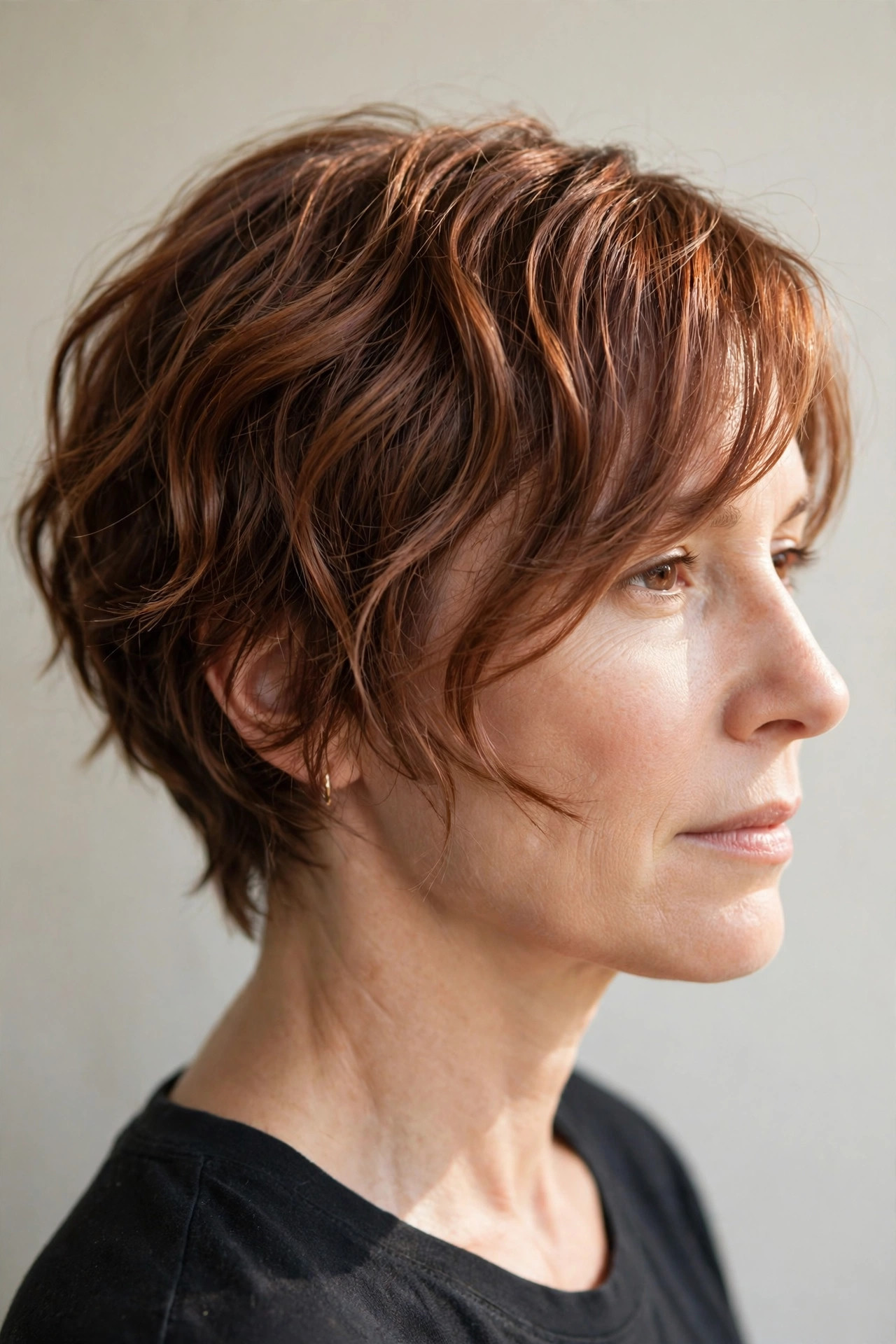
Auburn might be the most underrated color for thin hair — its warm, multi-tonal shine creates depth that flat shades cannot. This pixie pairs that glowing color with a dramatic long side fringe that sweeps from a deep part across the brow. The fringe does double duty: it is a beautiful focal point, and it covers the hairline completely, which is reassuring if your hair is finest at the front.
Ask your stylist for a pixie with a long, sweeping fringe and rich auburn color — ask about a gloss treatment to keep the tone vibrant between visits, since reds fade fastest. Style the fringe by blow-drying it across your forehead with a flat brush, then let the rest air-dry in waves. The contrast of smooth fringe and tousled crown is the whole look.
19. Vintage-Inspired Wavy Pixie
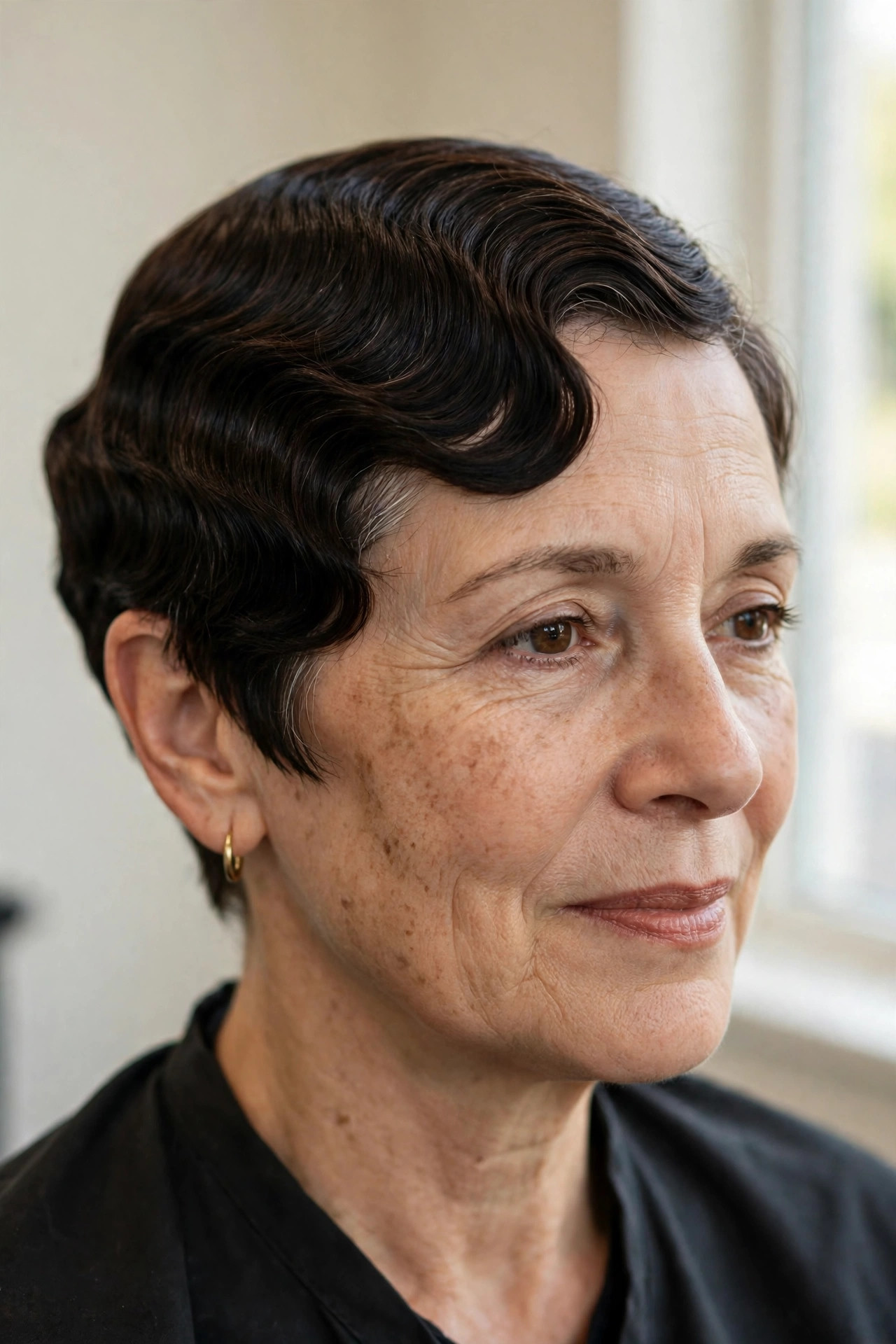
Finger waves are not just for period dramas — on a short pixie, those sculpted S-curves look incredibly chic and modern. This espresso-brown version shapes the top waves into smooth, glossy ridges that lie close at the sides and lift through the crown. Because the waves are set rather than fluffy, the style reads sleek and intentional, and its shine makes fine hair look polished instead of thin.
Ask your stylist for a pixie with enough top length (four inches or so) to mold into finger waves, and ask them to teach you the setting technique in the chair — it is easier than it looks. At home, work gel through damp hair, comb in the S-shapes, pin the ridges flat, and let it dry completely before touching it. Save this one for days you want compliments.
20. Soft Undercut Pixie for Fine Waves
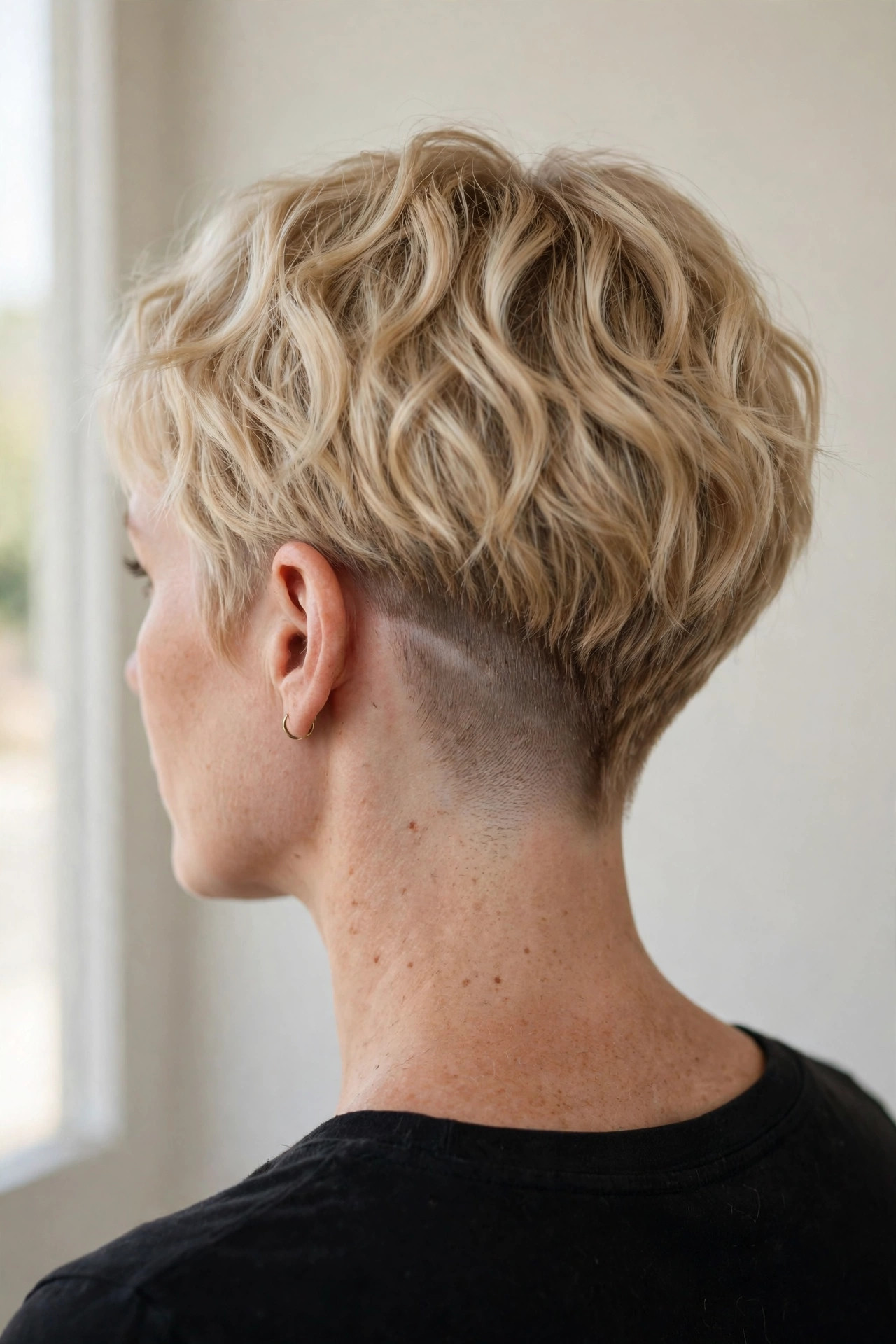
An undercut sounds daring, but on fine wavy hair it is secretly practical. Removing the bulk at the back and lower sides — the hair nobody sees — lets the wavy top layers sit higher and fuller, because they are no longer weighed down or pushed out by the hair underneath. This blonde version keeps the contrast soft (no harsh buzz lines), so it reads as a pretty pixie from the front and a neat surprise from the back.
Ask your stylist for a soft undercut or nape taper with a long, wavy top that overlaps the short section — that overlap is what keeps it feminine. This cut loves thick-at-the-nape hair that usually poofs out; if that is you, prepare to be amazed at how much lighter and bouncier your top layers feel. Trims every four weeks keep the undercut tidy.
21. Platinum Wavy Pixie with Root Lift
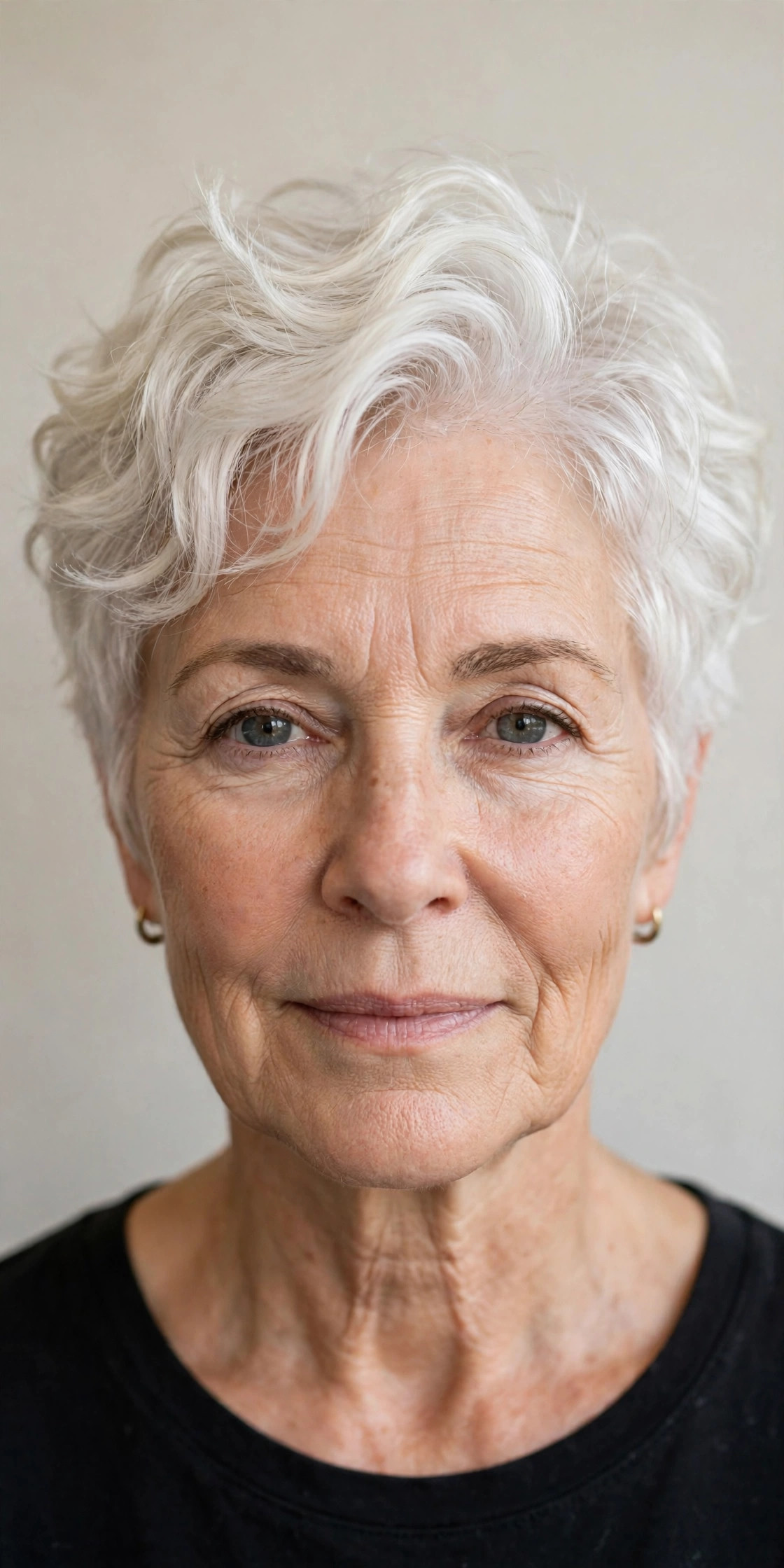
We finish with the fullest-looking formula of all: maximum root lift plus the brightest blonde. This platinum pixie is cut with short supporting layers underneath and longer waves on top, styled up and back so the roots stand away from the scalp — and hair that stands up always looks thicker than hair that lies flat. The cool platinum shade erases contrast between hair and scalp, making any fine areas far less noticeable.
Ask your stylist for a pixie built for lift: graduated under-layers, length on top, and platinum color with a shadow root if you want a gentler grow-out. The styling ritual matters here: mousse at the roots, blow-dry everything forward and up with your fingers, then set the direction. Two extra minutes at the dryer genuinely buys you a visibly fuller head of hair.
Frequently Asked Questions
Is a pixie cut good for thin wavy hair?
Yes — it is one of the best choices. Long thin hair gets dragged down by its own weight, which stretches waves flat and exposes the scalp. A pixie removes that weight, so your natural wave springs up, stacks, and creates the look of more hair. The key is keeping enough length on top for the waves to form, and using layers to build lift at the crown.
Which pixie shape makes thin hair look the fullest?
Shapes that concentrate length and layers at the crown — graduated, stacked, or lifted styles — look fullest. A deep side part and textured, piecey ends also help, because they break up the surface so light hits many small pieces instead of one flat sheet. Avoid very blunt, one-length cuts, which can make fine ends look wispy and see-through.
How often does a pixie for thin wavy hair need a trim?
Every four to six weeks is the sweet spot. Pixies rely on their shape for volume, and as the crown grows out, the weight returns and the style starts to collapse. Some softer, grown-in styles — the Italian crop or the curved pixie — can stretch to eight weeks. A quick nape tidy between full appointments keeps any tapered style looking sharp.
What products work best on a thin wavy pixie?
Think light and volumizing, never heavy. A lightweight mousse or root-lift spray before drying, a sea-salt or texture spray for piecey definition, and a tiny amount of matte paste for the ends cover almost every style in this list. Skip rich oils and thick creams on the roots — they weigh fine waves down and undo the lift you worked for.
Choosing the Right Pixie for Your Waves
With 21 options, the easiest way to choose is to pick one detail you love and start there. Drawn to softness? Look at the feathered bixie, the Italian crop, or the rounded pixie. Want maximum fullness? The layered crown lift, the sculpted side part, and the platinum root-lift styles are built for exactly that. Prefer a little edge? The shaggy pixie, the soft wolf, and the undercut will feel like home.
Be honest about upkeep, too. Sculpted waves ask for ten minutes and a little gel; the wash-and-wear crops ask for almost nothing. Whichever you choose, save the photo, show your stylist, and let them tailor the length and layers to your wave pattern and face shape. Thin wavy hair is not a limitation — cut short and shaped well, it is genuinely one of the prettiest textures to wear.
