
18 Short Bob Hairstyles for Thin Fine Hair With a Round Face: Easy Volume


If your hair is fine and your face is round, a short bob can flatten you or lift you — the difference is the cut. The right short bob hairstyle for thin hair and a round face adds height at the crown, keeps weight out of the sides, and pushes length below the jaw. These 18 ideas put all three to work.
Fine hair loses volume fast; a round face gains width fast. A blunt, chin-length bob does both wrong. Instead you want texture, graduation, or an angled line that breaks up roundness and stops hair from sitting flat against your cheeks. Every cut below is built to do exactly that.
You will get the exact cuts to ask for, the names to use with your stylist, and the daily styling moves that hold volume past noon. No guesswork, no styles that only work on thick hair. Pick two or three and bring photos.
How to Pick the Right Short Bob for Fine Hair and a Round Face
Match the cut to your growth pattern and how much time you will actually spend styling. A cut that needs ten minutes of round-brushing every morning will sit flat by lunch if you skip it.
- Length: Keep the longest points at or just below the jaw. Chin-length and shorter can widen a round face; collarbone-plus drags fine hair down.
- Shape: Choose graduation (stacked layers at the back) or an angled A-line over a one-length cut. Both build bulk where you want it and remove it where you do not.
- Texture: Ask for point-cutting or a little invisible layering through the ends — blunt lines read thinner on fine hair and can look heavy.
- Fringe: A long, side-swept or curtain fringe lengthens the face. Blunt bangs across the forehead shorten it and add width.
1. Textured A-Line Bob

An A-line bob is cut longer in front and shorter in back, which angles the face and adds noticeable height at the crown.
- Ask for: Point-cutting through the ends to strip bulk without losing texture.
- Why it works: The front-to-back angle slims a round face and lifts the top.
- Styling: Light mousse on damp roots, then a round brush aimed upward at the crown.
- Time: Roughly 8–10 minutes with a blow-dryer.
Keep product light—heavy creams flatten fine hair fast. A dime-sized amount of mousse is plenty for shoulder-grazing lengths.
2. Undercut Pixie Bob

Undercut sides and back shave away weight so the top can carry real volume. The contrast reads edgy while longer top layers stack height.
- Key piece: Clippers on the sides and nape, scissor work on top.
- Volume: Volumizing powder pressed into the roots, wax to pinch out pieces.
- Upkeep: A trim every 4 weeks keeps the line clean.
- Best for: Fine hair that collapses under its own length.
Rake wax through the tips only—skip the roots or the whole style goes greasy and flat.
3. Stacked Graduated Bob

A stacked graduated bob builds shorter layers at the nape that get longer toward the crown, creating a rounded silhouette right where fine hair needs bulk.
- Ask for: Graduation—stacked layers starting at the nape and climbing.
- Shape: Rounder at the back, which balances a round face.
- Styling: Round brush, lifting sections upward as you dry for maximum root lift.
- Finish: A spritz of medium-hold spray at the crown.
Point the dryer nozzle up at the roots, not down the strand—direction is what builds the stack.
4. Chin-Length Blunt Bob

A blunt cut at chin length creates one strong line that makes thin hair read thicker, and it pulls the eye downward to elongate a round face.
- Ask for: A single-length blunt line, no razoring, no thinning shears.
- Why it works: Every strand ends at the same point, so density looks fuller.
- Styling: Flat iron smooth, then a slight bend at the ends for movement.
- Avoid: Layers here—they thin the perimeter and kill the effect.
Bend the ends outward with the iron, not inward. It keeps the shape from looking helmet-like.
5. Inverted Lob with Layers

An inverted lob runs slightly longer in front and shorter in back, with hidden layers tucked inside for movement. Low-maintenance, volume without bulk.
- Ask for: Invisible interior layers, no visible steps on the surface.
- Shape: Collarbone length in front, angled up at the back.
- Styling: Texturizing spray on damp hair, then scrunch and air-dry.
- Vibe: Beachy, undone, easy on wash days.
Spray texturizer mid-shaft to ends. Root spray plus texturizer together is what causes that crunchy feeling.
6. Side-Swept Pixie Bob

A deep side part with swept bangs breaks up the roundness of the face and adds height where you need it. The pixie bob length keeps it current.
- Ask for: A deep side part and a long, swept fringe.
- Why it works: Asymmetry draws the eye diagonally across the face.
- Styling: Strong-hold gel to lock the sweep, then lift roots with fingers.
- Volume: Blow-dry the bang section in the opposite direction first.
Dry the sweep against its natural fall, then flip it back into place—that’s where the root lift comes from.
7. Wavy Textured Bob

Soft waves add width and volume to fine hair, and texture keeps a round face from looking too smooth or wide at the cheeks.
- Ask for: a razor cut with point-cut ends — it roughs up fine strands so waves hold instead of falling flat within an hour.
- Length: chin to just below the jaw; longer than that and the wave pattern drags the volume downwards.
- Tools: 1-inch curling wand on medium heat (around 320°F / 160°C) — hotter burns fine hair fast.
- Technique: alternate wrap direction each section, leave the last inch uncurled for a natural finish.
Set with a light-hold hairspray 8–10 inches away, then scrunch with fingertips once cool. Skip heavy cream — it flattens thin hair.
8. Curtain Bangs Bob
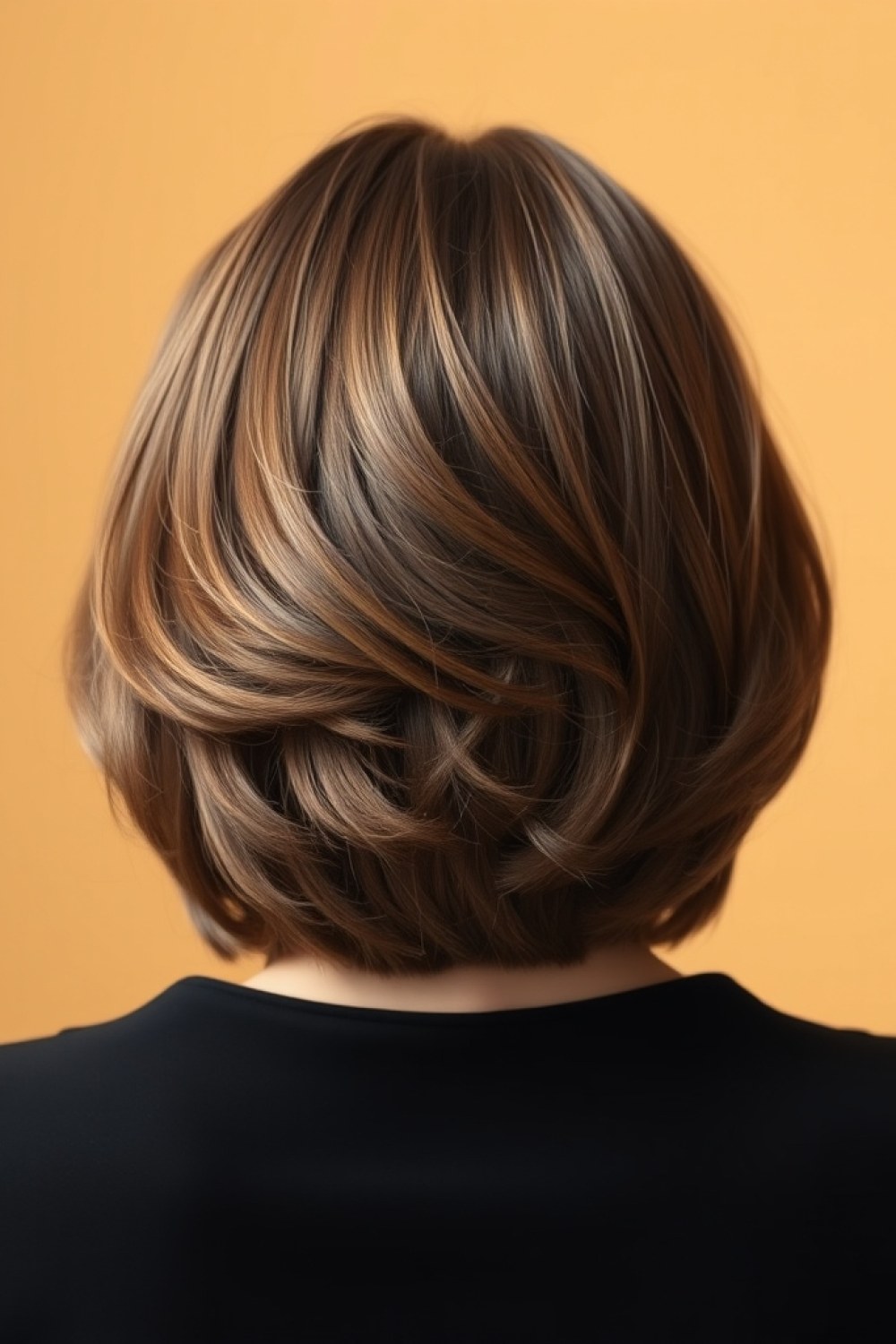
Curtain bangs draw the eye upward and frame the face, which visually elongates a round shape. Paired with a chin-length bob, they add root volume where fine hair needs it most.
- Ask for: a centre-parted curtain fringe starting at the brow bone, blending into a chin-length bob.
- Bang width: keep the shortest point at your cheekbone — longer than that and it closes in the face.
- Blow-dry: use a small round brush, pulling bangs away from the face on each side, then a blast of cool air to set.
- Maintenance: trim every 3–4 weeks — fine bangs grow out of shape fast.
If your hair parts stubbornly, mist roots with water and clip the bangs in the direction you want for two minutes before drying.
9. Angled Bob with Stacked Back

This cut pairs an angle in front with stacked layers in back, creating a diagonal line that slims the face while the stacked back builds real volume.
- Ask for: a chin-to-collarbone angle in front, stacked layers through the nape at the back.
- Angle: shortest at the jaw, longest at the front point — a steep drop reads as a sharper, more slimming line.
- Volume: the stacked back is what lifts the crown, so fine hair doesn’t sit flat against the head.
- Blow-dry: round brush at the roots, lifting upward, then smooth the ends downward to keep the line clean.
Use a 1.5-inch brush for the back and a smaller one for the front angle. Work in thin sections or fine hair dries before you shape it.
10. Micro Bob with Volume

A micro bob sits above the jawline, which can make a round face look fuller if it’s not styled with intention. The fix is all in the root lift.
- Ask for: a cut ending at or just above the jaw, with slight graduation at the back for shape.
- Volume: apply root lifter to damp roots at the crown — not the sides.
- Sides: keep these sleek and close to the head so width doesn’t compete with the face.
- Tools: small round brush at the crown, lifting up and back, then flat-iron the side pieces smooth.
The rule is simple: volume on top, sleek on the sides. Reverse it and a round face looks wider.
11. Layered Chin Bob
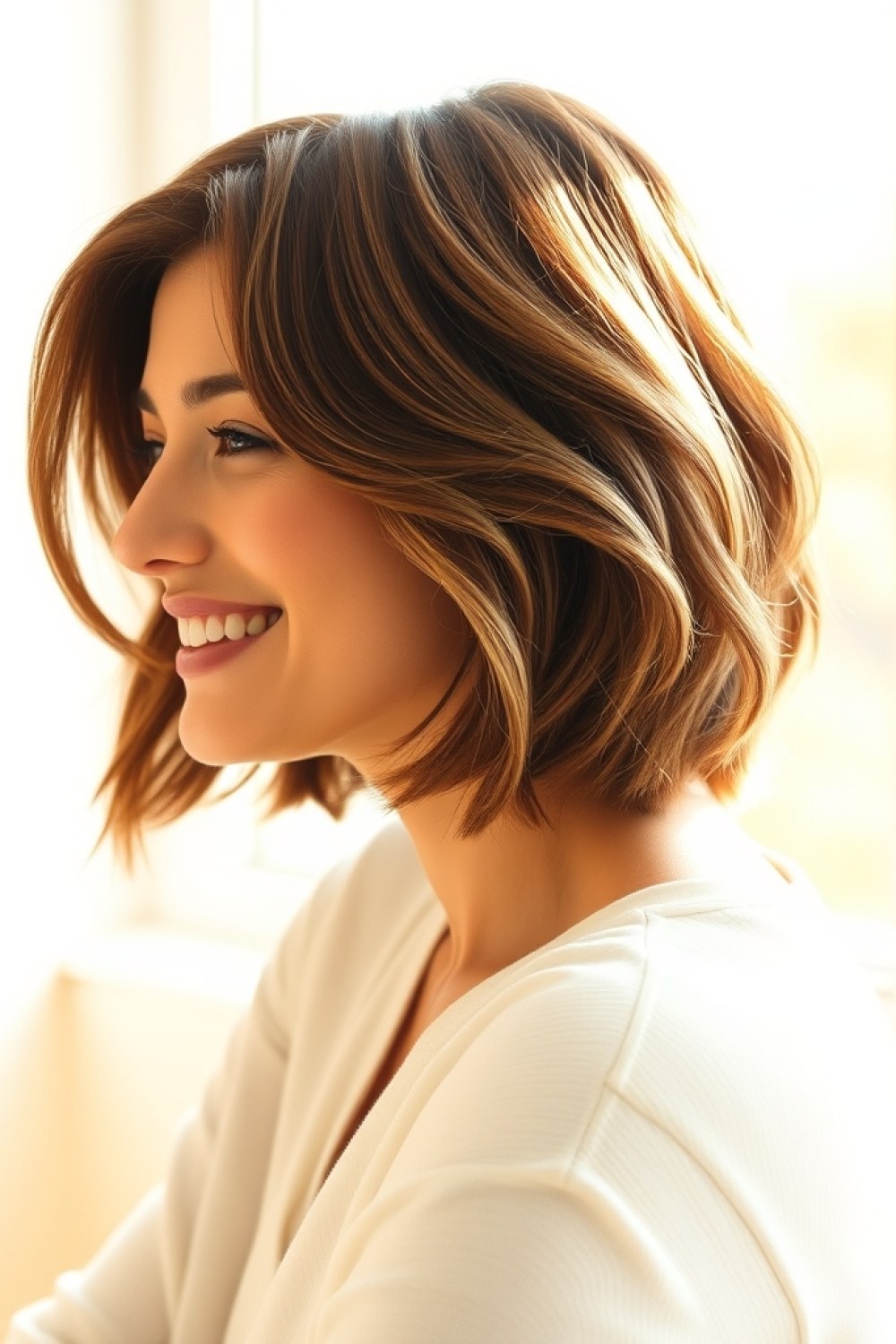
Layers throughout add movement and stop fine hair from looking flat and limp along the length. Chin length keeps it manageable day to day.
- Ask for: a chin-length bob with soft layers through the ends, not short choppy ones near the crown.
- Layers: start below the cheekbone — higher than that and fine hair thins out visibly.
- Product: a golf-ball-sized pump of volumizing mousse on damp roots and mid-lengths.
- Blow-dry: vent brush, lifting at the roots, then roll the ends under for a soft finish.
Aim the dryer down the hair shaft as you go — it smooths the cuticle and gives fine hair a shine that reads as thicker.
12. Asymmetrical Bob

One side longer than the other breaks up the roundness of the face with a diagonal line, and it’s an edgy, modern option that still suits fine hair.
- Ask for: a clear difference — one side at the jaw, the other 1.5 to 2 inches longer.
- Why it works: the angled line draws the eye down and sideways, distracting from a rounder width.
- Styling: flat iron both sides flat to define the angle, then curve the ends slightly inward.
- Finish: a drop of shine serum on the ends only — roots stay untouched.
Keep the shorter side tucked behind your ear to show off the cut. If the difference feels too bold, ask for 1 inch instead of 2.
13. Soft Graduated Bob
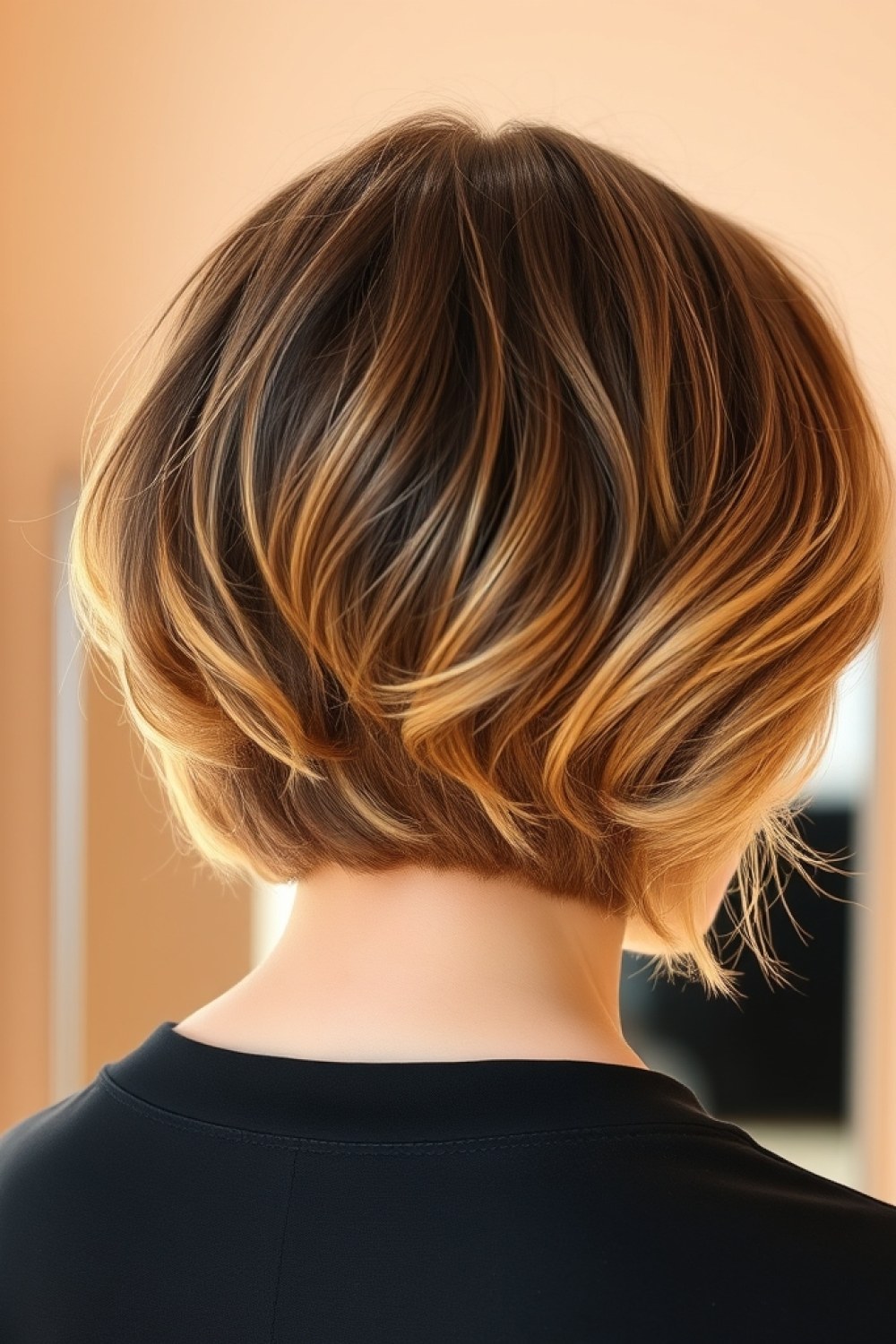
A graduated bob builds length at the back with stacked layers, tapering gently toward the front. On fine hair it reads as fuller, not choppy.
- Best for: Round faces wanting lift, not a heavy, blunt line.
- Ask your stylist for: Soft graduation at the back, long enough in front to graze the jaw.
- Style it: Blow-dry with a round brush, overdirecting sections upward for lift.
Keep the graduation subtle — too much stacking looks dated and thins the ends.
14. French Bob with Bangs

The French bob hits at the chin with full, blunt bangs. It feels effortless and Parisian, and it adds real volume at the crown.
- Length: Chin-skimming, one length or lightly layered.
- Bangs: Full and slightly rounded, never too heavy.
- Style it: Dry shampoo at the roots, bangs shaped with a small round brush.
Skip conditioner near the roots — fine hair flattens fast under extra product.
15. Textured Lob with Waves

A lob lands at the collarbone, and textured waves give it movement and length. It’s the most low-maintenance option on this list and works with almost any face shape.
- Length: Collarbone, blunt or lightly layered.
- Style it: Curling wand for loose waves, texturizing spray for grip.
- Bonus: Long enough to tie up on lazy days.
Wrap small sections away from the face and skip the last inch for a softer finish.
16. Pixie Bob with Undercut
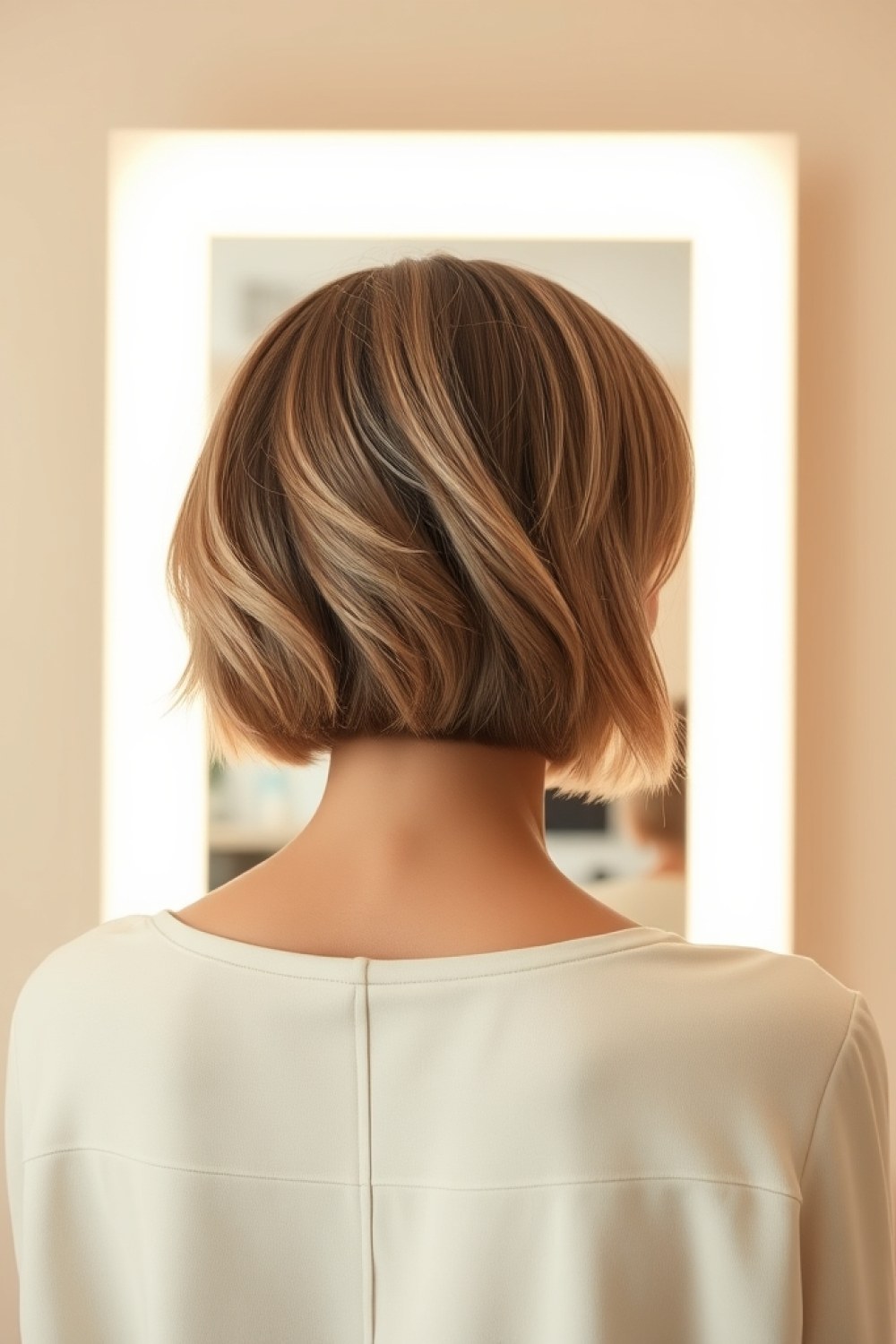
This is a pixie bob with a hidden undercut at the nape and sides. Removing that weight lets the top sit taller, so fine hair looks thicker than it is.
- Key feature: Undercut concealed by longer layers on top.
- Length: Slightly longer on top than a standard undercut pixie.
- Style it: Volumizing powder at the roots, round brush to lift.
Plan for trims every four to five weeks — undercuts grow out fast and lose their shape.
17. Feathered Bob
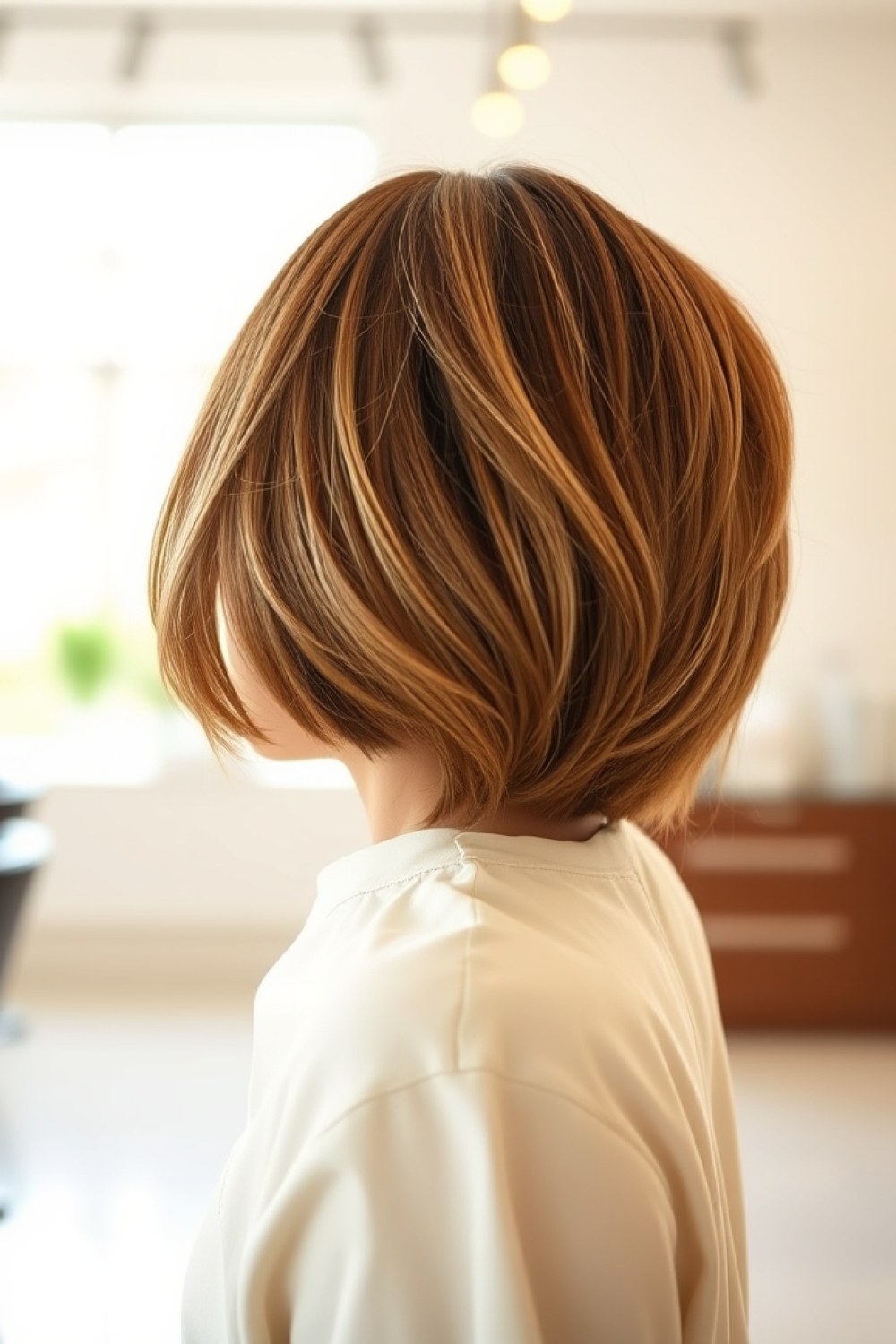
Feathered layers frame the face and break up roundness, adding airy movement. On fine hair, this cut creates volume without bulk.
- Ask for: Feathered layers around the face, tapering at the ends.
- Style it: Round brush, flicking the ends outward as you dry.
- Finish with: A light-hold spray to keep the shape.
Blow-dry the front sections forward first, then flick outward — it sets the feathering in place.
18. Blunt Bob with Middle Part

A blunt bob with a middle part is all symmetry. The line elongates a round face and gives fine hair a clean, modern edge.
- Key detail: Sharp, one-length cut with no layering.
- Style it: Flat iron for sleekness, light hairspray to hold.
- Add: Root volumizer for lift at the crown.
Ask for a slight A-line — just a touch longer in front — so it doesn’t sit boxy at the jaw.
Frequently Asked Questions
What is the best short bob for fine hair and a round face?
A stacked graduated bob or an A-line bob. Both build weight at the back and angle down toward the front, which adds height at the crown and length through the jaw. That contrast is what balances a round face. Skip blunt cuts that end at the widest part of your cheeks — they add horizontal width where you don’t want it, and on fine hair they hang flat with no shape underneath.
How do I style a short bob to add volume?
Apply a volumizing mousse to damp roots — a golf-ball-sized amount is plenty for chin-length hair — then blow-dry with a round brush, lifting each section up and away from the scalp before rolling it back down. Hit the crown with a root lifter or dry shampoo once it’s dry, and finish with a light texturizing spray mid-shaft to ends. One rule: keep heavy creams and oils off your roots. Fine hair collapses under weight, and no amount of backcombing fixes a greasy scalp.
Should I get bangs with a short bob for a round face?
Yes, with the right shape. Curtain bangs or side-swept bangs angle diagonally across your forehead, which draws the eye upward and elongates the face. Straight-across blunt bangs are the one to avoid — they cut your face into a short, wide rectangle and emphasize exactly the roundness you’re trying to soften. If you want a middle ground, ask for a longer, wispy fringe you can push to one side.
Can I wear a short bob if my hair is very thin?
Short bobs work better for thin hair than long styles do. Cutting length removes weight from the ends, so what’s left looks and behaves fuller. The real work is maintenance: book trims every 4 to 6 weeks so the ends stay blunt and thick instead of tapering into strings. Thin hair shows split ends fast, and once they travel up the shaft, the shape is gone.
What haircut makes a round face look slimmer?
A bob that falls below the chin with angled layers — an asymmetrical or A-line cut. The diagonal line from short at the back to longer at the front creates the illusion of length. Add crown volume and you get height on top, which makes the face read longer and narrower. If you want to push it further, ask for a deep side part; the asymmetry breaks up the roundness immediately.
How often should I trim a short bob?
Every 4 to 6 weeks to hold the shape and head off split ends. That sounds frequent, but a bob only looks intentional when the line is clean — a few weeks of growth and the shape goes soft at the edges. Growing it out? Stretch to 8 weeks and let your stylist dust the ends rather than reshape.