
20 Long Bob Hairstyles for Women Over 40 to Try in 2026


You finally grew your bob past your chin, and now it’s just… hanging there. Flat on one side, flipping out on the other, and the ends have that sad, grown-out taper. You’re not alone — this is the exact stage where most of us either chop it all off or give up and go back to a ponytail every single day.
A long bob is the sweet spot for 2026: shoulder-to-collarbone length, still short enough to feel fresh, long enough to pull back on a bad day. Better yet, this is the length where face-framing layers, curtain bangs, and a little invisible texturizing do the most work on fine, wavy, or gray-blending hair.
Below are 20 long bob hairstyles for women over 40 worth screenshotting and bringing to your stylist — including the cut names to ask for, where to place layers so they add volume instead of thinning you out, and the two-minute styling shortcuts that make each one work on a normal Tuesday.
1. Blunt Collarbone Lob
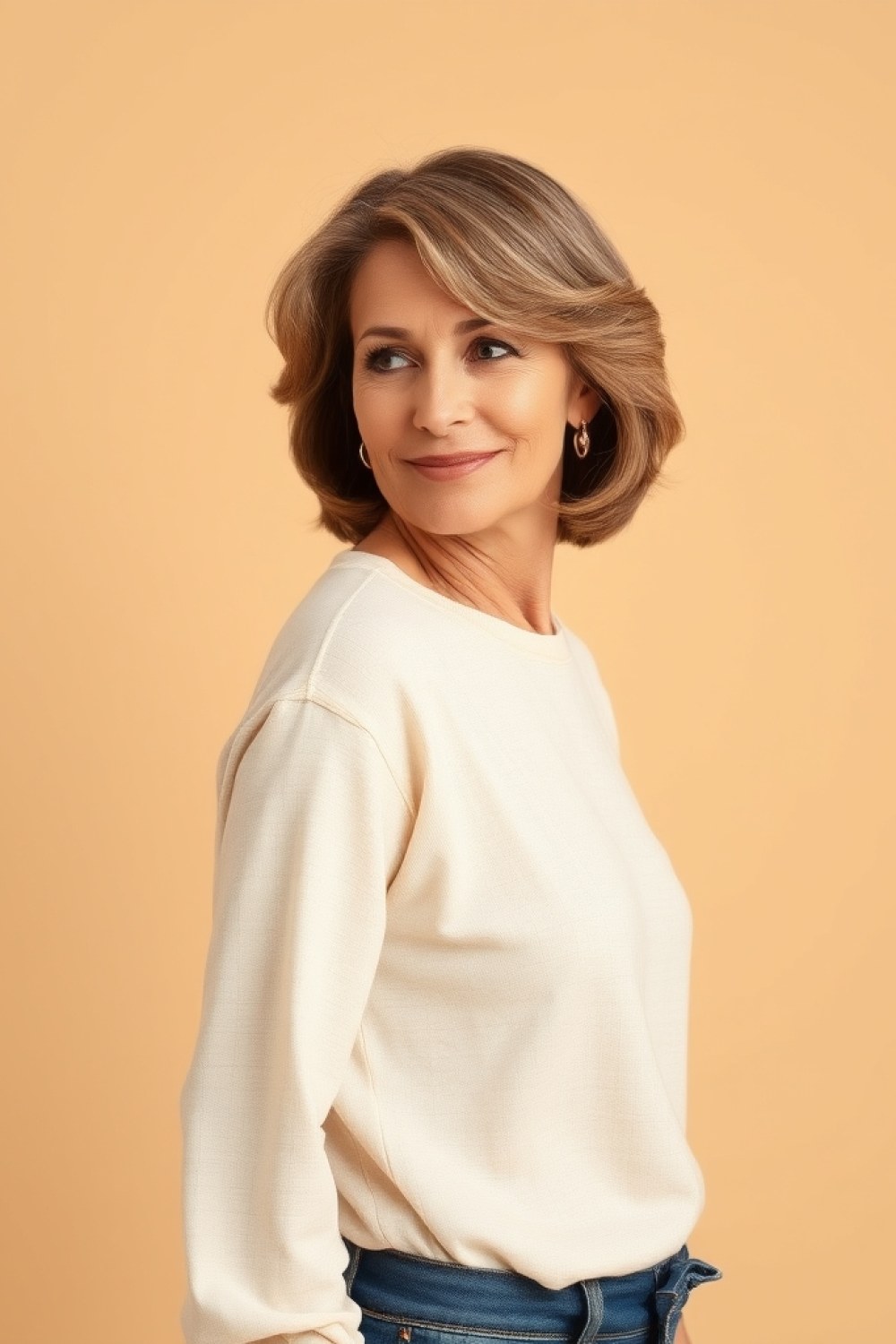
Best for: fine or thinning hair, or anyone stuck in the awkward grown-out stage.
Cut ruler-straight an inch or two below the collarbone with zero layering — this is the 2026 answer to “I’m growing it out.” A blunt hemline makes fine hair look denser because every strand ends at the same line.
Try this: Ask for a slight bend under at the ends, styled with a round brush — or let it dry straight for a crisp, modern finish.
2. Hidden Face-Framing Layers

Best for: softness around the face without sacrificing thickness at the hemline.
You get all the movement of layers, none of the scraggly ends. Your stylist cuts panels of layers only around the front — cheekbone to jaw — and leaves the back blunt. That one trick keeps your ends looking full while the front stays lively.
Try this: Point to your cheekbone and say “layers stop here” so your stylist knows exactly where to start and finish.
3. Collarbone Lob With Curtain Bangs

Best for: softening forehead lines and drawing eyes upward.
Curtain bangs that break right at the cheekbone and sweep outward are the easiest bang style to wear over 40. Ask for bangs starting at the brow and skimming the cheek — anything shorter reads dated. Dry them first with a small round brush pushing away from the face.
Try this: Blow-dry bangs before the rest of your hair — once they’re set, the whole style falls into place.
4. Tucked-Behind-Ear Lob

Best for: showing off cheekbones and earrings in one move.
A chin-length front section cut slightly shorter than the back so it looks intentional when you tuck both sides behind your ears. Instant cheekbone lift, zero effort. Mist the tucked pieces with a light-hold spray so they stay put all day.
Try this: Tuck just one side for an asymmetrical, slightly undone look that hides any uneven growth.
5. Invisible-Layer Lob

Best for: medium-thick hair that’s tired of pyramid-shaped volume.
Layers cut inside the shape rather than on top, so the surface stays smooth while the interior loses weight. This is the cut to request if your hair looks bulky at the bottom but you want to keep length. It grows out for 10-12 weeks without looking shaggy.
Try this: Tell your stylist “internal layers only” — those two words save you from a surprise shag.
6. Soft A-Line Lob

Best for: almost every face shape, especially round or square.
Slightly shorter in front, longer at the back — a gentler update on the classic A-line. Ask for no more than a 1-inch difference front to back; anything more starts to look like a mullet. It works with a side part or center part.
Try this: Pair it with a deep side part for instant volume at the crown without any product.
7. Wavy Lob With Razored Ends

Best for: Natural waves, air-dry routines, anyone tired of fighting the diffuser.
A razor doesn’t cut waves so much as free them — each strand gets a tapered tip, so the ends separate into piecey ribbons instead of bulking into a triangle. The trick is placement. Razor work stays below the jaw; go near the roots and you thin the crown, which is the last thing fine, wavy hair over 40 needs.
Try this: On soaking-wet hair, scrunch in a nickel-sized curl cream, squeeze out excess water with a T-shirt, then don’t touch it until dry. Zero brushing, zero frizz.
8. Lob With Soft Graduation

Best for: Fine hair that goes flat and stringy at the back of the head.
Graduation here means the back is stacked — but only by about an inch — layered into longer front pieces, so the shape builds quiet volume at the crown without the visible “shelf” of an old-school stacked bob. It’s the difference between lift and a hard line. The front stays long enough to tuck or pin, which keeps it feeling modern.
Try this: Blow-dry the back section upward, root to tip, using a vent brush and medium heat. Once it’s cool, the lift stays put — upward airflow is what sets it, not product.
9. Side-Parted Sleek Lob

Best for: Busy mornings, meetings, and days you need to look expensive in five minutes.
A deep side part does the heavy lifting — it creates asymmetry that reads intentional and instantly gives the eye a diagonal, which flatters almost every face shape. The finish should be smooth and glassy, not flat and stiff. Hair dried flat against the head with a paddle brush gets that mirror-like surface.
Try this: Warm a pea-sized drop of shine serum between your palms and smooth it over the top layer only — keep it off the roots and scalp, or you’ll undo the volume you just created. Pin the heavier side back with one bobby pin for extra lift at the part.
10. Lob With Micro-Bangs

Best for: Hiding a high hairline or thinning along the part line.
Micro-bangs are short, wispy, and sit just above the brows — softer and far less severe than blunt baby bangs, and much more forgiving as they grow out. They camouflage the two spots women over 40 notice first: a receding hairline and regrowth frizz right at the part. Because they’re piecey, they never look heavy.
Try this: Rub a tiny dab of texturizing paste between your fingertips and pinch it through the fringe only. Skip gel — it clumps the strands and makes micro-bangs look wet and dated.
11. Silver-Blending Lob

Best for: Anyone transitioning to gray who’s tired of the every-three-weeks root battle.
Instead of covering silver, this lob works with it. A money piece — a brighter, face-framing section around the front — visually connects your silver to your natural darker tone, so the grow-out looks intentional rather than neglected. Ask your colorist for a sheer, low-contrast glaze rather than full highlights; the point is blending, not brightness.
Try this: Show your stylist a photo in indirect daylight, not ring-light salon shots. Silver reads completely differently in real light, and that’s the version you’ll actually live in.
12. Wet-Look Lob

Best for: Evenings, dinners, and any night you want to look deliberately modern without heat styling.
The wet look goes wrong when it hits the scalp — that’s what tips it from editorial to greasy. Keep product on the mid-lengths and ends only, rake it through damp hair, comb everything back from the forehead with a center part, and let it air-dry. The result is sculpted and sleek, not soaked.
Try this: Use a true wet-look gel, not a cream — creams absorb and lose the shine. Two pumps raked from ear level down is plenty for a collarbone-length lob.
13. Lob With Invisible Curtain Part

Best for: straight or slightly wavy hair that falls flat at the roots and needs movement near the face.
The front two inches bend outward around the cheekbone — that’s the whole magic trick. It reads as a center part but the bend lifts the eye upward, which is exactly why every 2026 campaign is full of it. No layers required, so fine hair keeps its density.
Try this: wrap the bend around a 1.5-inch curling iron held horizontally, pin it into a curl against your head, and let it cool fully before releasing — 60 seconds minimum.
14. Layered Lob With Face-Framing Highlights

Best for: fine, one-tone hair that looks flat in photos no matter how well it’s cut.
Two or three woven highlights placed exactly where your front layers fall catch light and make the cut look more layered than it actually is. It’s the cheapest way to fake dimension, and it works on gray-blending hair too — just ask your colorist to keep the tone cool and ashy.
Try this: book a gloss every 8 weeks to keep the pieces from going brassy, and point to the exact spot where your layers start so the foils land there.
15. Air-Dried Beach Lob

Best for: wavy hair and anyone who wants to leave the house with wet roots and still look done.
Skip salt spray — salt is drying and over-40 hair doesn’t need that fight. A lightweight wave foam does the same job while adding moisture and a little hold. Twist and walk away; the texture sets while you’re doing your makeup.
Try this: mist a salt-free texture spray or wave foam into damp hair, twist two-inch sections around your finger, and don’t touch them again until they’re dry.
16. Blunt Lob With a Deep Side Part

Best for: anyone chasing root volume without reaching for a single product.
Move your part two inches off-center and the weight of the hair falls to one side while the other lifts at the root. Pair it with a one-length cut so the weight actually does the work — layers here just dilute the effect. It’s the fastest volume hack on this list.
Try this: rotate your part a little every few weeks so it doesn’t train a permanent dent, and blow-dry the root in the opposite direction before flipping it back.
17. Lob With Grown-Out Highlights

Best for: women who want low-maintenance color and can’t face a salon visit every six weeks.
Deliberately rooty balayage on a collarbone lob looks expensive and hides the regrowth line for months. The key is placement: keep the lightest pieces at the mid-lengths and ends and away from the crown, where brightness makes thinning more obvious. Ask for a soft, blended root shadow.
Try this: bring a photo of the exact grown-out effect you want, and tell your colorist to keep the crown one shade deeper than the ends.
18. Chin-to-Collarbone Lob

Best for: anyone nervous about committing to true collarbone length — this cut gives you an exit ramp.
One cut, two looks: round-brush it for a sharper, more traditional chin-length bob, or blow it straight down for extra length. The swing between them makes this the most flexible lob on the list, and it grows out beautifully if you decide to go longer.
Try this: ask for a blunt line with just the tiniest bit of point-cutting at the ends so it moves without looking thinned out.
19. Lob With Wispy Side Sweep

Best for: anyone whose forehead or hairline has changed with age — widening part, softer edges, or a few cowlicks you’d rather not fight.
A soft section that travels diagonally across the forehead does the work of bangs without the commitment. It breaks up a high or thinning hairline, narrows a wide forehead, and frames cheekbones without the blunt weight that can drag fine hair down. The magic is in the graduation — ask your stylist to taper the sweep gradually so it melts into the length instead of stopping in a stiff wedge.
Try this: set the sweep on a medium Velcro roller for five minutes while you do your makeup, then brush it out and push it across with your fingers. Five minutes, no heat, real lift.
20. Half-Up Lob

Best for: flat crowns, second-day hair, or any morning you need to look pulled-together in ninety seconds.
This is a styling move, not a cut, and it’s the fastest face-lift a lob has to offer. Pull the top third of your hair back into a low, loose twist or clip, leave the rest falling around your shoulders, and suddenly your whole face lifts, your cheekbones pop, and that flat spot at the crown disappears. Loosen a few strands at the temples so it reads relaxed, not schoolgirl.
Try this: reach for a claw clip in tortoiseshell or matte black — the 2026 version — over a plain elastic. Twist the section loosely first, then clip, so you get soft volume instead of a tight pull.
Mistakes That Sabotage a Gorgeous Lob After 40
Even a perfect cut can fall flat with a few wrong moves. Here’s what to sidestep:
- Cutting it too blunt for fine hair. A heavy, one-length line can collapse thin strands into a flat curtain — invisible layers keep movement without losing thickness.
- Layering wavy hair like it’s straight. Too many short layers make curls stack into a pyramid. Razored or point-cut texture blends waves instead.
- Ignoring your natural growth pattern. Fighting a cowlick at the part or the crown wastes 10 minutes every morning. Work with where the hair wants to go.
- Going more than 12 weeks between trims. A lob tips from “intentional” to “shaggy” fast once the ends lose their line — especially with gray-blending hair that can look drier at the tips.
- Leaving the salon without a styling walkthrough. If you can’t recreate the look in two minutes, it won’t survive a Tuesday morning.
Questions About Long Bobs for Women Over 40
What length is a long bob, exactly?
A long bob (lob) generally falls between the jaw and the collarbone, with true “long bob” length sitting right at or just below the collarbone. It’s the longest cut that still reads as a bob rather than a mid-length style. Ask your stylist to show you the finished length dry, since hair springs up an inch or more when it dries.
Is a long bob flattering on a round face over 40?
Yes — the key is to ask for length below the chin and soft layers that start at the cheekbone rather than the jaw, which stops the cut from adding width at your widest point. A slightly off-center part and a bit of volume at the crown elongate the face. Avoid a blunt cut that ends exactly at your chin.
How do I stop my long bob from flipping out at the ends?
The flip usually comes from cutting the ends too bluntly for your hair’s natural bend, or from blow-drying them without tension. Ask your stylist for light point-cutting or a few invisible layers at the last two inches, then dry the ends wrapped around a round brush and hold the shape until it cools. If you have a cowlick, work with it rather than against it.
Choosing Your Lob and Keeping It Fresh
Match the cut to your hair’s behavior, not just the photo: fine and straight hair does best with blunt or invisible-layered ends, while wavy hair needs razored or point-cut texture to avoid a pyramid shape. Bring photos, yes — but also tell your stylist how your hair actually dries on a lazy Sunday, because that’s the version you’ll be styling every day.
Book a trim every 8–12 weeks. A lob loses its shape fast once the ends get uneven, and waiting a month too long means losing the length you wanted to keep. Before you leave the chair, ask for a two-minute morning routine you can actually pull off — the right cut plus the right shortcut is what makes a lob feel effortless in 2026.