
22 Pixie Haircuts for Thin Fine Hair Easy to Style at Home

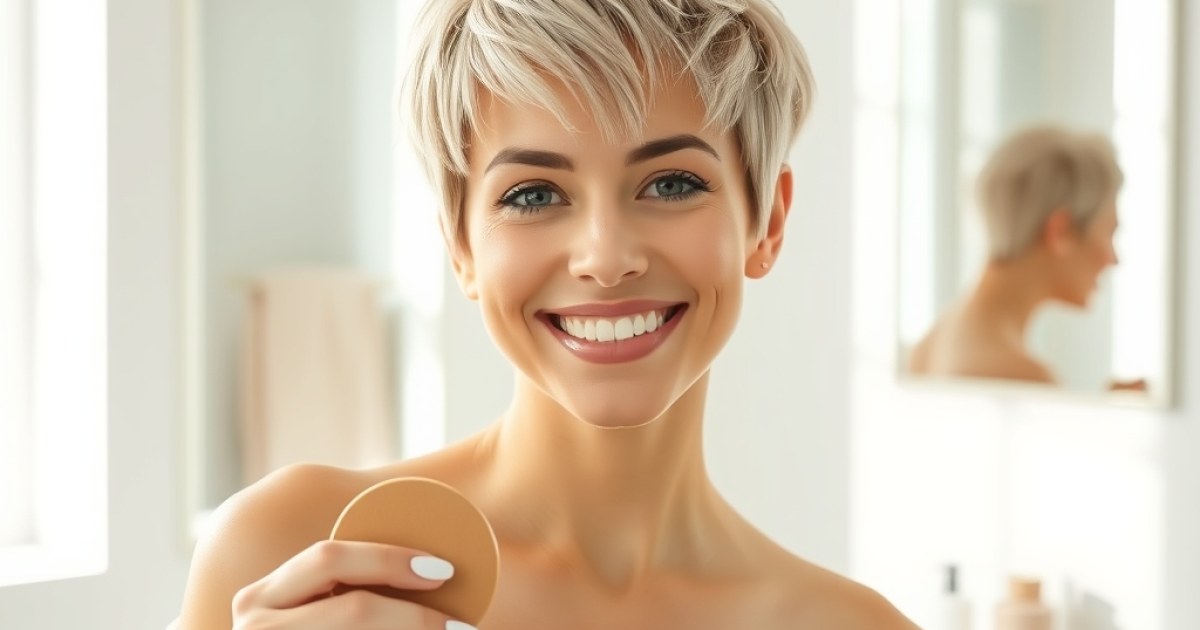
You know that moment when you’ve spent 20 minutes trying to get volume into your fine hair and it still falls flat by lunch? A pixie cut can be the answer—but only if it’s cut and styled right for thin hair. Here are 22 pixie ideas that actually make fine hair look thicker and take minutes to style at home.
Thin, fine hair needs a different approach than thick hair. It needs sharp lines, layered texture, and cuts that use every strand you have. Every pixie on this list was chosen for density: graduated backs, choppy crowns, blunt edges, and styling tricks like root-lift mousse and second-day texture spray that hold shape without weighing hair down.
You’ll get exact cut names to ask your stylist for, honest notes on which versions suit which face shapes and growth patterns, and a realistic styling routine for each one—most take under five minutes. No complicated blowouts. Just pixies that keep their shape until your next wash.
1. Soft, Effortless Texture
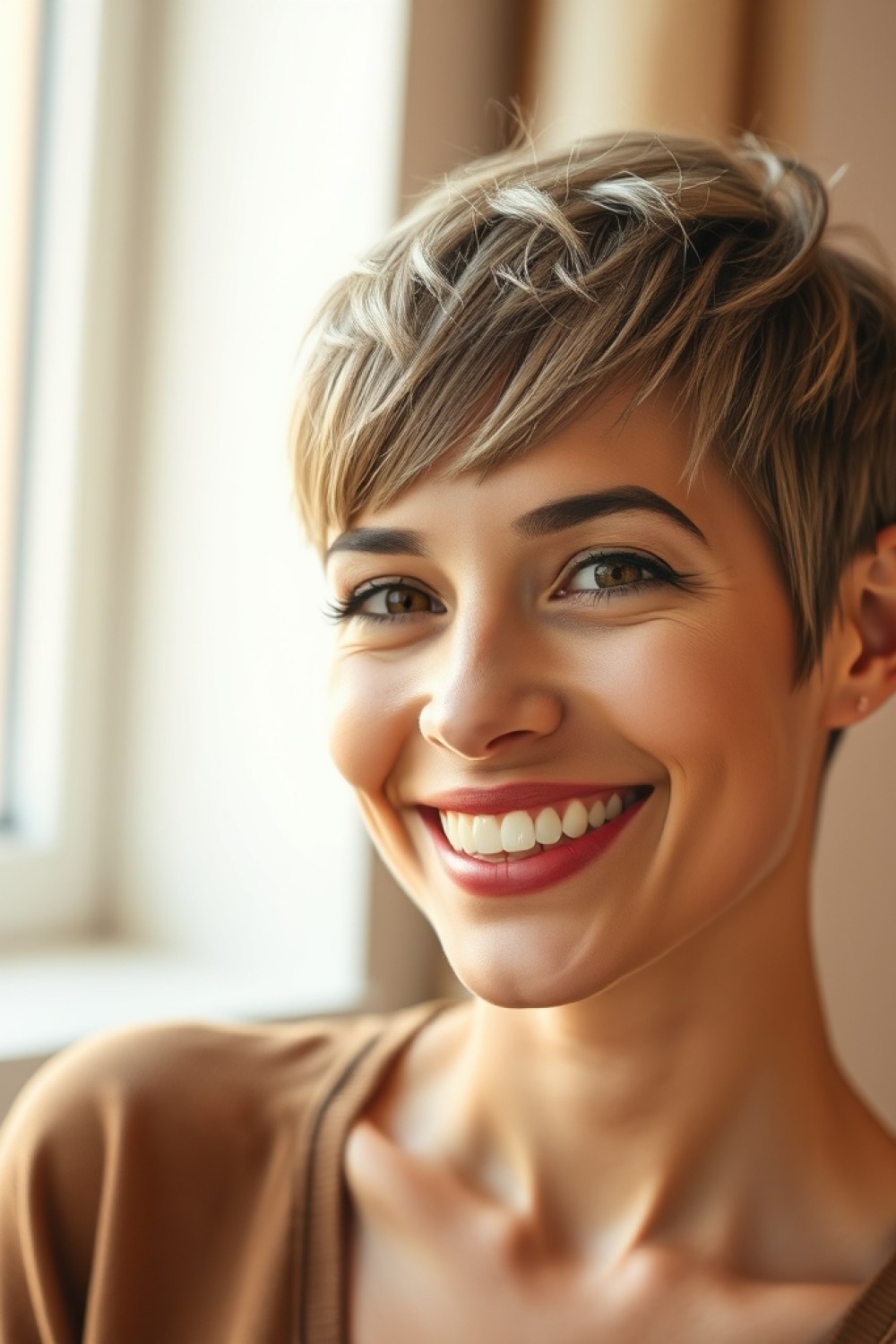
A textured pixie with piecey ends adds instant volume without looking overdone. Ask your stylist for point-cutting to create uneven lengths that catch light and mimic thickness. The goal is a soft, lived-in finish you can refresh in seconds each morning.
Fine hair responds best to lightweight products. Heavy creams and waxes drag strands down and undo the volume you just created, so keep everything matte and minimal.
How to Style It
- Rub a pea-sized amount of matte paste between your palms until it disappears.
- Scrunch into damp hair, lifting sections at the crown.
- Air-dry, then pinch the ends to define pieces.
2. Sleek and Polished Perfection

A sleek pixie with a deep side part creates an illusion of density because the hair lies flat and reflects light. The uninterrupted surface reads as fuller than a choppy finish, and the strong part line draws the eye along the length rather than across thin spots.
This look works best on naturally straight fine hair. Skip it if your hair tends to frizz or fights humidity, since any flyaway breaks the clean line.
How to Style It
- Apply a heat protectant to dry hair.
- Flat iron on low heat, gliding in one pass per section.
- Finish with a single drop of lightweight serum, smoothed over the surface only.
3. Undercut for Instant Lift
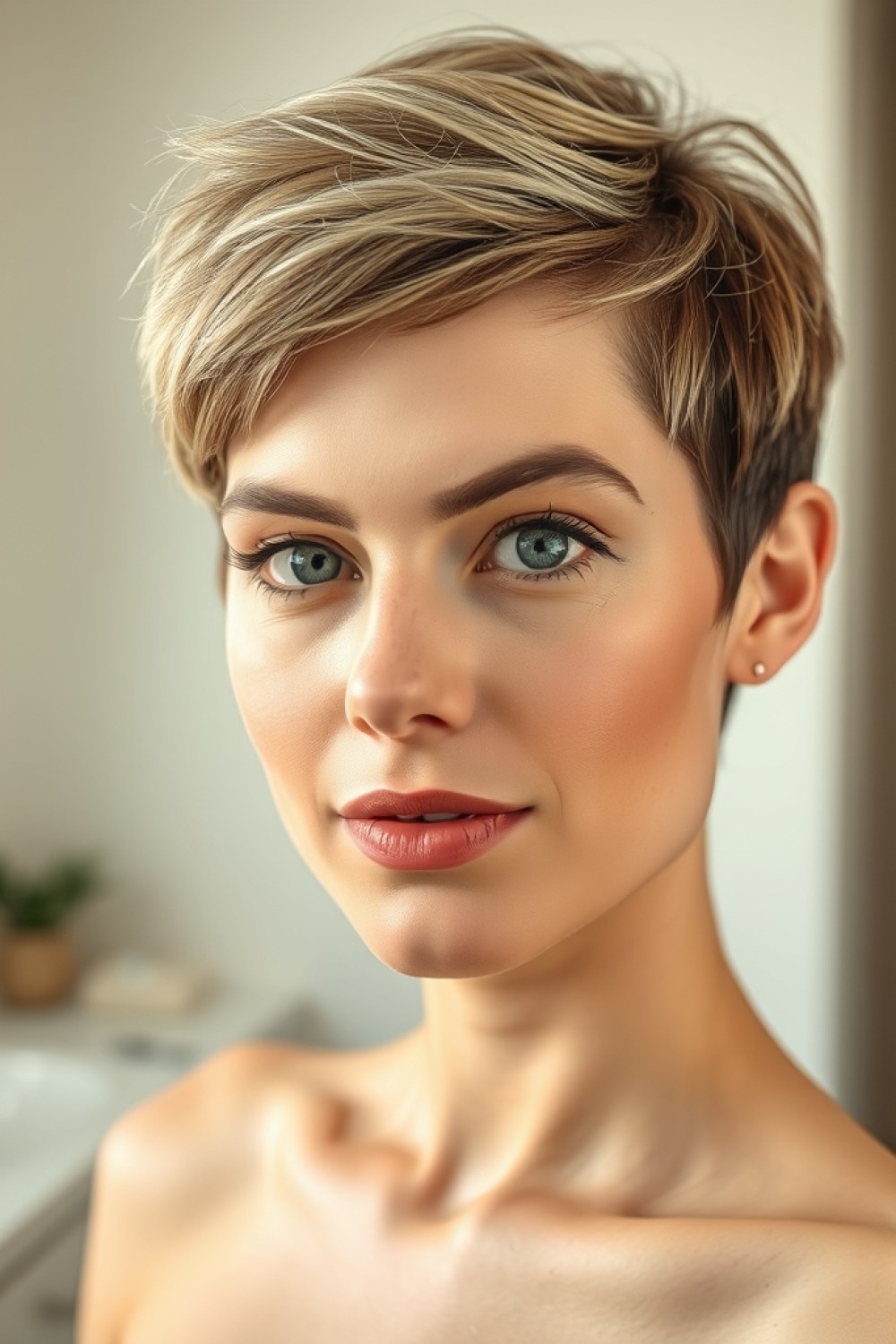
An undercut removes bulk from the sides and back, allowing the top layers to appear fuller by contrast. The shaved or clipped section also cuts drying time dramatically, which matters when you style at home daily.
It is a bold choice that requires frequent trims—every three to four weeks to keep the line sharp. Plan for that commitment before you sit in the chair.
How to Style It
- Spray root-lifting spray along the part line.
- Blow-dry the top section upward with a small round brush.
- Set with a light mist of flexible-hold hairspray.
4. Long Pixie with Face-Framing Layers

This grown-out pixie hits at the cheekbone, with layers that frame the face and add width where you want it. It is easier to style than a short crop because you can tuck it behind your ears or pin it back on lazy days.
The extra length also gives you room to experiment—clip it half-up, add a statement pin, or wear it loose and soft.
How to Style It
- Wrap 1-inch sections around a curling iron, holding for five seconds.
- Release and pull gently to relax the curl into a bend.
- Run fingers through to blend, then tuck one side behind the ear.
5. Short and Sweet with Baby Bangs
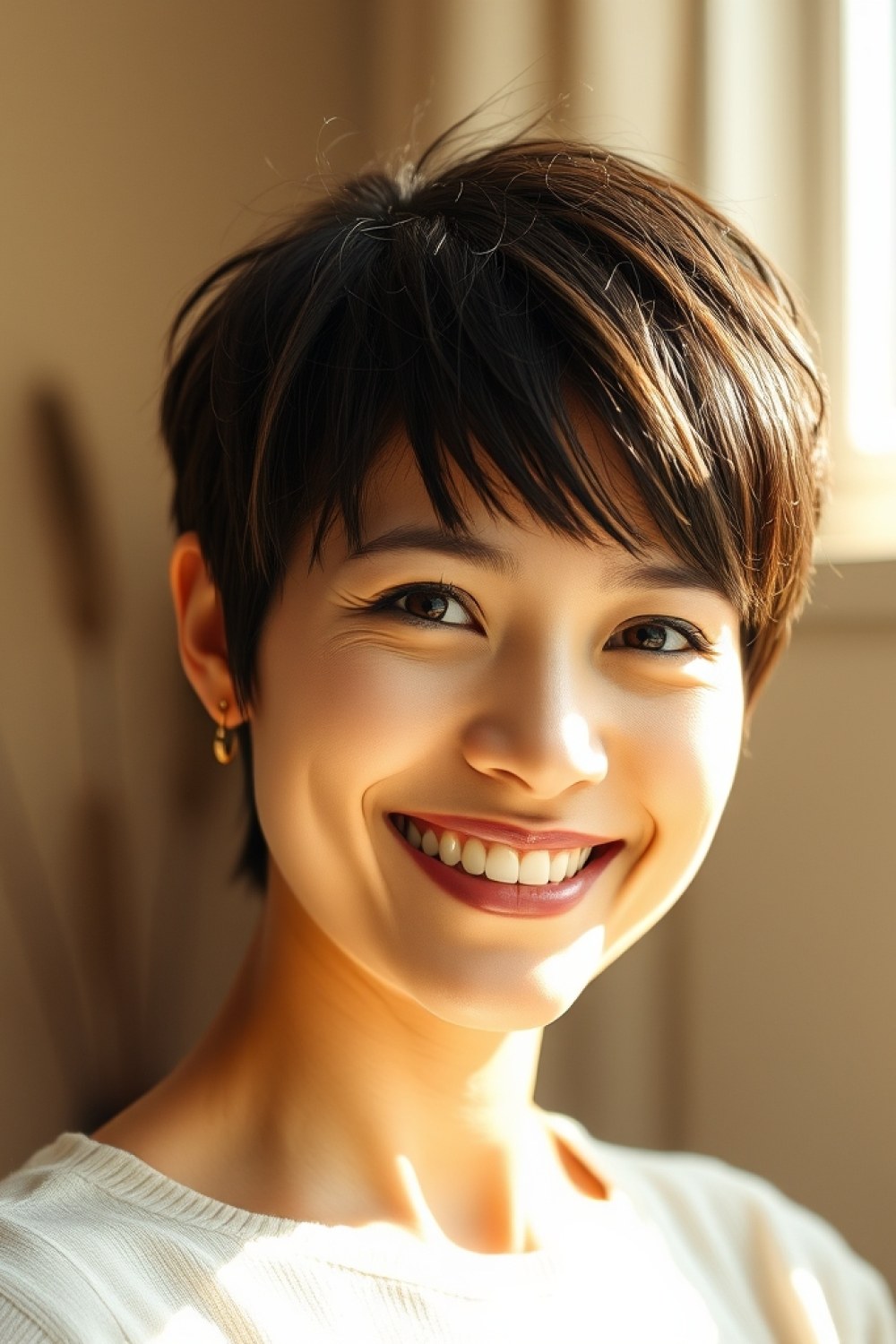
Baby bangs draw attention upward and make the crown look thicker by cutting a short, deliberate line across the forehead. Keep them textured rather than blunt—a solid straight fringe creates a heavy shadow that flattens the whole face.
This length grows out fast, so book a bang trim between full cuts to keep the line crisp.
How to Style It
- Blow-dry bangs side to side with a small round brush.
- Direct air from the roots forward to prevent separation.
- Press flat with a fingertip, then set with a light mist.
6. Choppy Layers for Maximum Volume
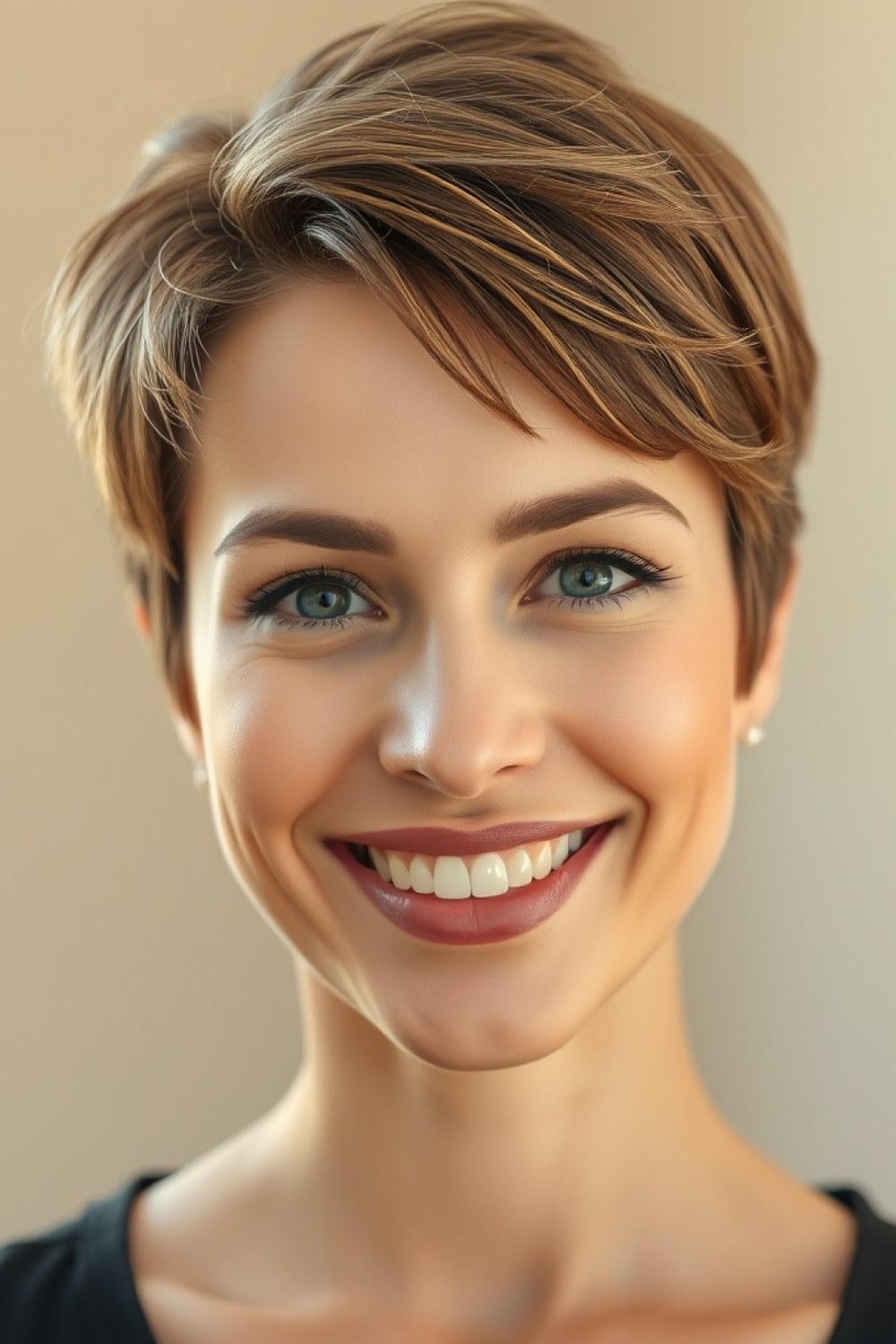
Choppy layers throughout create a sense of depth and movement, so the eye reads texture instead of thinness. Ask for slice-cutting rather than blunt cuts—your stylist slides the scissors through the hair to build soft, uneven ends.
This is the lowest-effort option on the list. A quick spray and a scrunch is genuinely all it takes, with no heat tools needed.
How to Style It
- Spray texturizing spray directly at the roots.
- Scrunch with your fingers, lifting as you go.
- Let it air-dry or hit it briefly with a diffuser.
7. Asymmetrical Angled Pixie
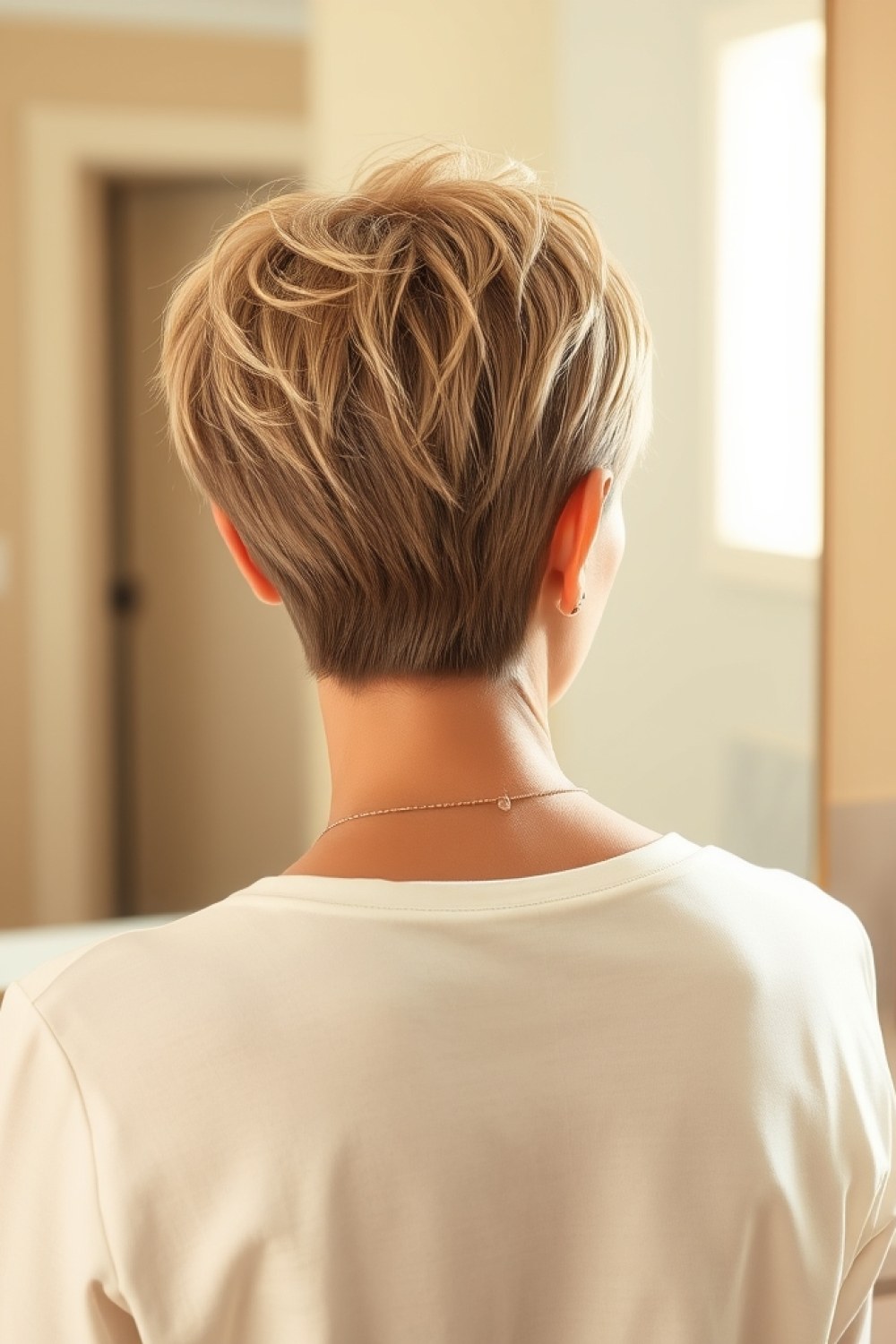
An asymmetrical angled pixie keeps length at the front and crops one side short, so the diagonal line does the work of adding visual density. Fine hair reads thicker when weight sits at the fringe and tapers toward the back.
It suits square, oval, and heart-shaped faces, and the uneven line draws the eye up and across instead of staring at sparse spots. Ask your stylist for a soft, wearable angle—not a hard wedge.
How to Style It
- Run a flat iron on low to medium heat down the longer side, angling the iron slightly forward for a smooth sweep.
- Skip heat on the short side entirely; warm hair flattens faster.
- Rub a pea-sized dab of matte wax between fingertips and pinch the short side into definition.
- Finish with a light mist of flexible-hold hairspray.
8. Pixie with Micro Fringe
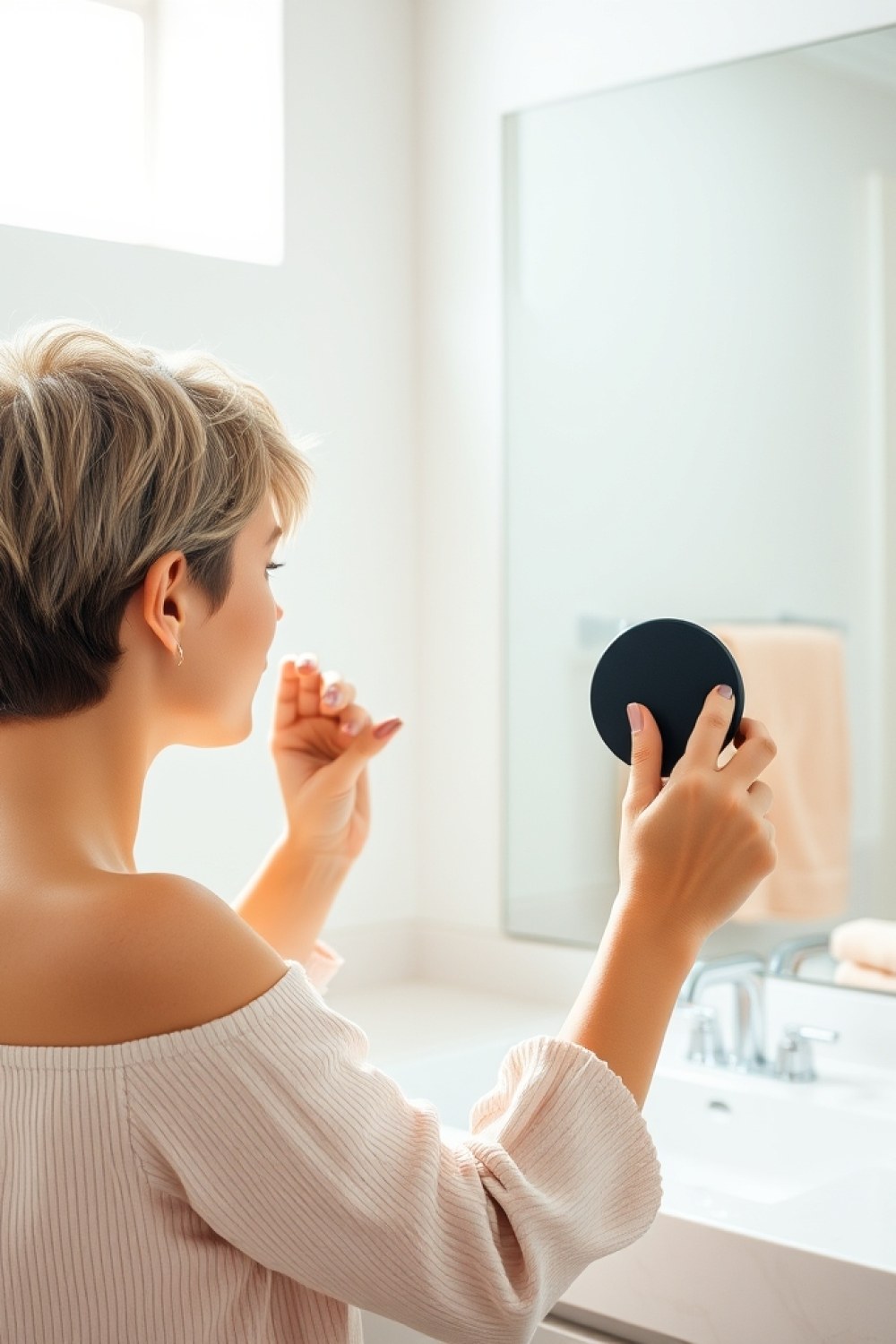
A micro fringe stops above the brows and instantly modernizes a pixie while pulling attention to your eyes rather than your hairline. Because it’s so short, it never separates or looks stringy the way a longer, thin fringe can.
Pair it with a tapered back and slightly longer top for contrast. It’s one of the lowest-maintenance fringes you can wear with fine hair.
How to Style It
- Warm a rice-grain amount of pomade or styling paste between your fingers.
- Press and swipe the fringe downward and slightly forward, working from root to tip.
- Keep the sides and back untouched so all the definition stays at the front.
9. Voluminous Curly Pixie
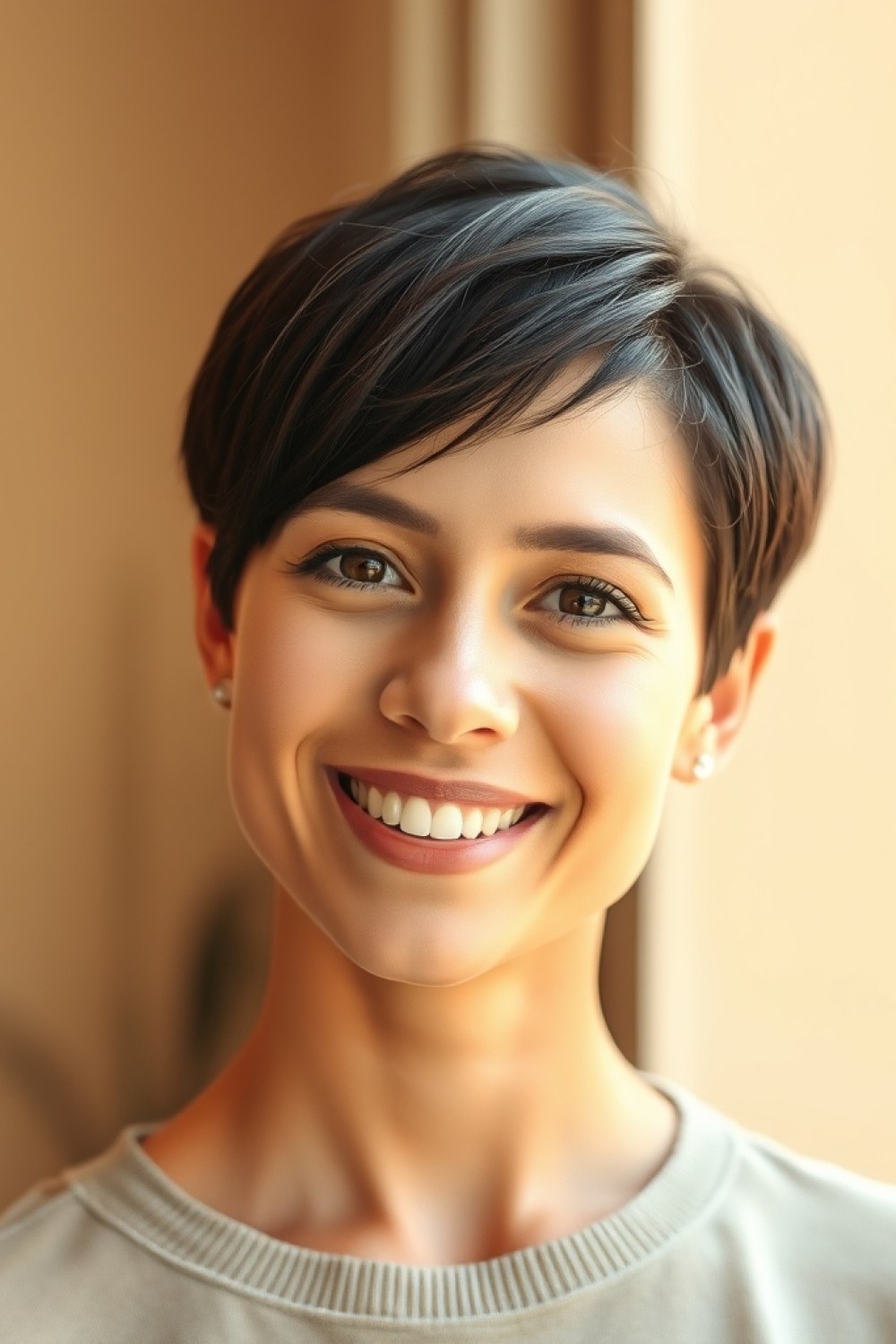
Curls naturally create bulk, which is a real advantage when your strands are fine. A curly pixie is shaped around your curl pattern so each ringlet sits where it looks fullest.
Ask for a dry cut—curls spring up as they dry, so cutting wet hair can leave you shorter than expected. Layers remove weight while keeping the round shape.
How to Style It
- Apply a curl-enhancing cream to soaking-wet hair, raking it through with your fingers.
- Scrunch upward from the ends toward the scalp to form clumps.
- Diffuse on low heat and low speed, pausing near the roots to lift them.
- Once dry, shake your head gently instead of combing to keep definition.
10. Piecey Textured Crop
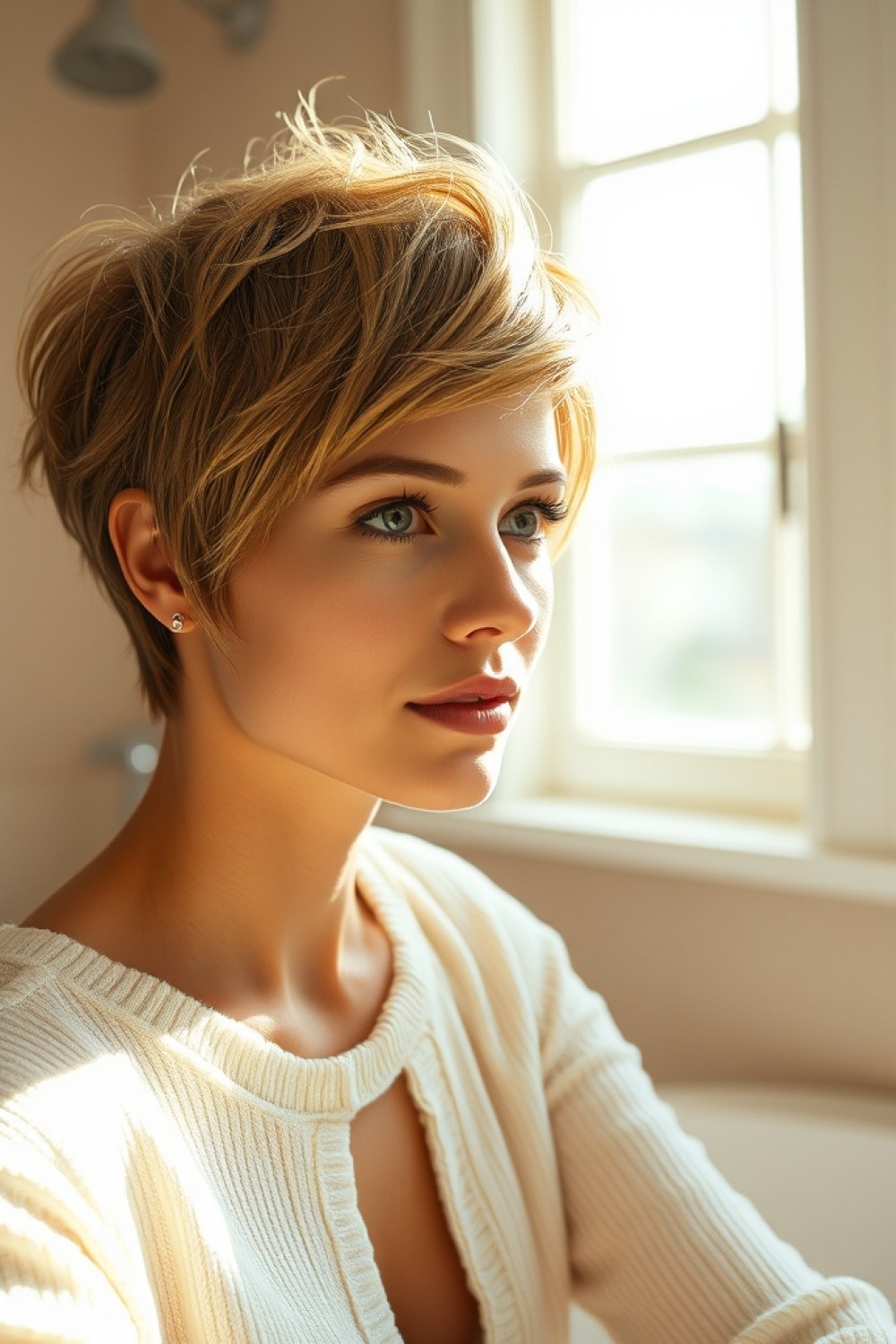
A textured crop is a touch longer on top and shorter at the sides, with visible separation between pieces. That broken-up texture is what makes fine hair look like it has more strands than it does.
It’s a deliberately undone, lived-in shape—great for anyone who hates a polished, slick finish and wants something they can rough up with their hands.
How to Style It
- Spray sea salt spray evenly through damp hair, root to tip.
- Scrunch lightly and let it air-dry completely.
- Rub your fingertips over your scalp to break up any stiff pieces.
- Pinch small sections between thumb and forefinger to define texture.
11. Slicked-Back Pixie for a Modern Edge
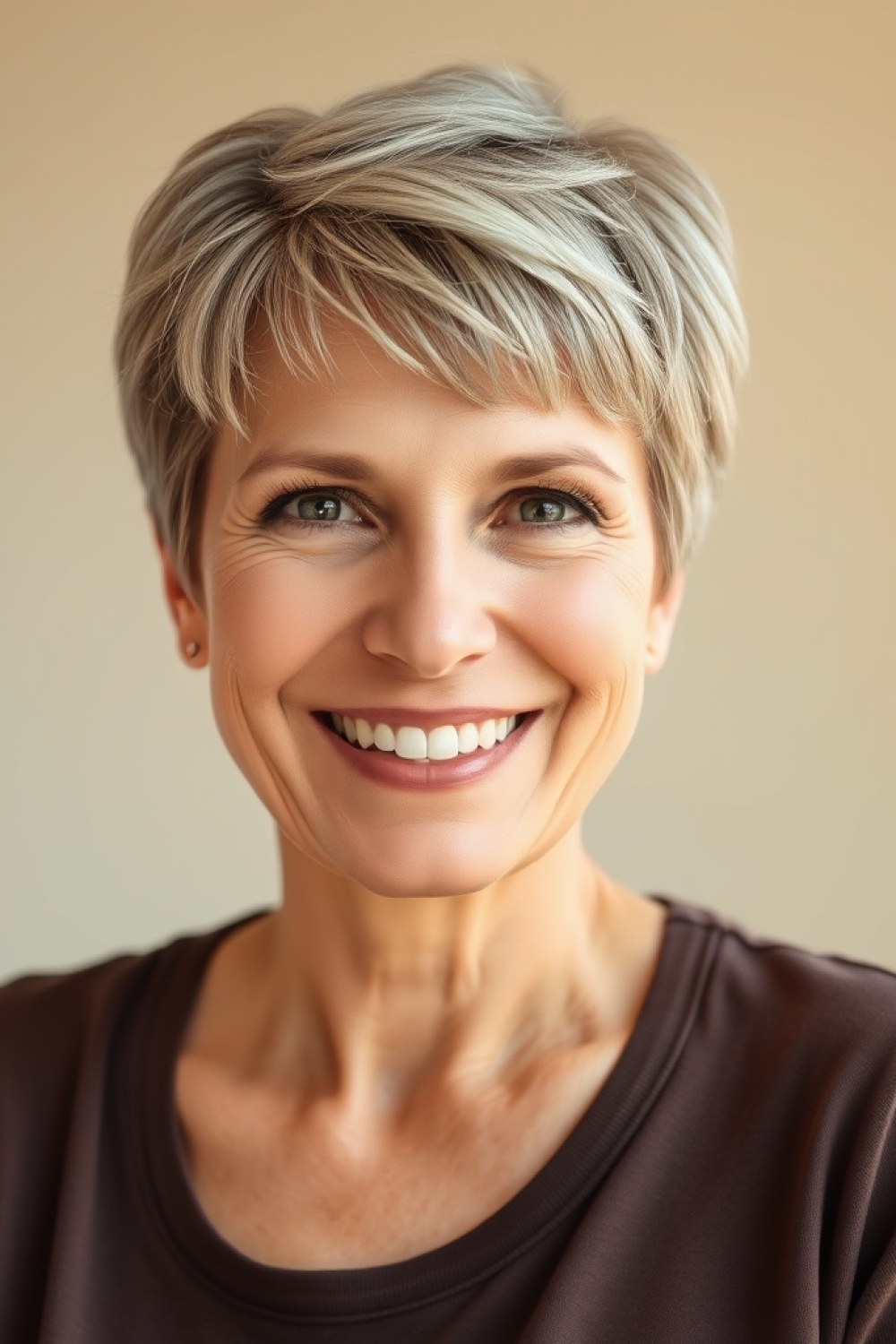
Slicking a pixie back with gel or pomade creates a sleek, wet-look finish that frames and emphasizes the face. On fine hair it also hides thin spots, since every strand lies flat and intentional.
It’s the fastest style here—two minutes on a busy morning—and it looks sharp whether you’re at the office or out for the evening.
How to Style It
- Work a strong-hold gel through damp hair, starting at the front hairline.
- Comb everything back with a fine-tooth comb, pressing close to the scalp.
- Smooth the sides and tuck ends behind your ears if you like.
- Let it set without touching; add a little pomade to tame any flyaways.
12. Pixie with Hidden Undercut

A hidden undercut shaves a slim section at the nape beneath the top layers. With hair down, it looks like a completely ordinary pixie. Swept up or pinned, the shaved patch appears—so you get an edgy detail without a full commitment.
It also removes bulk at the neck, which can help fine hair sit better and reduce that flat, heavy feeling at the back.
How to Style It
- Rub a small amount of texture paste through the top for grip and lift.
- Push the hair up and back with your fingers to expose the undercut when you want it visible.
- For a normal day, simply comb the longer layers over the shaved area.
- Touch up the nape with a little gel if you like a clean edge.
13. Tousled Bedhead Pixie
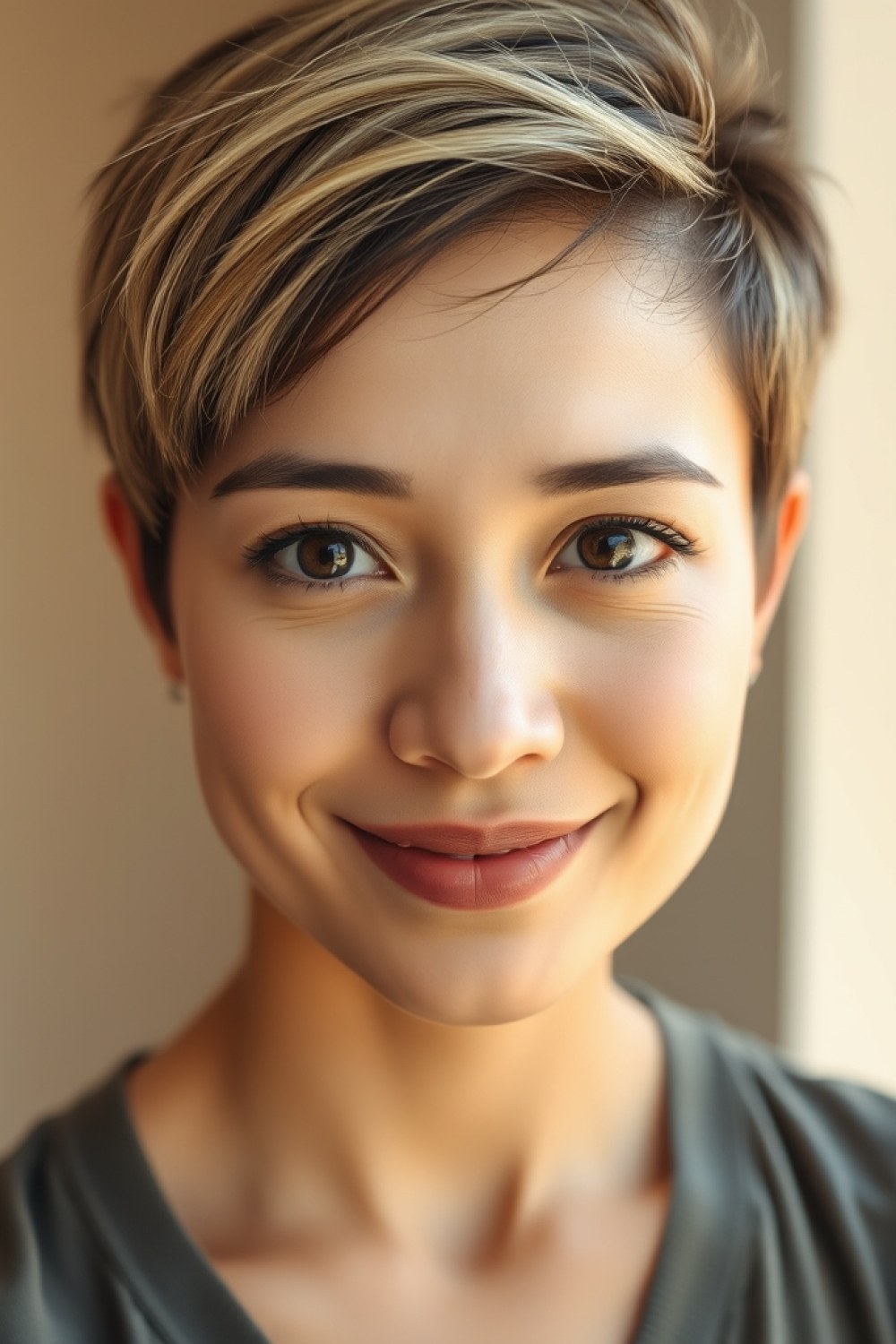
A bedhead pixie is deliberately imperfect: piecey, slightly lifted, like you rolled out of bed looking good. For fine hair this is liberating — there’s no part to get straight, no smoothness to chase. The messier it looks, the better it works.
You do need product to keep the texture from collapsing by noon. Dry shampoo at the roots plus a light texturizing spray gives grip without weight.
How to Get the Look
- Spray dry shampoo directly at the roots, then rub in with fingertips for 30 seconds to build grip.
- Mist a texturizing spray over the mid-lengths and ends, holding the can 8–10 inches away.
- Scrunch and push hair in random directions with your fingers — no comb, no brush.
- Avoid touching it once you leave the house; oil from hands flattens fine hair fast.
14. Classic Tapered Pixie
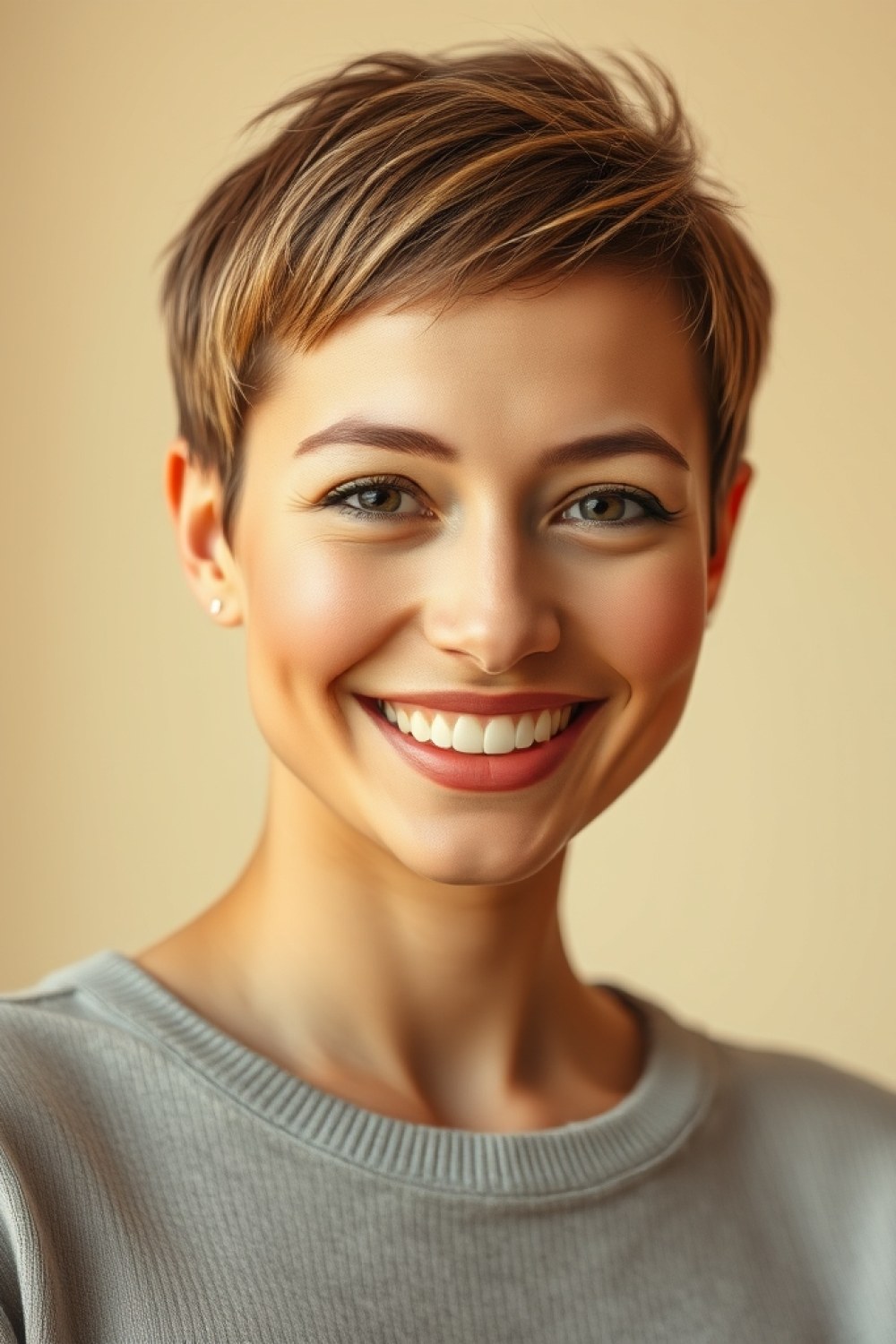
A tapered pixie is cut close at the nape and around the ears, then gradually lengthened toward the crown and fringe. That gradient is what creates the shape — it looks intentional even on day three without a wash.
Maintenance is genuinely low: a trim every 4–6 weeks keeps the neckline clean, and you can stretch it longer if you don’t mind a softer edge.
How to Style It
- Apply a pea-sized amount of light styling cream to damp hair, working from roots to ends.
- Blow-dry the top section with a vent brush, lifting hair up and away from the scalp for height.
- Dry the sides and nape downward, pressing flat with the brush to define the taper.
- Finish with a light-hold hairspray, holding the can 12 inches from your head.
15. Pixie with Wispy Bangs
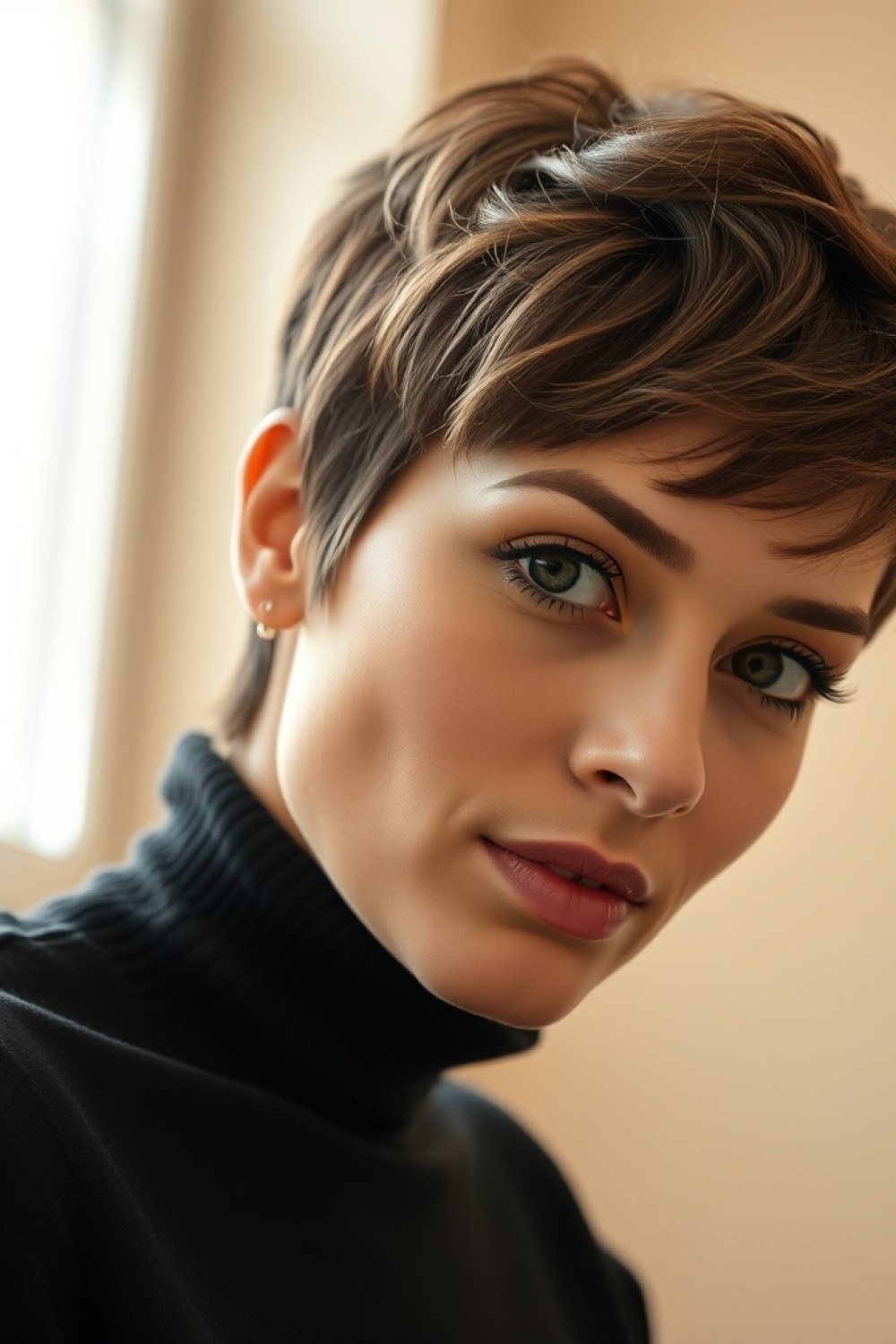
Wispy bangs are cut with a point-cutting technique so the ends look feathered rather than blunt. On fine hair, this matters: a solid fringe looks heavy and separates into gaps, while wispy bangs sit soft and blend into the layers behind them.
They add a romantic frame to the face without stealing volume from the crown — usually the first place fine hair goes flat.
How to Style Them
- Blow-dry bangs first, while hair is still damp, using a small round brush.
- Roll the brush upward and outward, curving the bangs away from your forehead, not flat against it.
- Hold the shape for 5 seconds with cool air from the dryer to set it.
- Tap a tiny amount of texturizing paste between your fingertips and pinch the ends for separation.
16. High-Volume Rooted Pixie
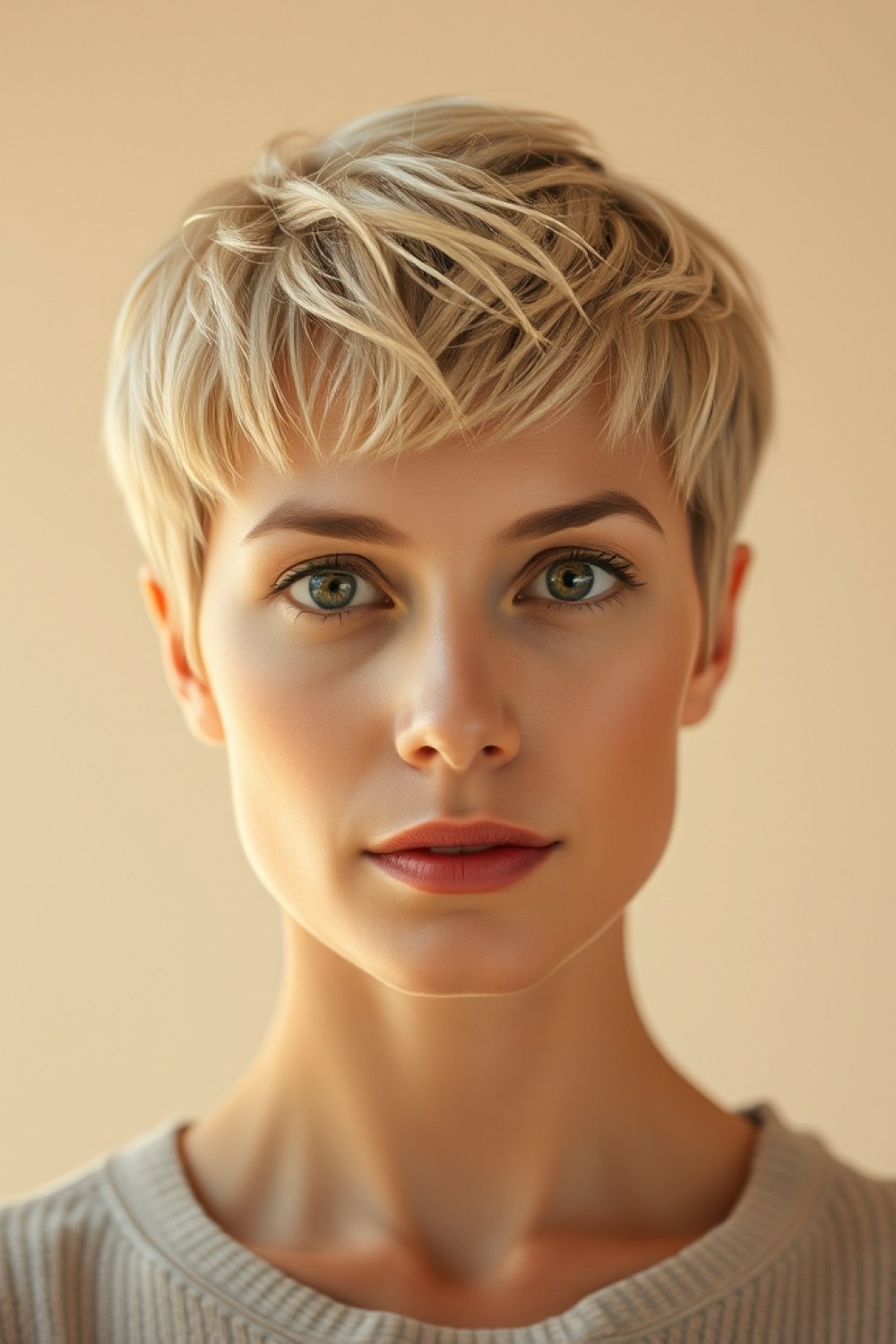
This cut stacks short layers at the crown, so the hair naturally sits up instead of clinging to the scalp. It’s the most direct answer to fine hair that falls flat within an hour of styling.
The lift isn’t just about product — the cut itself removes the weight that drags fine hair down. Layers are kept short and graduated at the top, longer toward the sides.
How to Build the Height
- Apply a golf-ball-sized amount of volumizing mousse to damp roots, massaging it in with fingertips.
- Flip your head upside down and blow-dry the roots on medium heat for 2–3 minutes.
- Stand upright and use a round brush to lift the crown sections upward while drying.
- Set with a blast of cool air, then mist a flexible-hold spray at the roots only.
17. Edgy Spiky Pixie
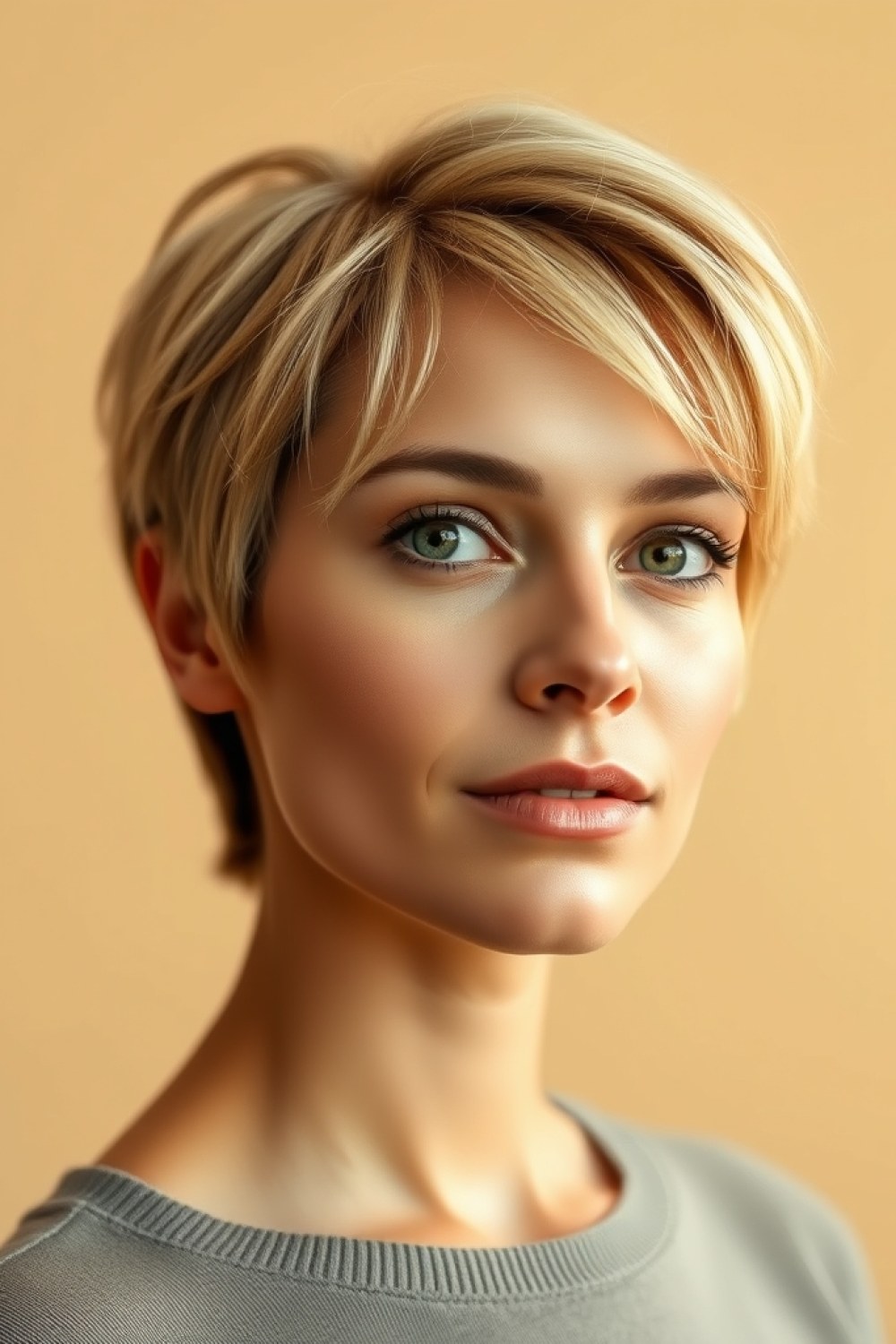
A spiky pixie uses short, choppy layers cut with a razor or point-cut technique so the ends taper to sharp points. Strong-hold products then push those points upward for a punk-inspired finish.
It’s a fun look for a night out, and fine hair actually holds spikes well because each section is light enough to stand on its own.
How to Spike It
- Start with dry hair — spikes won’t hold on damp strands.
- Squeeze a dime-sized amount of hair glue or strong-hold gel onto your fingertips.
- Twist small sections — about half an inch — upward and outward, working front to back.
- Let it set for a minute without touching, then spot-fix any drooping pieces with extra gel.
18. Pixie with Balayage Highlights
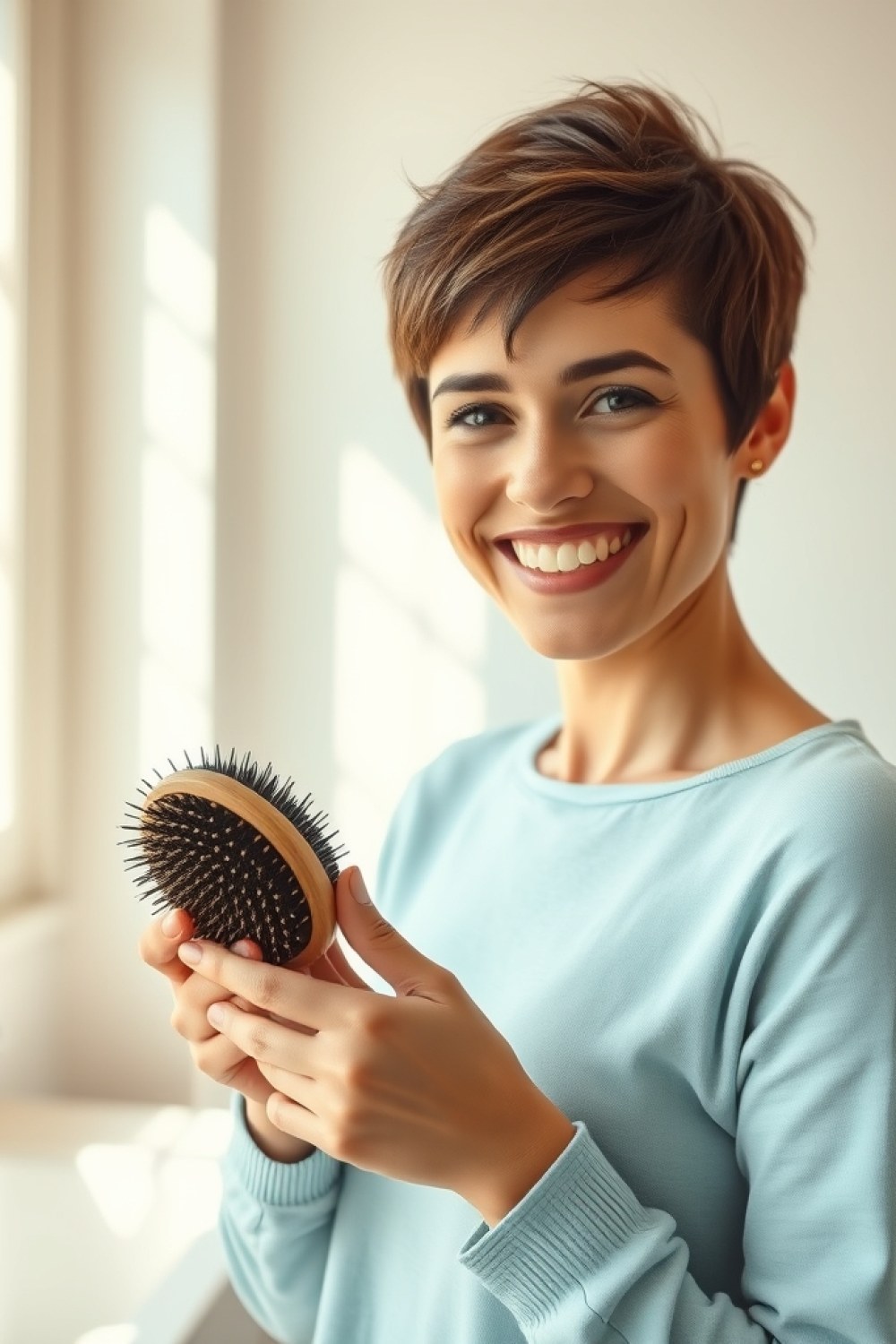
Balayage on a pixie is hand-painted, so the color follows the movement of the cut rather than sitting in stripes. Fine, woven highlights create depth that makes hair read as thicker — chunky highlights do the opposite and expose the scalp.
The catch is upkeep: lightened hair on fine strands is more fragile, so your routine has to protect it.
How to Keep the Color Looking Good
- Ask your colorist for fine, woven highlights, and bring a photo of what you mean.
- Wash with a color-safe, sulfate-free shampoo no more than every other day.
- Use a hydrating hair mask once a week, focusing on mid-lengths and ends.
- Book a gloss or toner refresh every 6–8 weeks to stop highlights turning brassy.
19. Soft Curled Pixie
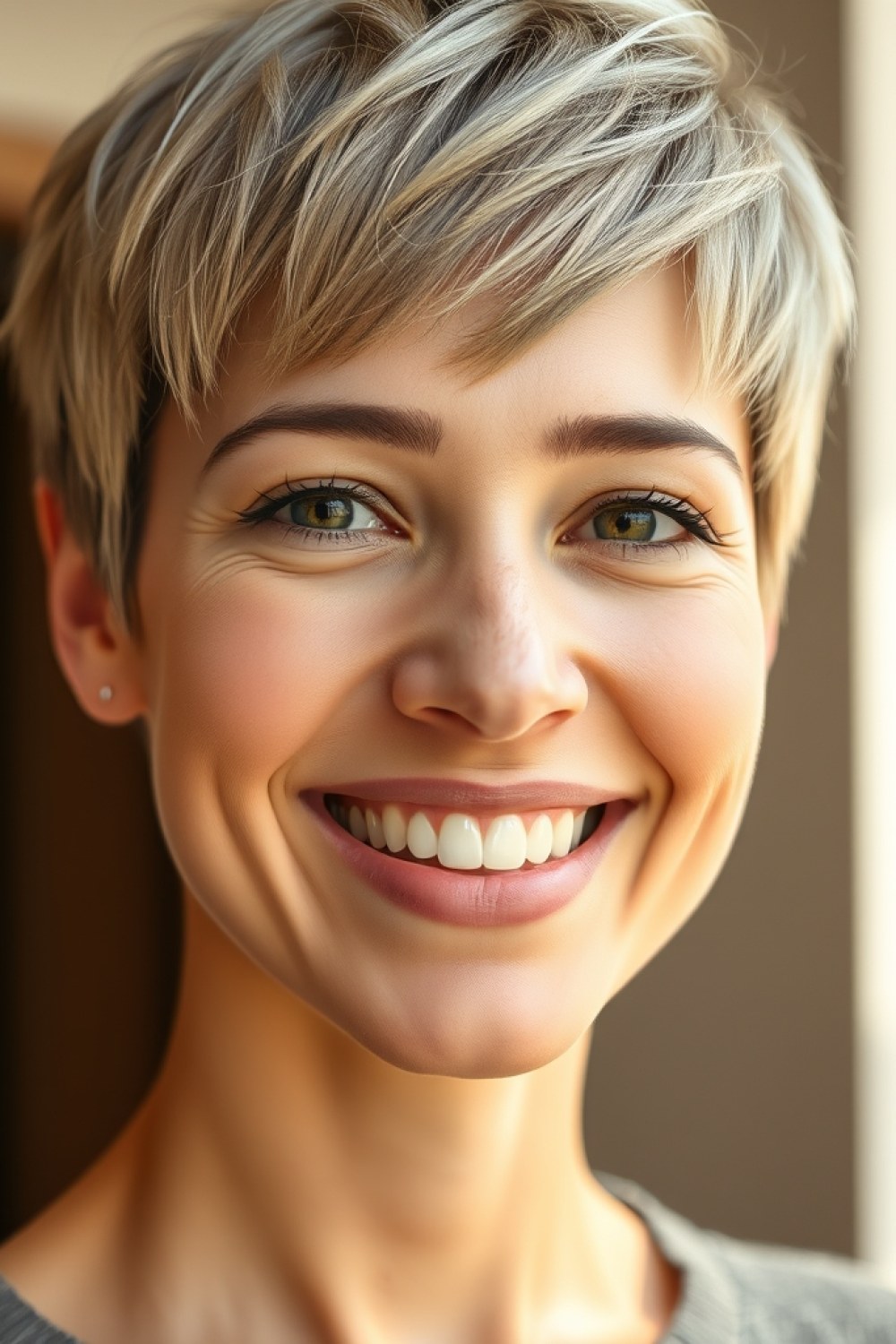
Thin hair rarely holds a curl well, so the trick is small sections and a low heat setting. A 1/2-inch barrel is narrow enough to wrap fine strands tightly, giving each curl real staying power without looking dated. Curling away from the face lifts the front and keeps the shape soft rather than helmet-like. Work in passes of six to eight curls, then move on.
Once the whole head is done, don’t brush the curls out — that’s where fine hair collapses. Finger-comb gently, tipping your head upside down for a second to shake in air. Set with a light-hold spray held about ten inches away so the mist settles rather than soaks.
How to Style It
- Section dry hair into small 1/2-inch pieces and clamp each with a 1/2-inch iron on low heat, holding five seconds.
- Alternate the curl direction on each side so the finished shape looks natural, not uniform.
- Let the curls cool completely — at least two minutes — before touching them.
- Finger-comb through, tip your head upside down, and finish with a light-hold hairspray.
20. Pixie with Feathered Ends

Feathering is a cutting technique, not a styling one, and it’s the fastest way to fake density at the perimeter. A stylist uses a razor to slice the ends into fine, uneven points so the edge breaks up light instead of forming one solid line. That softness reads as fullness because no single blunt edge shows how little hair is actually there. Ask for feathered ends only — razor the lengths too and fine hair goes fuzzy.
At home, the look depends on direction. Blow-drying ends outward rather than under creates the airy flick that keeps the cut from sitting flat. It adds about two minutes to your routine and holds all day on most fine textures.
How to Style It
- Ask your stylist for feathered ends worked with a razor, and mention if your hair is very fine so they lighten their touch.
- On damp hair, wrap a small round brush around the ends and point the dryer downward, flicking the wrist outward.
- Work section by section, front to back, keeping the nozzle aimed down the hair shaft to smooth the cuticle.
- Finish with a light texture mist at the roots only — skip the ends, which are already airy.
21. Two-Tone Pixie for Depth

Colour can do what product can’t: it makes thin hair look denser. Keeping the roots darker and lifting the ends two or three shades lighter creates a shadow effect that reads as volume, because the eye picks up contrast and depth instead of a flat sheet of one tone. It’s also the most forgiving grow-out a pixie can have — dark roots are deliberate here, not neglected.
Maintenance is genuinely low. You can stretch a salon visit to eight or ten weeks without looking unkempt, and a colour-depositing conditioner tops up the lighter ends in between. Choose a shade close to your natural tone so any fading stays in family rather than turning brassy.
How to Make It Last
- Ask your colourist for a root shadow with ends two to three shades lighter, and request a gloss rather than full bleach.
- Wash with a sulphate-free shampoo to slow colour fading on fine hair.
- Use a colour-depositing conditioner once or twice a week, leaving it on five minutes in the shower.
- Book a toner refresh at six weeks instead of a full colour appointment.
22. Pixie with Side-Swept Bangs
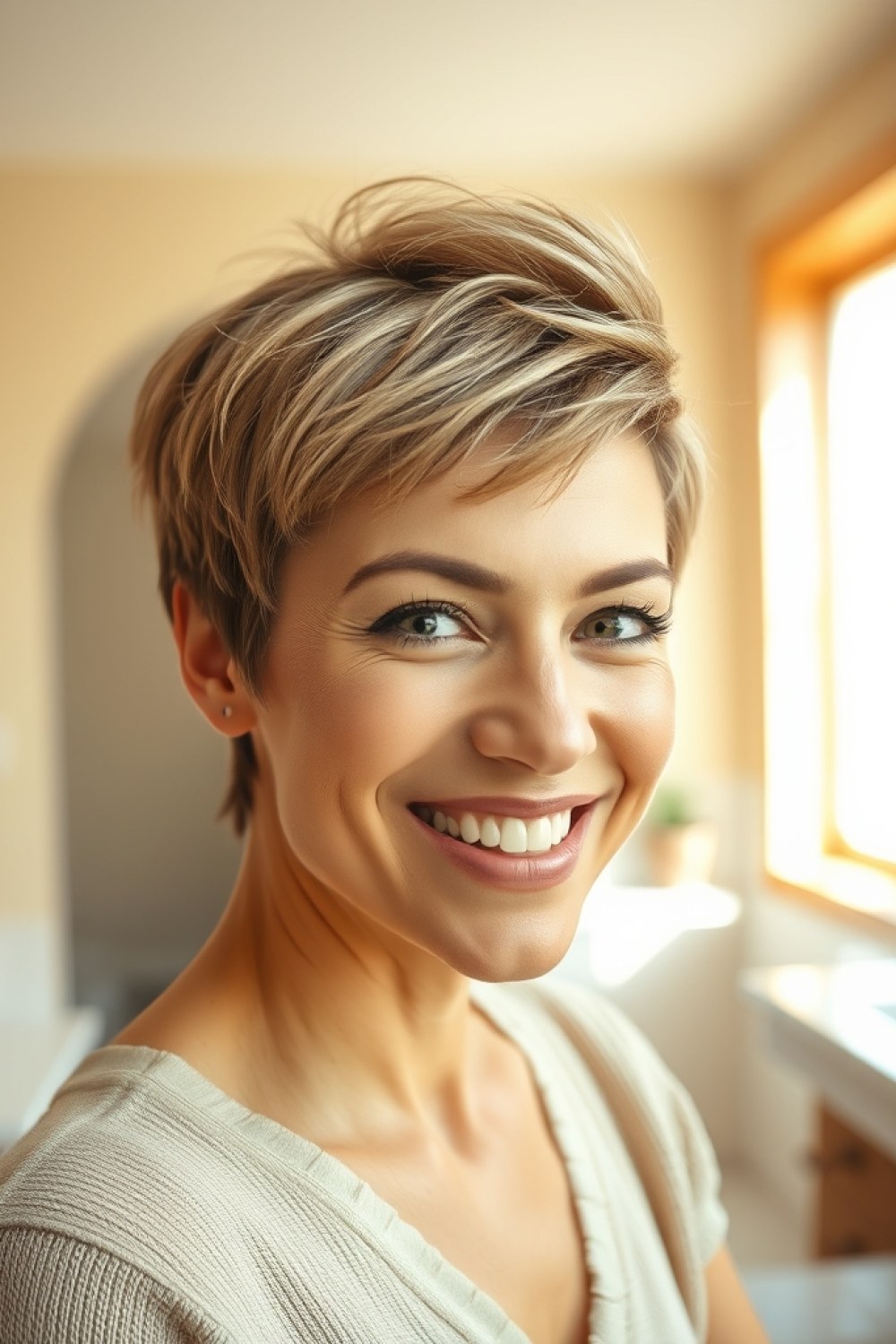
Side-swept bangs give a fine pixie two things it usually lacks: asymmetry and lift at the front. Because the weight sits on one side, the other side opens up and the forehead area looks fuller without any teasing. This cut suits a longer pixie best — there needs to be enough bang length to sweep across and tuck behind the ear if you want.
Styling is a matter of direction, not skill. Bangs set in the direction you dry them and stay there, so blow-drying is what trains the sweep. A round brush adds a gentle bend at the ends, which stops thin bangs from hanging straight and limp.
How to Recreate It
- On damp bangs, position the round brush under the hair and aim the dryer in the direction you want the sweep to fall.
- Roll the brush slightly as you pull through to create a soft bend, holding a few seconds at the ends.
- Push the bangs across your forehead with your fingers while they’re still warm, then let them cool in place.
- Keep the rest of the pixie as is — no extra product on the bangs, which will only weigh them down.
Quick Questions
Will a pixie cut make my thin hair look thinner?
Not if it’s cut correctly. A good pixie removes the length that drags fine hair flat and lets your stylist build layers close to the scalp where volume actually shows. The cuts that backfire are blunt, one-length crops and anything cut with a razor on fine strands — both leave clean horizontal lines that expose the scalp. Ask for point-cut or slice-cut texture at the crown, a slightly tapered nape, and sides that sit just long enough to look soft rather than sparse.
How often do I need to trim a pixie cut?
Plan on every 4–6 weeks for a standard pixie. If you have an undercut, a skin fade, or a very short crop, 3–4 weeks keeps the shape from growing out unevenly. The reason is simple: an inch of new growth at the nape is invisible on long hair but completely changes the silhouette of a pixie, and the crown layers start sitting flat instead of lifting. If you’re stretching trims to save money, ask your stylist for a cut with softer edges — grown-out hard lines look intentional on some shapes but messy on most.
What products are best for styling a fine hair pixie?
Stick to lightweight formulas: a volumizing mousse or root-lift spray applied to damp roots, a texturizing or sea salt spray for grip through the mid-lengths, and a matte paste or fiber cream for piecing the ends. Heavy gels, butters, and shine serums sit on top of fine hair and pull it down within an hour. Dry shampoo is your quiet workhorse — a few sprays at the roots gives fine hair instant grit and lift, even on freshly washed day-one hair.
Can I style a pixie cut without heat tools?
Absolutely. On damp hair, mist in texturizing spray, scrunch with your hands, and let it air-dry while you do your makeup — then finger-shape the front and pull a few pieces forward for definition. If the roots dry flat, a 30-second blast with a blow-dryer aimed upward at the crown, no brush needed, is enough. Air-dried pixies read a little more piecey and tousled, which usually suits fine hair better than a slick, over-worked finish anyway.
Is a pixie cut suitable for a round face?
Yes, if you choose the right shape. Height at the crown and shorter, tapered sides elongate a round face; width at the sides does the opposite, so keep the weight off your ears and cheekbones. A long, swept fringe or an asymmetric front section breaks up the roundness more effectively than a straight-across fringe. Bring photos to your consultation and ask your stylist to show you where the volume will sit before they start cutting.
How can I make my pixie look thicker?
Start at the roots: apply a root-lifting spray or mousse to damp hair and blow-dry the crown upward with your head tipped forward. Highlights matter more than most people expect — two or three shades of dimension break up the flat surface of fine hair and make the shape read as fuller. Keep conditioner to the ends only, skip heavy leave-ins, and use dry shampoo at the roots on non-wash days. A little matte paste rubbed between your fingertips and worked into the tips adds visible texture, which is often mistaken for thickness.