
18 Short Bob Hairstyles for Thin Fine Hair


Wondering whether a short bob can actually make thin, fine hair look fuller? Yes — if the cut keeps density at the ends and you skip the heavy products that flatten it. Here are 18 short bob hairstyles that do the work for you, with the exact cutting and styling details to ask for.
The mistake most fine-haired women make is asking for a layered, thinned-out bob that removes the very weight holding the shape. A blunt or softly graduated cut keeps every strand working for you, so the perimeter reads dense instead of wispy. We’ll cover where to place length, whether bangs help, and which textures actually lift fine hair.
You’ll also get the real-life styling routine: rough-dry upside down, a nickel-sized amount of mousse — never a palmful — and a blast of cool air at the roots to set volume that lasts past lunch. Screenshot the cuts that suit your density and face shape, then hand your stylist the exact words for what you want.
What You’ll Need to Style a Fine-Hair Bob
- Volumizing mousse or root-lift spray (nickel-sized amount)
- Lightweight texture spray — not heavy pomade or wax
- Small round brush plus a fine-tooth comb for the perimeter
- Blow dryer with a concentrator nozzle and a cool-shot button
- Sectioning clips to work in thin, manageable layers
- Dry shampoo for grip and second-day lift at the crown
1. Blunt Chin Bob

A one-length cut landing at the jaw or just below is the most reliable way to make fine hair read thicker. Every strand reaches the same point, so there’s no wispy taper to expose scalp. Ask for zero texturizing and a clean, blunt line — then blow-dry with a round brush, curving the ends slightly under for a solid, dense-looking edge.
Why it works: Blunt perimeters keep the full weight of your hair at the hem, so the ends look packed rather than see-through.
Pro tip: Point your blow-dryer downward along the cut line as you round-brush; lifting the nozzle frays the edge and undoes the density you just built.
2. French Girl Bob

This softly curved, chin-to-jaw length has an air-dried finish and a slightly messy fringe — effortless, never over-styled. The trick is a subtle undercut of invisible layers only near the crown for lift, while the silhouette below stays solid. Style with a salt-free texture mist on damp roots, scrunch, and let it dry for that lived-in fullness.
Why it works: Crown-only layering lifts the top without thinning the ends, and salt-free formulas add grip without the crunch that reveals sparse strands.
Pro tip: Skip sea-salt sprays entirely — the drying minerals roughen fine cuticles. A sugar-based mist gives the same beachy hold with far less brittleness.
3. Micro Bob

Cut at cheekbone or higher, the micro bob is a secret weapon for very fine hair because shorter strands can’t stretch and look stringy. Keep the perimeter soft-blunt and add a tiny pinch of volume powder at the crown. It dries in five minutes, and the shorter length makes hair spring up rather than lie flat.
Why it works: Less length means less weight pulling downward, so your natural root lift finally has a chance to show.
Pro tip: Tap volume powder only at the crown, never near the front hairline — powder there reads as gray flecks on fine, lighter hair.
4. Jaw-Length Lob-Bob Hybrid
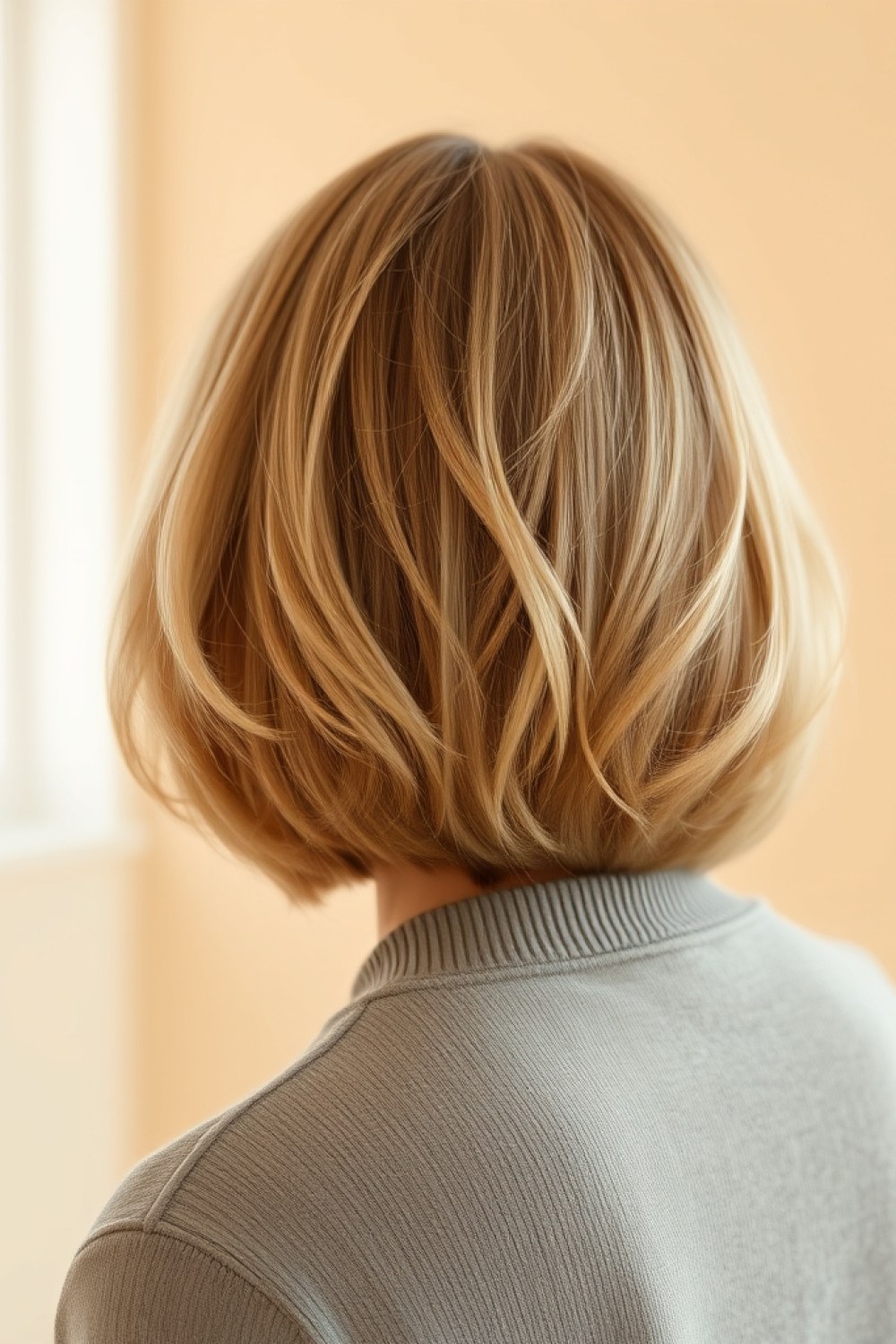
A collarbone-grazing bob with a deep side part is ideal if you’re nervous about going short. The asymmetric part lifts one side at the root and creates the illusion of a fuller, wider shape. Blow-dry roots in the opposite direction of your part, then flip back — it holds all day.
Why it works: Training roots against their natural fall builds memory, so the lift stays put instead of collapsing by lunchtime.
Pro tip: Set the flip with a five-second blast of cool air at the root before you style the rest — cool air locks the lift in place.
5. Curtain Bangs Bob

Face-framing curtain bangs break up a thin hairline without a heavy fringe covering the forehead. Ask for them to start at the cheekbone so they blend into the bob, then style with a medium-barrel iron turned away from the face — the outward curl adds width exactly where fine hair looks narrow.
Why it works: A center-parted curtain opens up the forehead and pushes volume outward at the temples, the thinnest-looking zone on fine hair.
Pro tip: Keep bangs long enough to graze your cheekbones; anything shorter springs up and separates, exposing the sparse hairline you’re trying to disguise.
6. Invisible-Layer Bob

This is the modern version of layering: layers are cut internally, not on the surface, so the outline stays blunt and thick while the inside moves. Only ask for this with a stylist who uses point-cutting on interior sections — visible layers on fine hair always look thinner at the ends.
Why it works: Interior layers remove bulk from the middle so the shape swings and moves, while the intact surface line keeps the bob looking dense.
Pro tip: Book a stylist who shows you a photo of invisible layering before you commit — if they describe “choppy” or “textured” layers, that’s a different, thinning cut.
7. Boxy Bob

The boxy bob holds a square silhouette with softly rounded corners, keeping weight along the sides of your hair rather than tapering it away. Your stylist cuts with minimal elevation, so both sides fall straight down past the jaw in one continuous line. It’s a structured, deliberate shape that doesn’t rely on density you don’t have.
Why it works: Fine hair loses visual bulk the moment it’s tapered, so leaving the sides blunt and square builds a solid frame around your face instead of wispy ends.
Pro tip: This is the best short bob for round faces with fine hair — the width at the sides balances your shape rather than piling volume on top, which just elongates and thins.
8. Blunt Bob With Curtain Bangs

This cut pairs the density of a one-length blunt bob with the softness of a parted, face-framing fringe. Keep the bangs long — nose-length rather than brow-length — and resist the urge to thin them out. The fringe moves with your face instead of sitting flat against it, which reads far thicker than a skimpy, eye-length fringe.
Why it works: A single blunt line across the bottom gives the illusion of density, while curtain bangs break up the front without exposing a sparse hairline the way a heavy straight fringe can.
Pro tip: Wrap your bangs around a Velcro roller for five minutes while you do your makeup — it lifts the root of the fringe, which is usually the flattest part of fine hair.
9. Baby Bob With Micro Bangs

A baby bob grazes the cheekbone and finishes with a soft, wispy micro fringe that sits high on the forehead. This is a delicate, vintage-leaning shape that suits fine hair because the short length stops your ends from stretching thin. It’s cropped, but it never looks severe when the fringe is cut with a light hand.
Why it works: Short lengths keep what density you have concentrated near the scalp, and a wispy micro fringe adds a soft frame without demanding fullness you don’t have at the hairline.
Pro tip: Fine hair often has a sparse hairline, so ask for the fringe to be cut slightly thicker than feels natural — it’ll settle within a week. A drop of lightweight pomade on fingertips smooths flyaways without weighing the fringe down.
10. Lob With Graduated Back
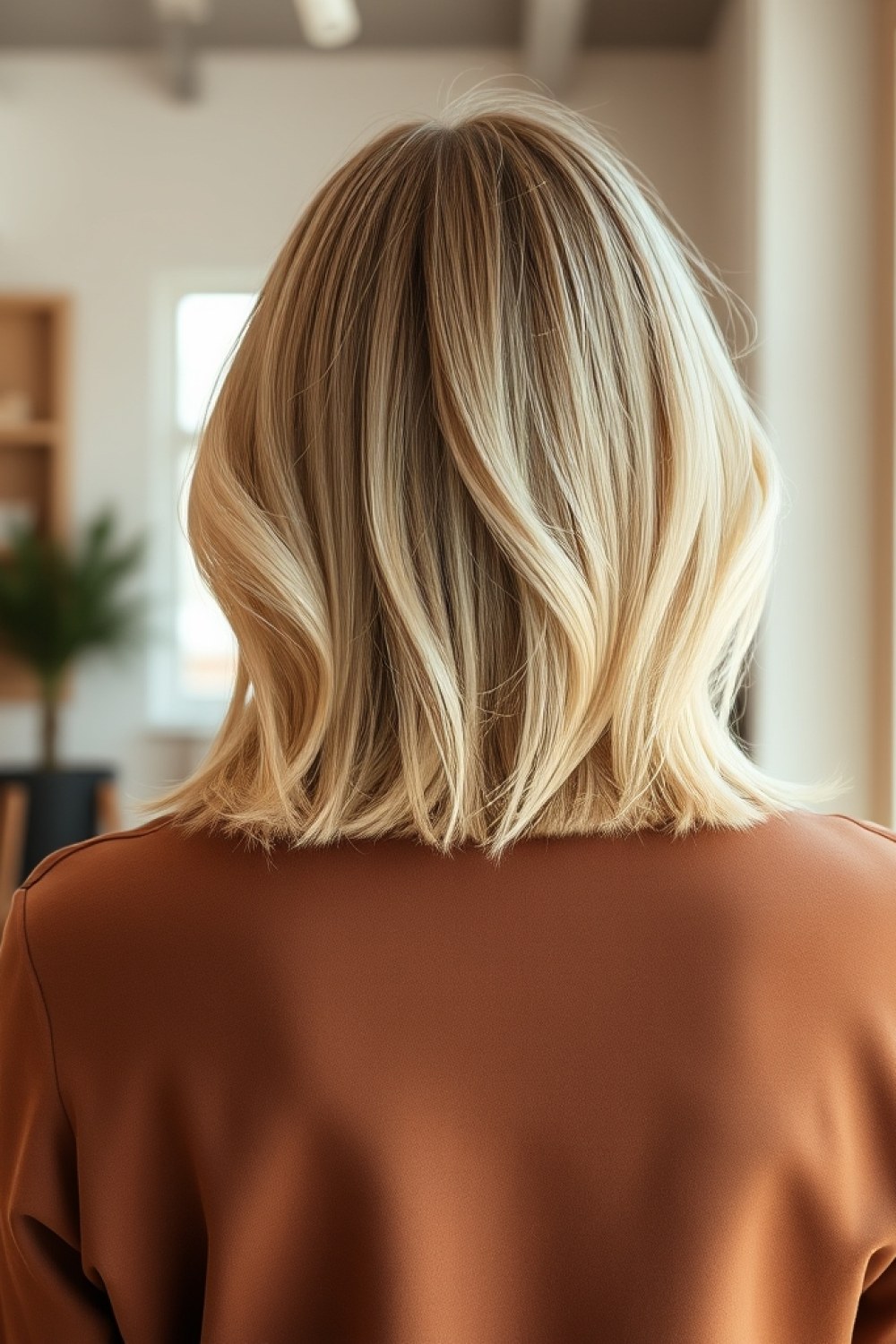
The lob with a graduated back is slightly shorter at the nape and longer at the front, creating natural stacked volume where fine hair usually looks flattest. It’s a clever way to fake density at the back of your head without piling on layers everywhere. You get movement and lift exactly where you need it, and length you can still tie back.
Why it works: Graduating the back stacks strands on top of each other near the occipital bone, so several thin layers combine into one thicker-looking section.
Pro tip: Ask for graduation stacked no higher than the occipital bone — any higher and the crown goes thin. Blow-dry with your head tipped forward for extra lift at the back.
11. Fluffy 90s Bob
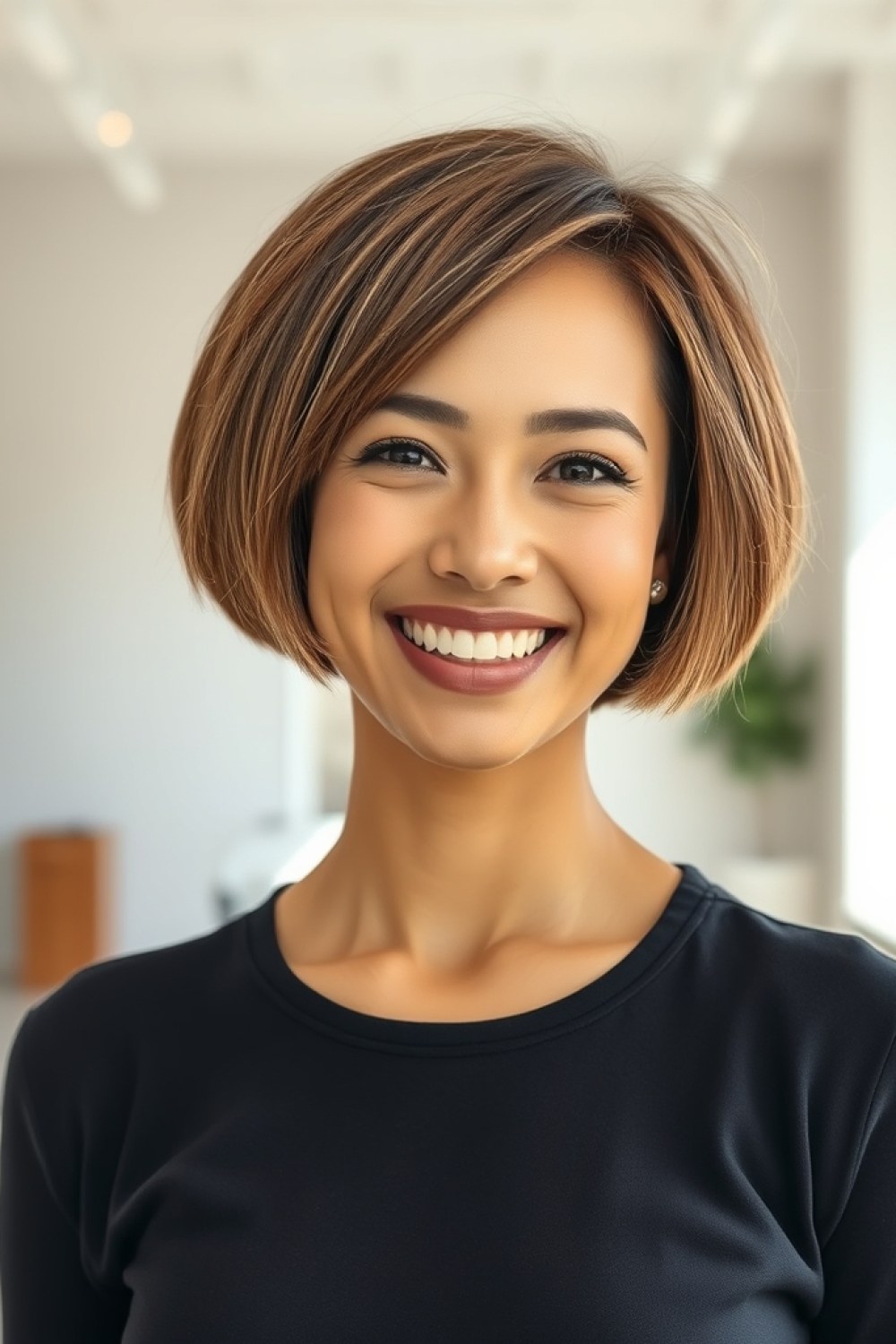
Rounded, bouncy and brushed up, the fluffy 90s bob is the cut that made fine hair look thick on every magazine cover of the decade. The shape is soft and full at the sides with a rounded crown, styled rather than left to its own devices. It’s playful, feminine and surprisingly easy to build volume into at home.
Why it works: The whole silhouette is engineered around volume at the sides and crown, so your hair reads as fluffy rather than flat — styling does the heavy lifting, not your natural density.
Pro tip: Style with a large round brush and a root-lifting mousse, then flip your head upside down and blast the roots with cool air to set the volume before you leave the bathroom.
12. Angled Bob

The angled bob dips gently from a shorter back to a longer front, landing just past the chin at the jawline. The 10–15 degree angle is subtle — enough to feel modern, but not the steep diagonal that instantly dates a cut. It’s a flattering, wearable option that grows out gracefully between appointments.
Why it works: The slight angle creates a built-in sweep that looks fuller than a straight-across line, and the longer front pieces frame fine features without overwhelming them.
Pro tip: Blow-dry from underneath with your head tipped forward, lifting the roots as you go — maximum lift with barely any product, and the angle stays sharp for the whole day.
13. Wet-Look Bob
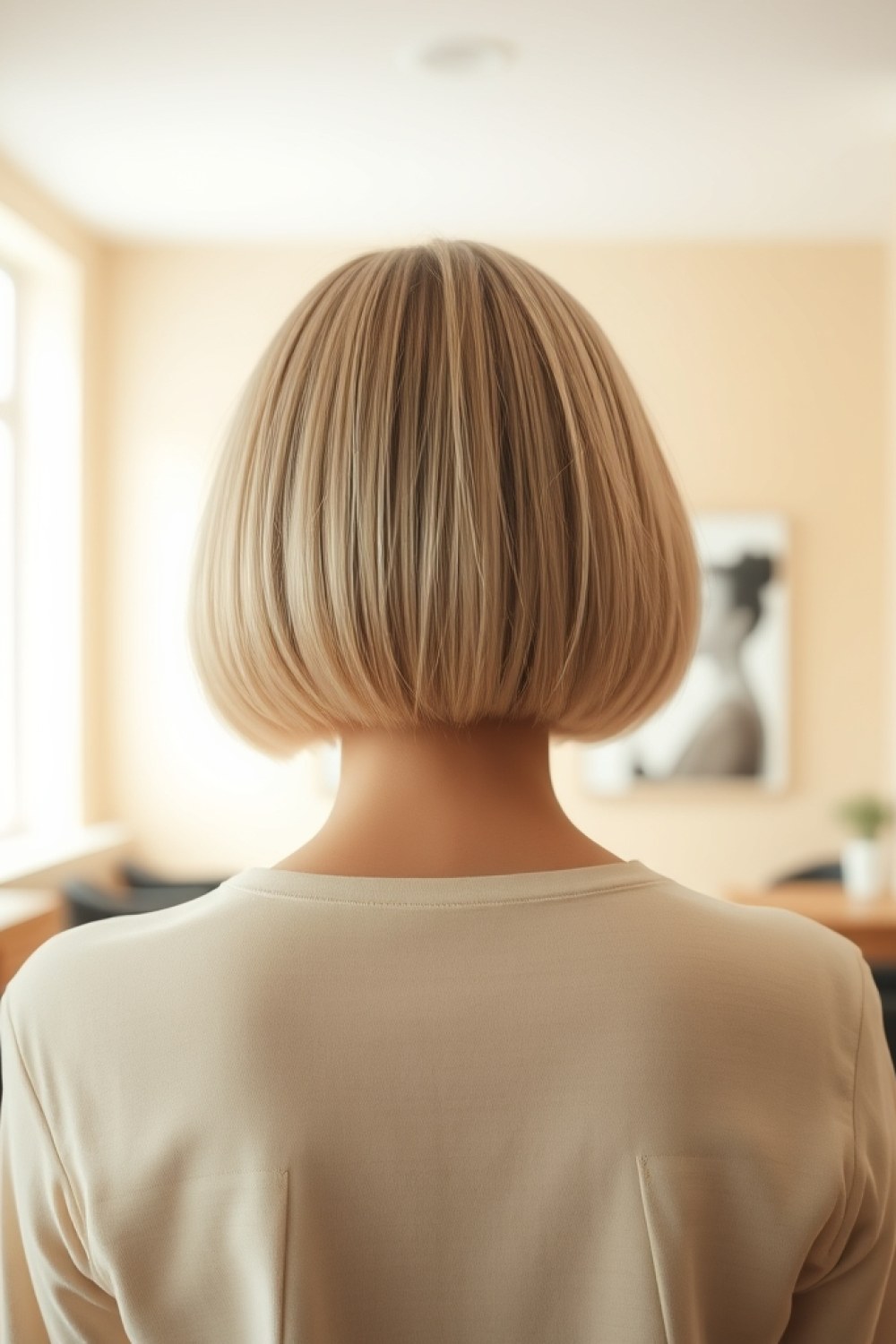
The wet-look bob turns fine hair’s slickness into a feature, not a flaw. Rough-dry damp hair with a wide-tooth comb, raking through a leave-in gel or styling cream from mid-shaft to ends, then comb straight back off the face. Let it air dry most of the way before finger-combing to finish.
Why it works: Smooth, separated strands create depth through reflection, so the eye reads sheen and definition rather than gaps in density.
Pro tip: If your scalp shows easily through the front, skip this one or keep volume at the crown instead of combing everything flat back.
14. Textured Flipped Bob
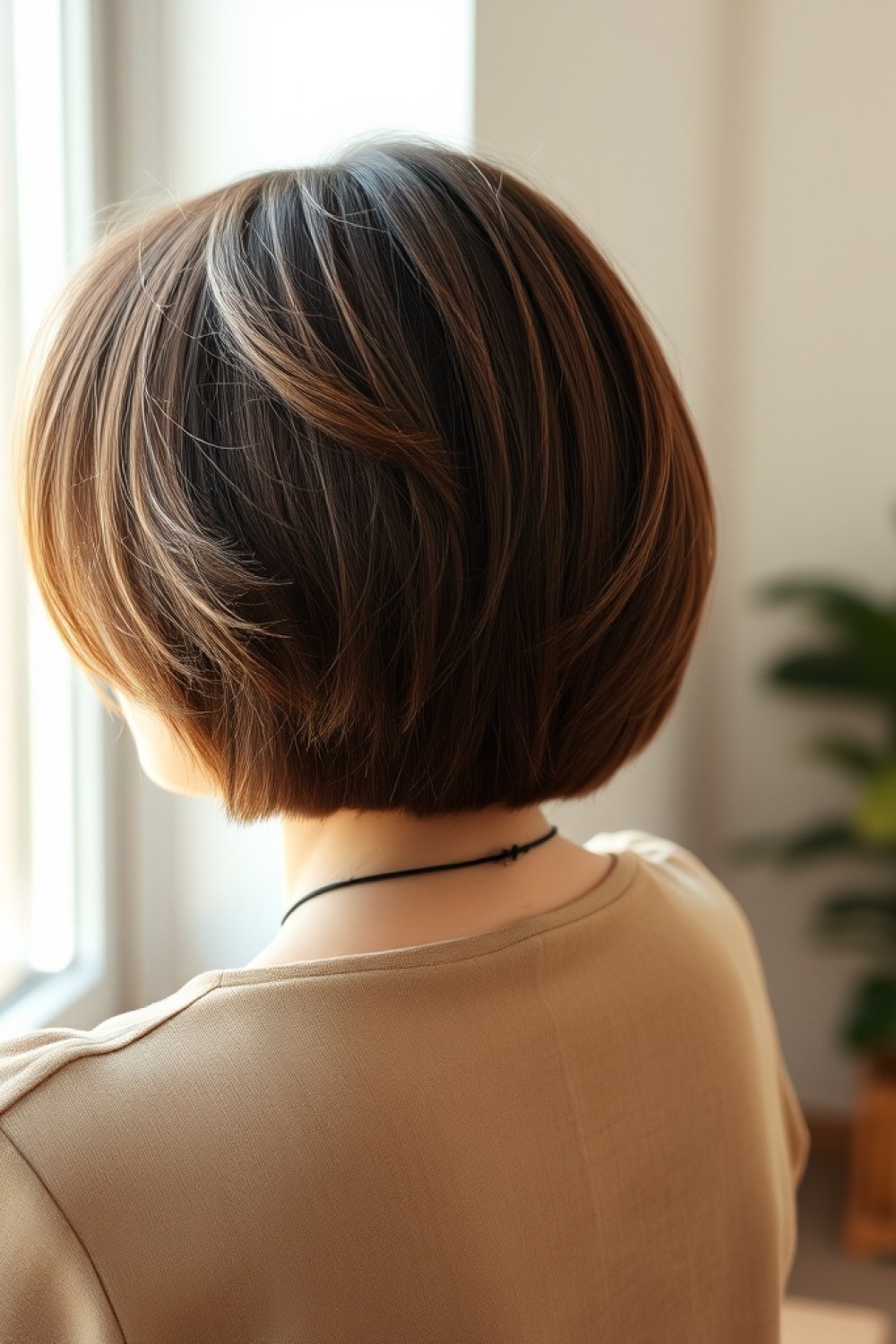
A flipped bob sends ends outward instead of tucking them under, adding width exactly where fine cuts look narrowest. Take a 1-inch iron, clamp the last two inches of each section, and rotate your wrist away from your face as you pull through. Work in small sections, flipping alternate pieces for movement.
Why it works: That outward bend builds horizontal width at the jawline, so the bob reads styled and deliberate rather than simply short.
Pro tip: This is the fastest style in your rotation — five minutes on day-old hair beats thirty minutes of curling under on freshly washed fine hair that won’t hold.
15. Asymmetric Bob
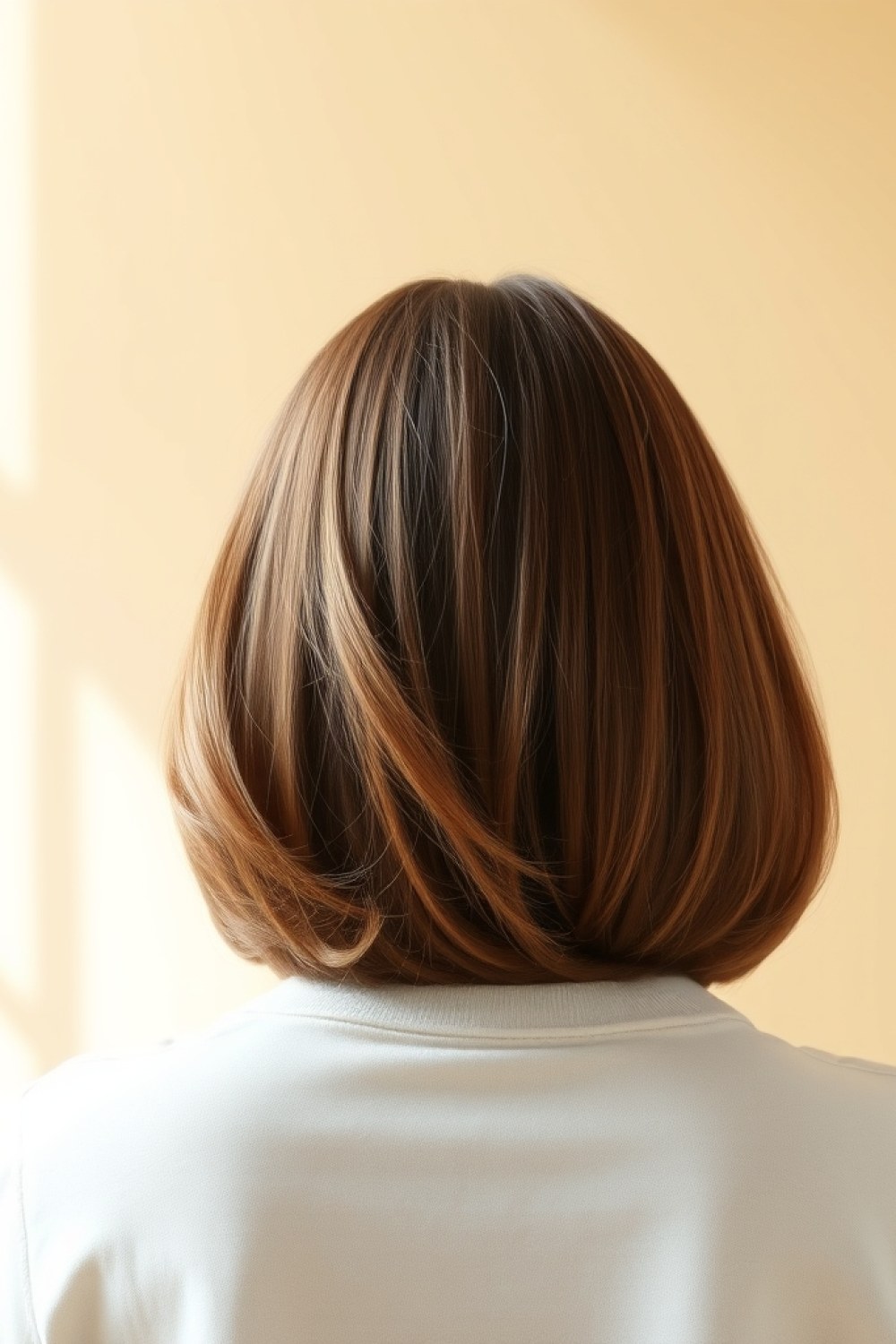
An asymmetric bob runs noticeably shorter on one side than the other, usually with a deep side part. Ask your stylist for a 1.5- to 2-inch difference so the imbalance reads as a clear choice, and request blunt ends on both sides to keep the perimeter looking strong. Style with a flat iron and a dab of lightweight serum.
Why it works: Deliberate asymmetry gives the eye a diagonal to follow, pulling attention toward the shape of the cut instead of the density of your strands.
Pro tip: Pull your part on the shorter side — it makes the length difference look intentional in photos rather than like a bad trim.
16. Sleek Bob With Face-Framing Pieces
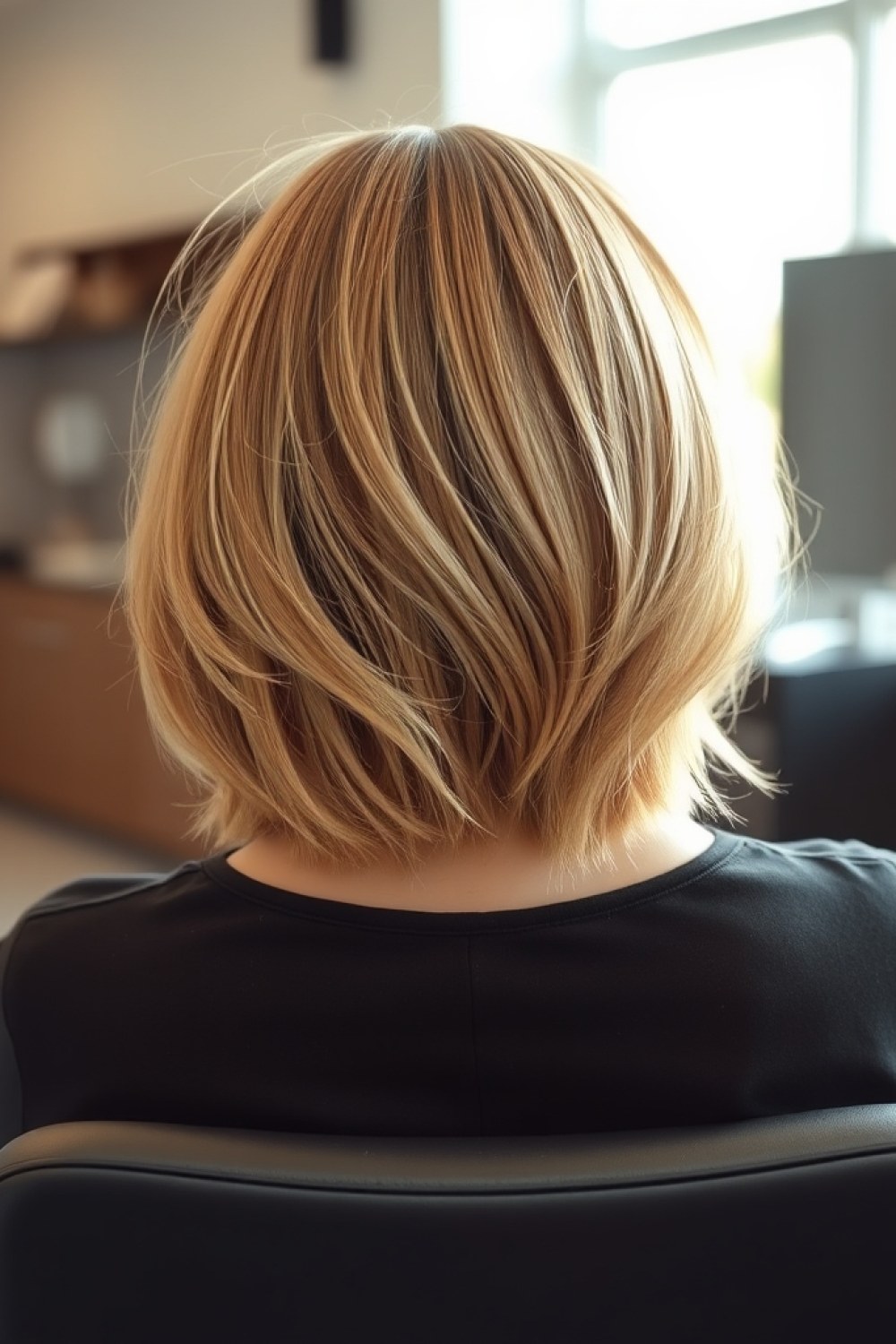
This cut pairs a sharp, straight perimeter with one or two internal face-framing sections cut to jaw level. Blow-dry with a paddle brush, directing the nozzle down the hair shaft for a smooth finish, then set with a light-hold spray. Keep everything below the cheekbone clean and glassy.
Why it works: The framing pieces draw the eye inward toward your cheekbones and add a layer of shape that fine hair otherwise lacks.
Pro tip: Never spray sticky formulas near fine roots — mist the mid-lengths and ends, then press with cool air to lock the shape without a crunchy feel.
17. Wavy Short Bob

Ask for a blunt cut first, then style with a 1-inch wand, wrapping sections in alternating directions for a soft, unstructured wave. The blunt baseline keeps the ends looking full while the wave adds width through the middle. Finish with a light mist of flexible spray and a quick scrunch.
Why it works: Alternating directions prevent the waves from collapsing into each other, so fine hair holds shape and volume without shrinking shorter than you intended.
Pro tip: Set waves on day-two hair with dry shampoo at the roots — that grit gives the curl something to grip, and holds last hours longer.
18. Short Bob With Hidden Volume

This is a blunt bob with discreet backcombing at the crown and a dusting of lightweight texture powder. Lift a two-inch section at the very root, tease it gently with a fine comb, then smooth the top layer over the top so nothing looks ratted. Keep the rest of the cut clean and even.
Why it works: Root-only lift adds height where fine hair falls flat, making the whole cut look twice as dense without visible layers or thinning out the ends.
Pro tip: This is the backstage trick stylists use before camera work — backcomb only that narrow root section and never tease the surface layer.
Frequently Asked Questions
Will a short bob make my thin hair look thicker?
Usually yes — a short blunt bob hides thin ends because the strands all stop at the same point rather than tapering. You get the most fullness from a one-length cut at the jaw or chin with no visible layers, plus a little root lift when styling.
Should fine hair have blunt or layered bobs?
Blunt, with layers kept internal. Visible layers on fine hair remove weight from the ends, which is exactly where you need density to build an illusion of thickness. If you want movement, ask for invisible layers cut inside the shape rather than on the surface.
What’s the best length for a bob on fine hair?
Chin to jaw length suits most fine hair best because the hair can’t stretch and look stringy. If your hair is very fine and limp, go cheekbone-length; if it has some natural wave, you can carry a collarbone-grazing version.
How do I stop my fine bob from going flat by lunchtime?
Apply root-lifting mousse or texturizing spray to damp roots, blow-dry upside down, and finish with cool air to set the lift. Then add dry shampoo at the crown the next morning — the grit gives fine hair something to hold on to.
Do bangs work on a short bob with thin hair?
Yes, if you keep them long and blend them in. Ask for curtain bangs starting at the cheekbone or a soft micro fringe cut slightly thicker than feels natural — a thin, wispy fringe exposes the hairline and makes fine hair look sparser.
Taking These Bobs to Your Stylist
Screenshot two or three favorites — one blunt shape, one with bangs, one for a different length — and point out what you like about each rather than handing over a single photo. That gives your stylist room to adapt the cut to your growth pattern, cowlicks, and density instead of trying to force your fine hair into a picture that was styled on someone with three times the strands.
Tell your stylist up front that you’re working with fine hair and want density kept at the ends, and ask them to skip razoring, thinning shears, and surface layers — all three strip bulk you can’t afford to lose. If a cut doesn’t feel right once it’s dry, the lightest fix is adding a face-framing piece or going an inch shorter; both help fine hair look fuller immediately, and neither means starting over.