
24 Pixie Bob Haircuts for Thin Fine Hair: Volume-Boosting Styles That Look Fuller

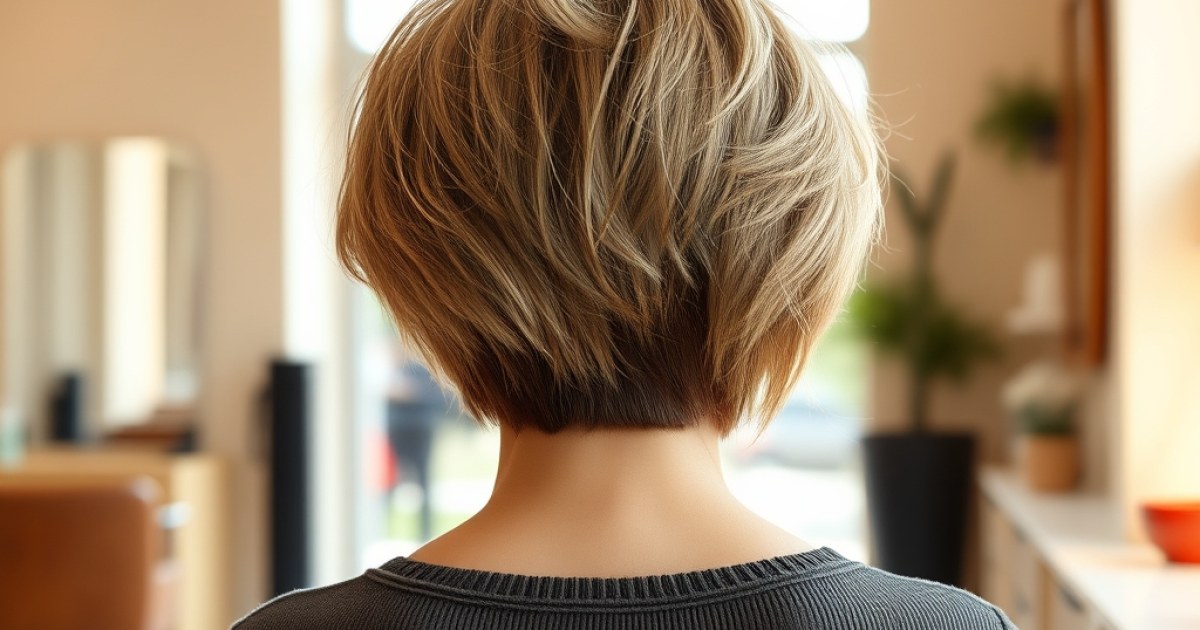
Thin, fine hair plus a pixie bob can be a match made in heaven — or a flat, see-through letdown. The difference comes down to two things: how the cut is built and how you style it at home. Get those right and short hair suddenly looks denser than it ever did long.
If you’re tired of root lift that collapses by 10 a.m., or you’re parting differently just to cover a little scalp show-through, this list is for you. Whether you’re post-partum, in perimenopause, or just born with baby-fine strands, every one of these 24 styles is chosen to fake real fullness.
Inside you’ll find specific cuts worth asking for by name, the products and tools that actually hold lift, and the honest questions to bring to your stylist before the first snip. Short hair grows out fast — so let’s get it right the first time.
1. Invisible-Layer Pixie Bob

This is the volume trick stylists reach for first on fine hair, and it works because the cut is doing the lifting, not your products.
- The technique: Your stylist cuts internal layers shorter than the surface hair so the top layer tents over them instead of lying flat.
- Where it goes: Ask for invisible layers only through the crown and occipital bone, keeping the perimeter one clean length.
- Grow-out: Soft and shapely for 8-10 weeks before you need a trim.
- Best for: Fine hair that collapses at the crown by mid-afternoon.
Snap a photo of hair that sits flat on top — your stylist needs to see the problem zone to place the layers exactly right.
2. Micro-Bob With Hidden Volume

Short, sharp and secretly engineered — the stack at the back is what makes this cut look twice as full as it is.
- The cut: Jaw-skimming length with a stacked back, nape cut 1-2 inches shorter, pushing bulk upward.
- Best for: Straight-to-slightly-wavy fine hair.
- Styling: Blow-dry the back section with a small round brush, lifting at the root.
- Effort level: Low — the stack does most of the work for you.
If your hair turns greasy fast, dry-shampoo the nape before styling so the stack stays lifted instead of slicking down.
3. Blunt-Edge French Bob

A chin-to-jaw French bob with zero layering — the blunt edge reads as density because no strands taper away to nothing.
- The cut: One-length, chin-to-jaw, no layers anywhere.
- Why it works: Blunt edges make fine hair look thicker instantly.
- Style it with: A deep side part and a root-lift mousse for height at the crown.
- Skip it if: Your hair is baby-fine and limp — blunt lines need a little density to hold.
Ask your stylist to check the perimeter with your hair dry before finishing — blunt lines show every uneven millimetre.
4. Piecey Textured Pixie Bob
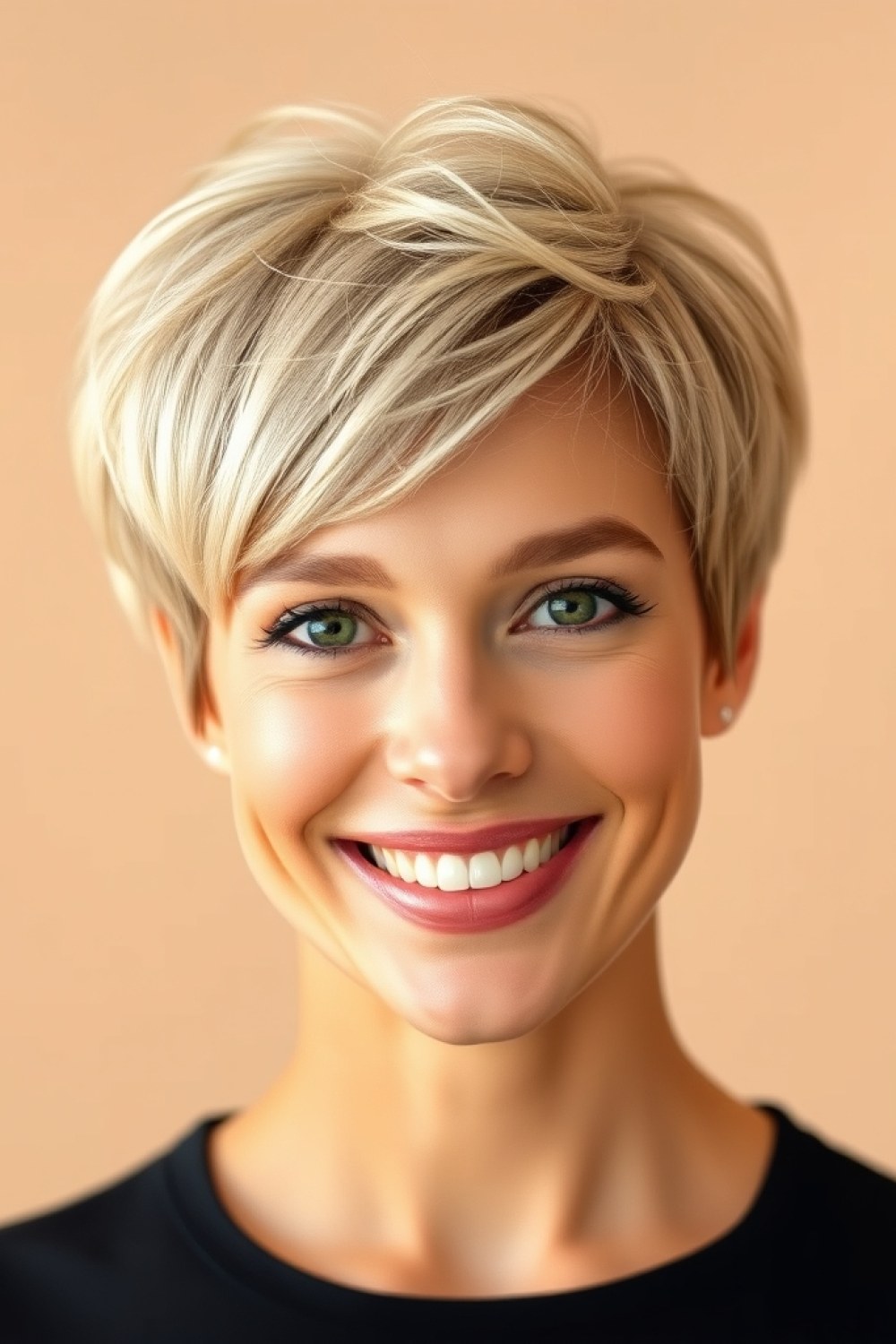
Choppy, razored ends give the eye texture to read as fullness — this one thrives on fine hair that has a little natural movement.
- The cut: Razored, choppy ends for maximum piecey definition.
- Products: Texturizing spray or sea-salt mist on damp hair.
- Technique: Scrunch, air-dry, then break up the pieces with a matte paste.
- Best for: Fine hair with natural wave.
Don’t over-paste — start with a pea-sized amount and add more only at the tips, or fine hair turns stringy by lunchtime.
5. Soft Undercut Pixie Bob
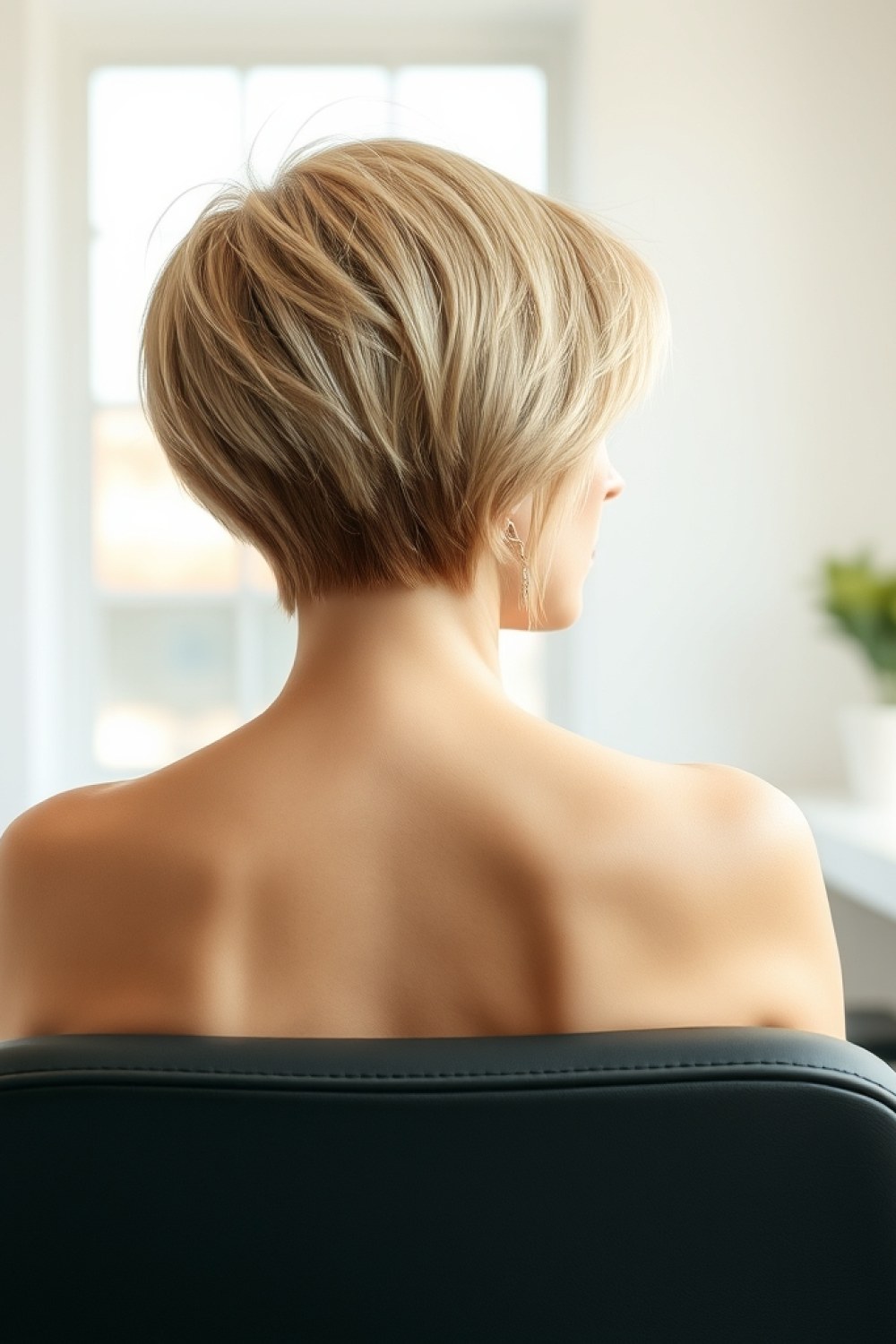
A lightly undercut nape and sides strip away the wispy bulk that drags a pixie bob down, so the top reads thicker by contrast.
- The cut: Nape and sides undercut with a #4 guard or scissor-over-comb — not shaved.
- Why it works: Removing the thin under-layers lets the top hair sit fuller and taller.
- Maintenance: Low — the undercut just blends into the longer hair as it grows.
- Best for: Fine hair that looks thin and straggly at the nape.
Show your stylist exactly how short you want the undercut before they start — a #4 is a safe first step if you’re nervous.
6. Asymmetrical Volume Pixie Bob
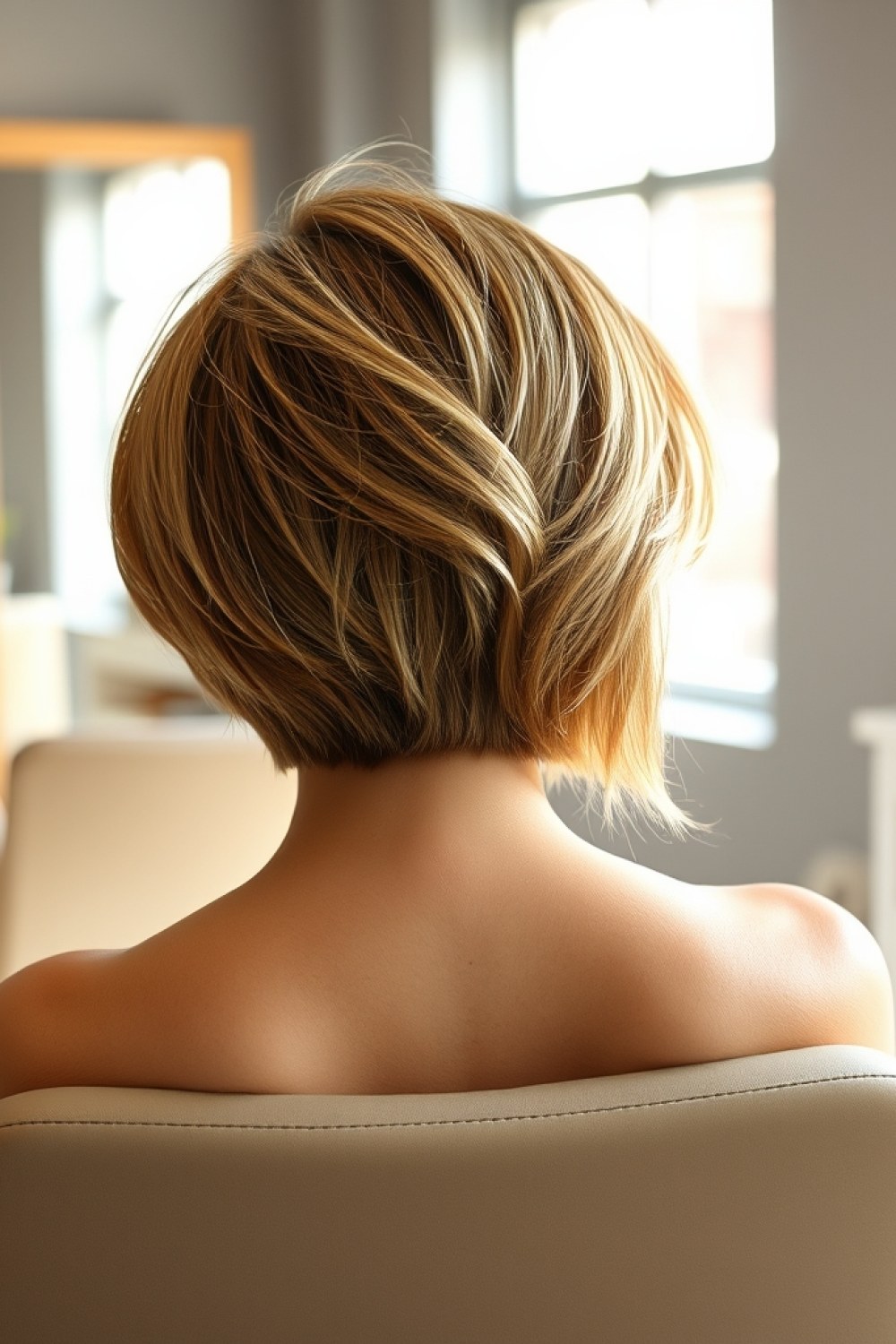
Longer on one side, cropped on the other — the diagonal line flatters round and square faces and gives you instant lift on demand.
- The cut: Chin-length on one side, ear-level on the other.
- Why it works: Diagonal lines elongate round and square faces.
- Styling trick: Sweep the longer side over for instant volume and root lift.
- Detail: Tuck the short side behind your ear to show off cheekbones.
Use a tail comb to place your part before styling — a sharp diagonal part is what makes this cut look intentional, not lopsided.
7. Root-Lifted Bob With Volume Spray
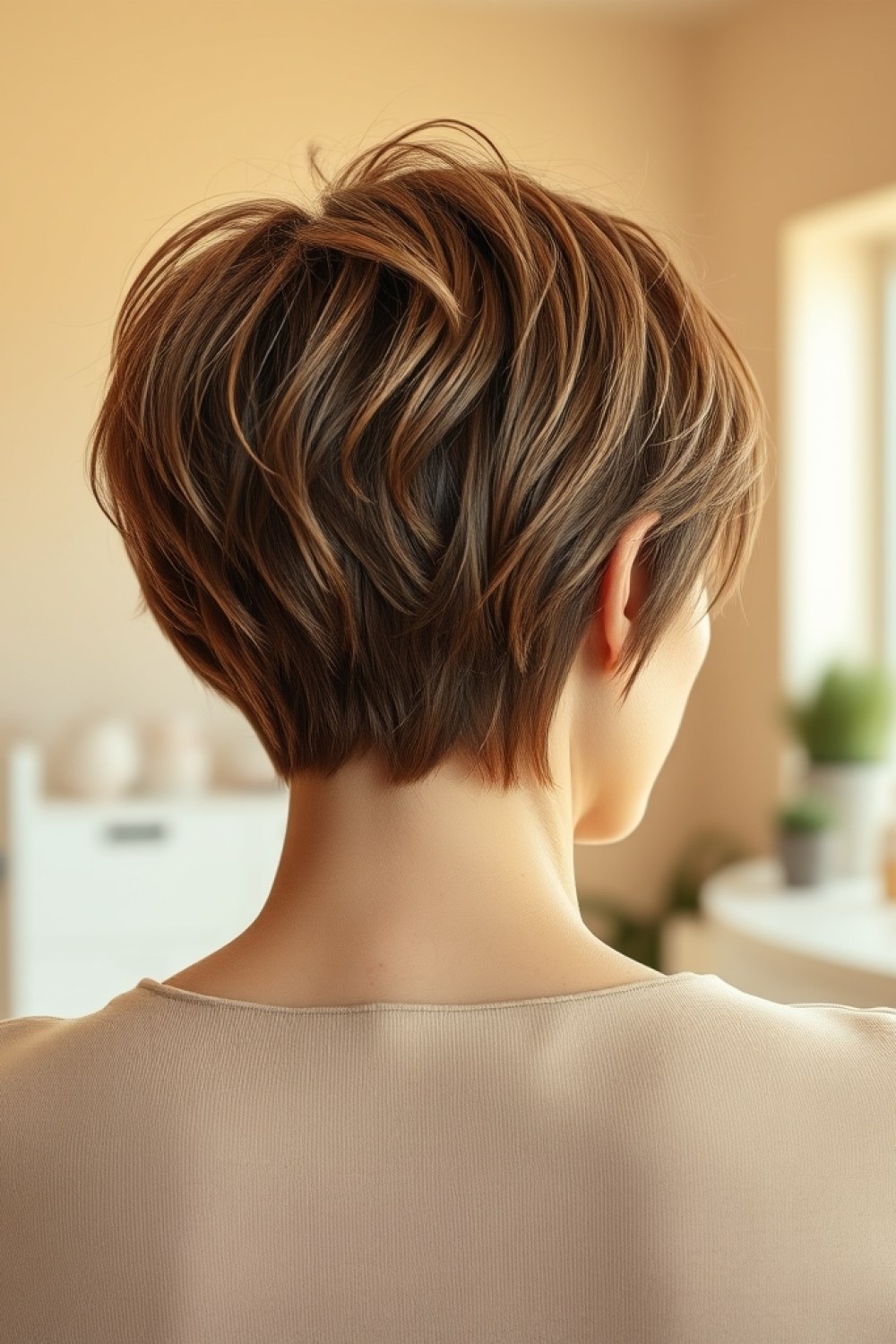
The cut is simple; the styling does the heavy lifting. A little spray and a blast of hot air is all it takes to fake a fuller head of hair.
- Key product: Volumizing spray or mousse applied directly to damp roots at the crown.
- Technique: Blast with a dryer while lifting sections in the opposite direction of growth, then flip back.
- Result: About 1–2 inches of visible height that holds until your next wash.
- Time: Two minutes, tops.
Don’t spray past the mid-lengths — overloading fine strands flattens them the moment you stop drying.
8. Curtain-Bang Pixie Bob
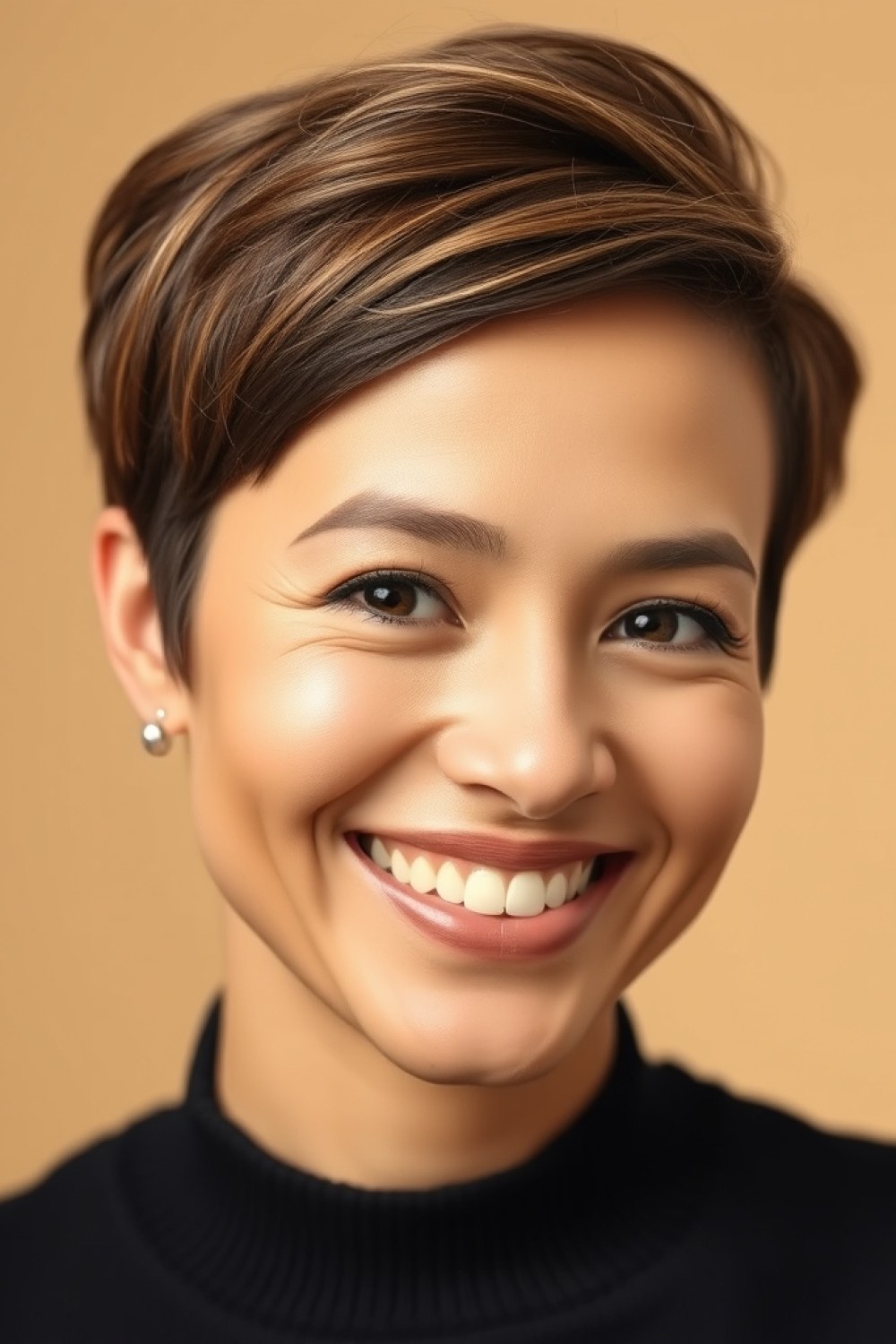
Soft, parted fringe that skims the brow and blends seamlessly into the sides — this cut reads full because the eye lands on the frame, not the scalp.
- Ask for: Wispy, point-cut ends so the fringe never looks heavy.
- Colours: Works beautifully with a face-framing highlight or a subtle money piece.
- Styling trick: Pop a velcro roller in the bangs while you do your makeup.
- Best for: Round and square faces wanting softness at the cheekbones.
Bangs hide a fine hairline instantly — the single fastest fix for a widening part.
9. Side-Swept Bang Pixie Bob

A deep side part with one long, sweeping bang creates diagonal volume through the front — exactly where fine hair shows thinning first.
- Technique: Direct the bang forward and slightly up when drying to build root lift.
- Set with: Medium-hold hairspray on a round brush.
- Parting: A 70/30 split works for most; adjust to your natural growth pattern.
- Refresh: Re-roll the bang on a brush each morning before you leave.
Keep the sweep long enough to tuck behind your ear when you want a sleeker finish.
10. Wispy Fringe Pixie Bob
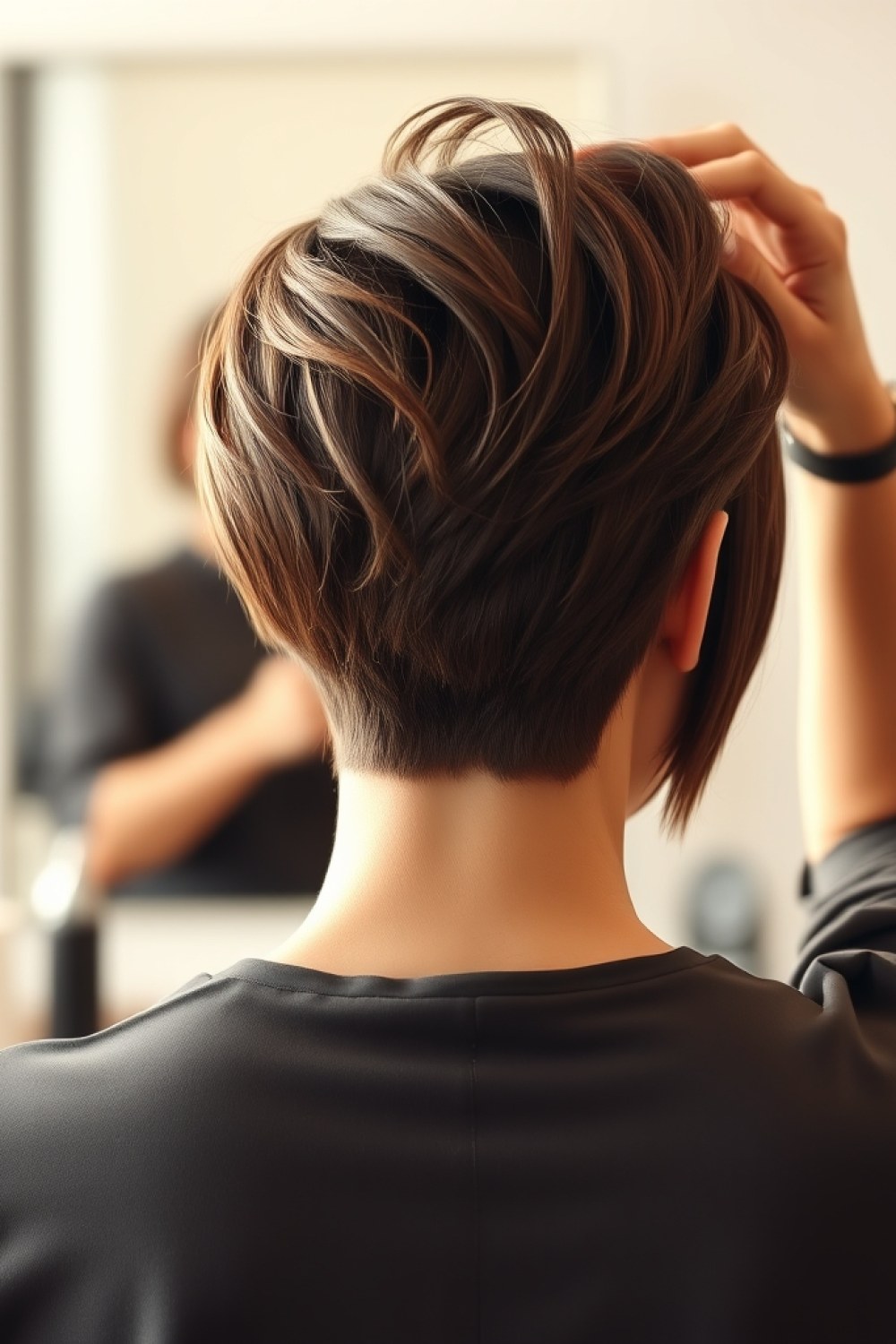
Baby bangs or a soft, broken fringe that sits right at the brow. Light, piecey and deliberately imperfect — never solid. Great for oval and heart faces.
- Ask for: Piecey, texturised ends rather than a blunt line.
- Why it works: Solid bangs clump into greasy-looking strands on fine hair by 3pm.
- Midday fix: Dry shampoo at the roots — not on the fringe itself.
- Avoid: Wet-look gels or serums anywhere near the fringe.
Thread a tiny drop of texturising powder through the ends for grip that lasts all day without weight.
11. Layered Crown Pixie Bob
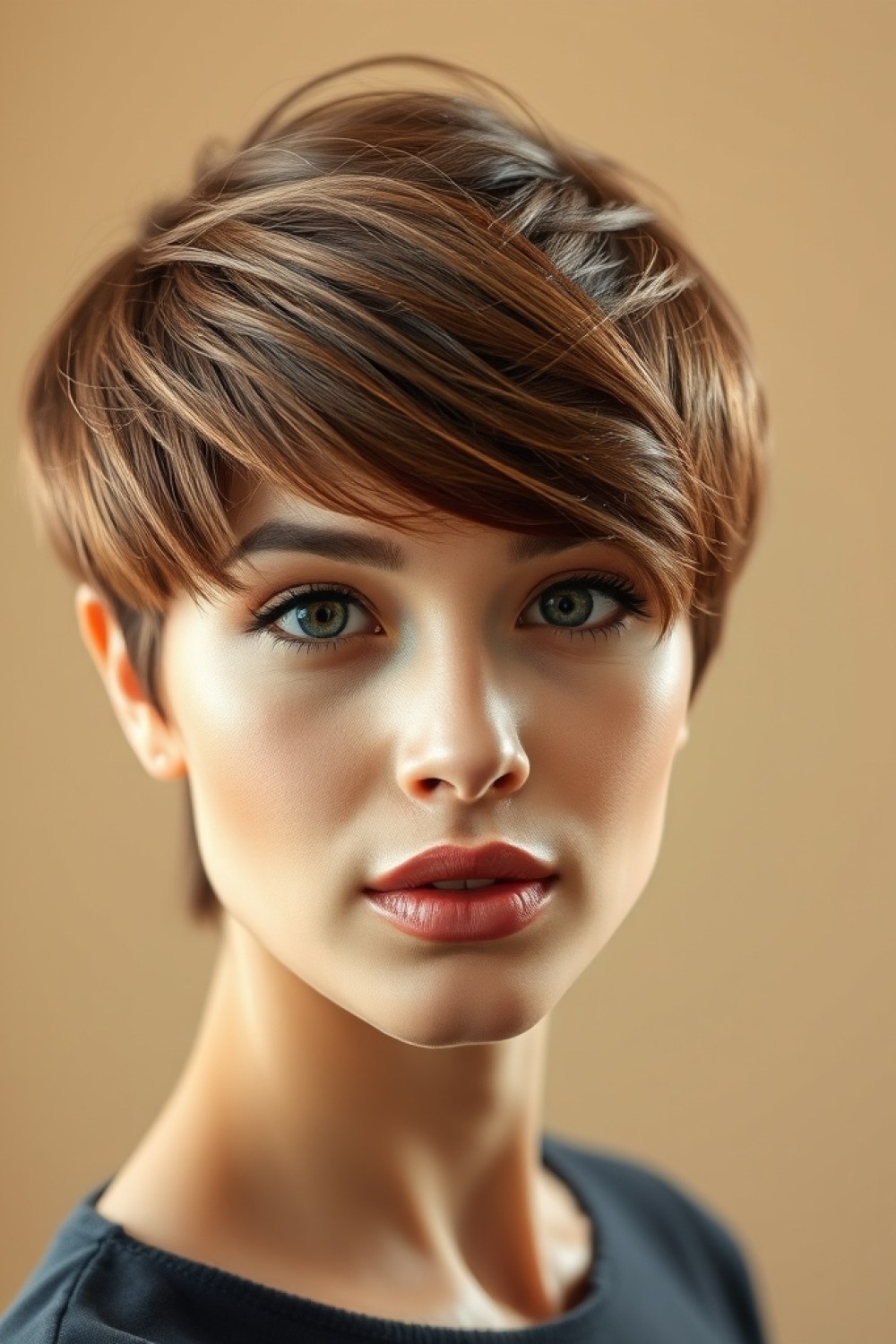
Short, built-up layers sit only at the crown, with the rest kept longer and one length. The result is a soft dome of height exactly where fine hair lies flattest.
- Key piece: Crown layers cut shorter than the perimeter to build structure.
- Dry: Upside down for the first 60 seconds, then upright to smooth the surface.
- Tool: A small round brush at the crown for the last pass.
- Length: Keep the sides below the jaw so the shape stays balanced.
Too many layers all over will thin the ends — keep them concentrated at the top and let the rest stay dense.
12. Curly Pixie Bob
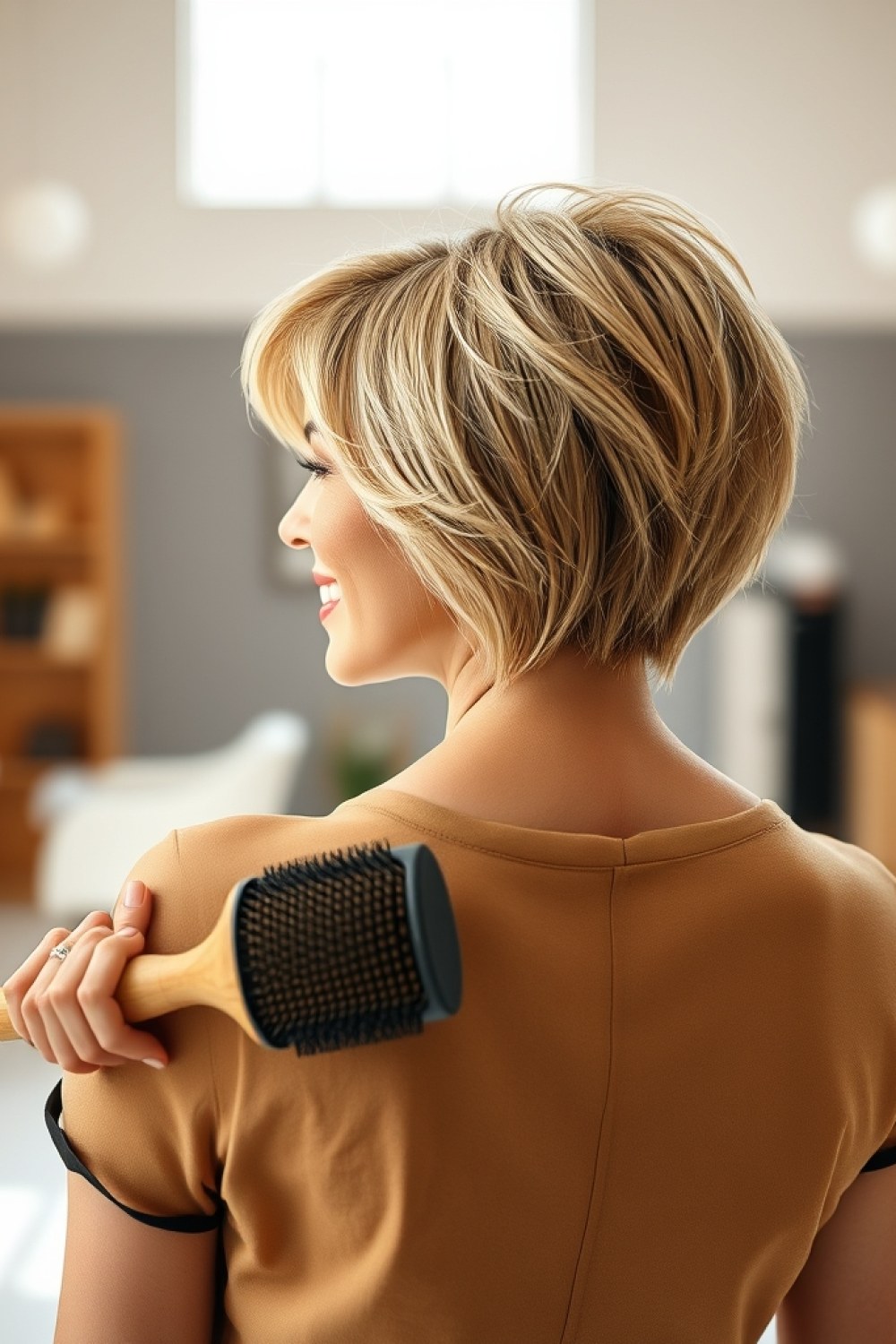
If you have natural curl, a dry-cut curly pixie bob is a volume cheat code. Cutting curl-by-curl means the shape holds without stretching or springing back wrong.
- Cut: Dry, curl-by-curl, section by section.
- Style: Diffuse on low heat with a light gel, then scrunch out the cast.
- Avoid: Heavy creams and butters — they weigh fine curls down flat.
- Maintenance: Refresh with water and a leave-in mist, not a full re-wash.
Book with a stylist who specialises in curls — a standard wet cut will cost you the shape you paid for.
13. Wavy Pixie Bob With Sea-Salt Finish
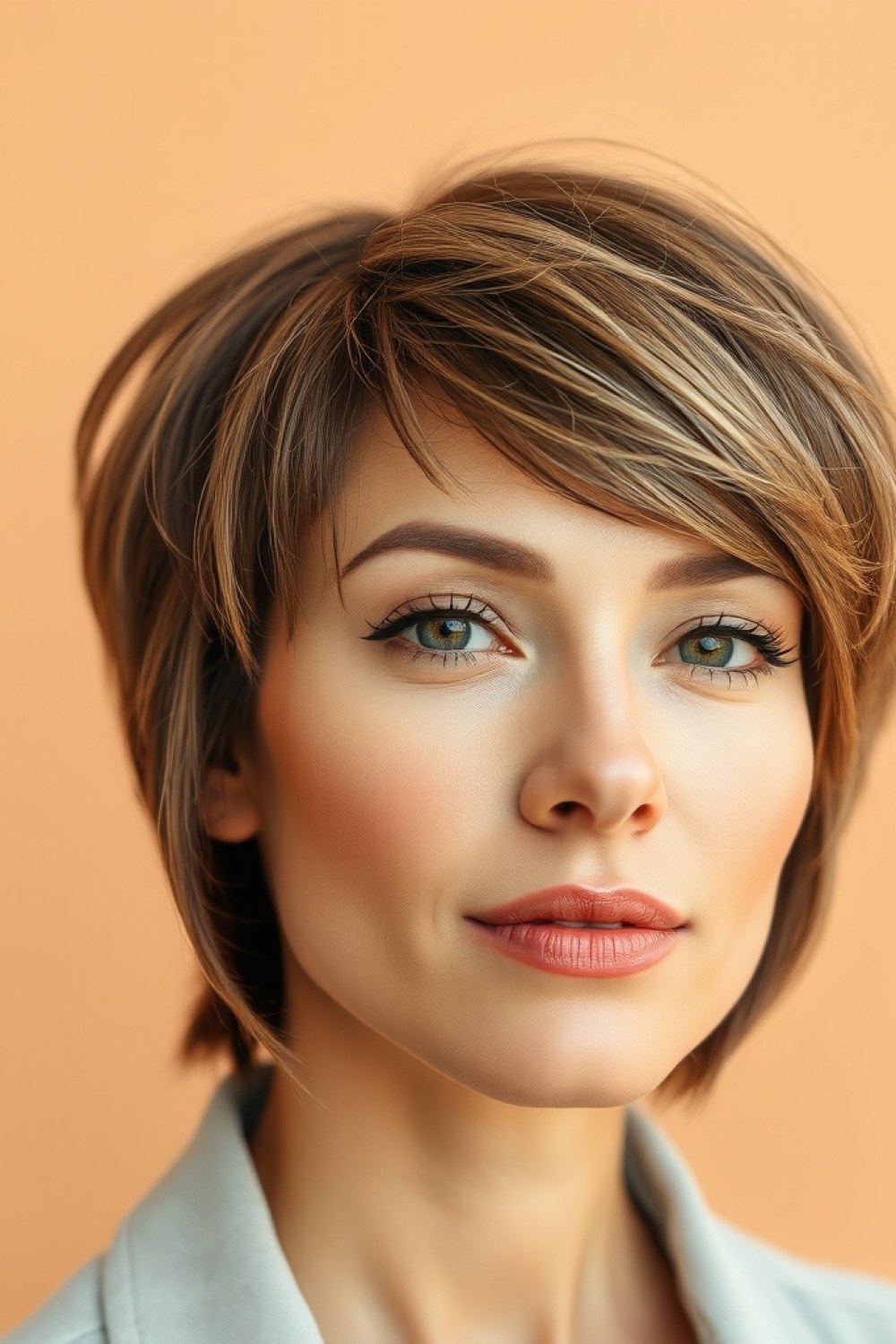
For 2a–2b waves that look airy and undone, a salt-spray finish delivers texture without weight. It’s ideal for fine hair that resists holding a curl.
- How to style: Mist sea-salt spray on damp hair, twist random 1-inch sections around your finger, air-dry, then rake through with fingers.
- Watch the dryness: Sea salt can dehydrate fine strands, so limit use to 2–3 times a week.
- Care swap: Book a hydrating mask every Sunday to restore moisture.
Skip heat entirely — the twist-and-air-dry method is what gives this cut its effortless, beachy movement.
14. Angled Bob With Stacked Nape
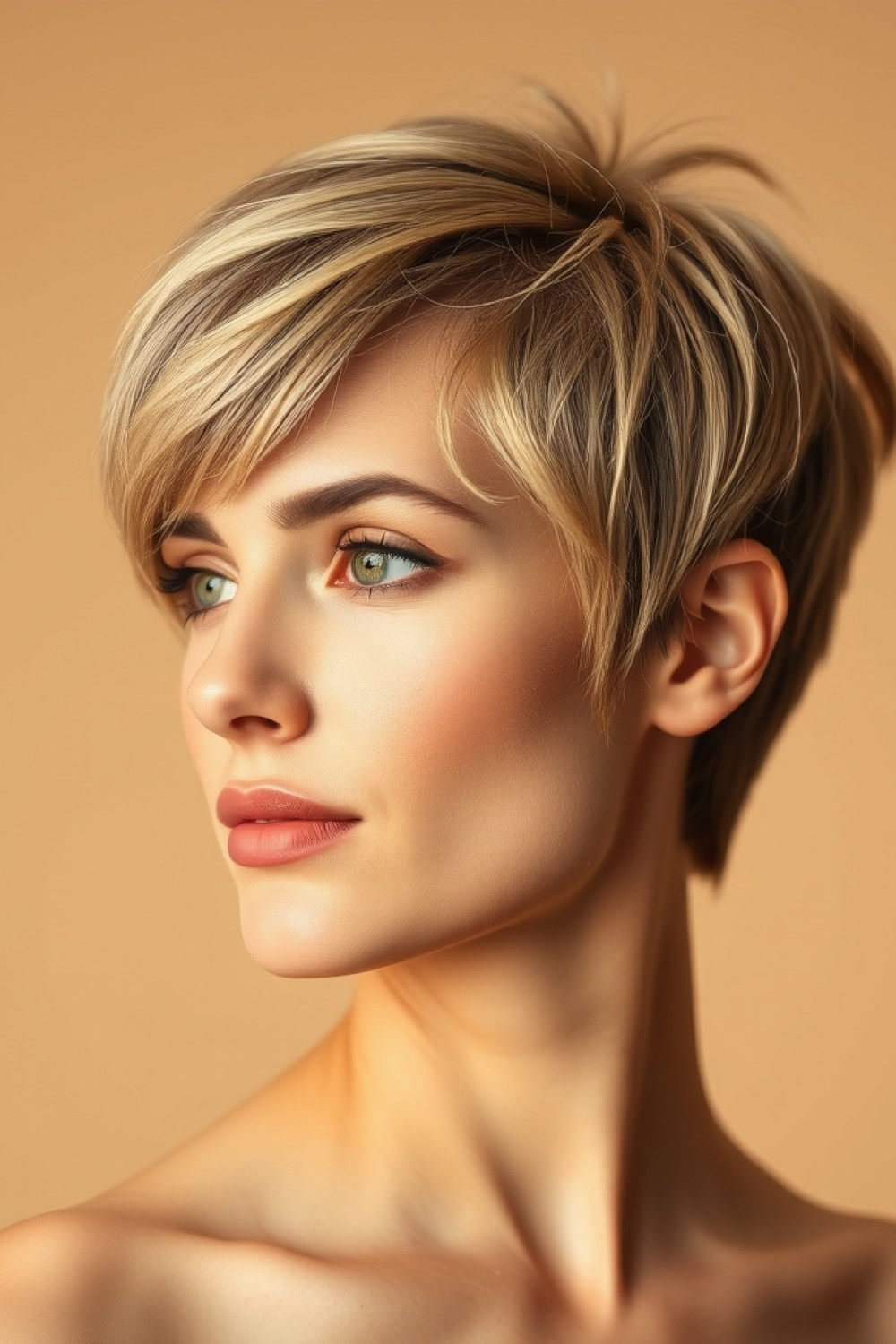
A chin-length A-line front that angles up to a stacked nape does two things at once: it lifts the eye and adds roundness at the back of the head, where fine hair usually falls flat.
- Best for: Straight, medium-density fine hair that holds a clean line.
- Key feature: The stacked nape builds bulk and curve at the back.
- Ask your stylist: Request visible graduation at the nape and a blunt-ish front edge.
Keep the front slightly longer than the back — the contrast is what makes this shape read as fuller.
15. Lob-to-Pixie Hybrid
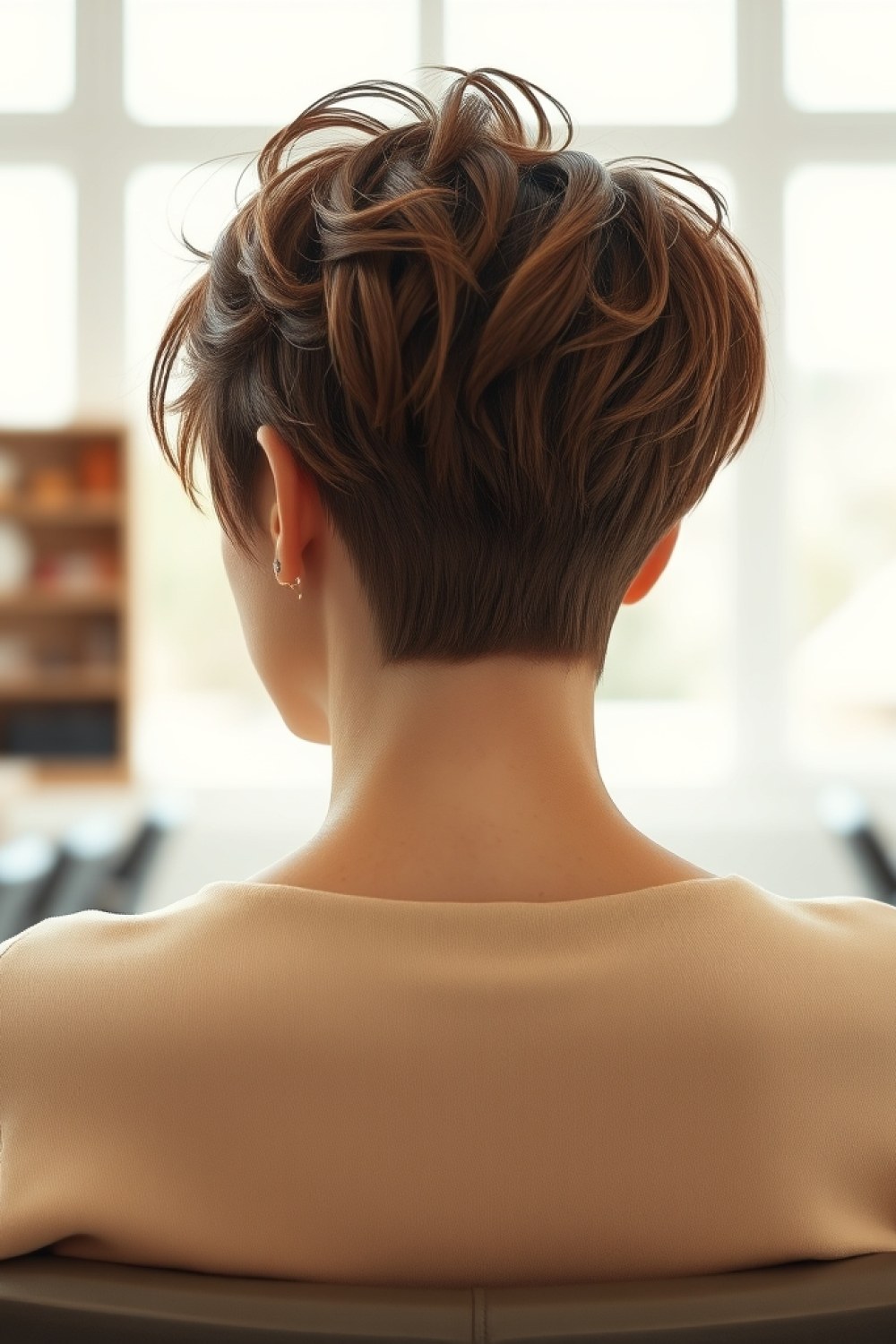
Collarbone-length in front, snipped short at the back — the “bixie.” You keep length to play with around your face while the weight is removed from the back where fine hair collapses.
- The shape: Longer front panels, cropped back for lift.
- Parting: Works with a center or side part.
- Drying: Air-dries well with minimal product.
It’s the easiest transition cut if you’re not ready for a full pixie but want the volume benefits.
16. Micro-Fringe Pixie Bob

Very short, blunt micro-fringe paired with a chin-length bob. Bold and editorial — and surprisingly flattering on fine hair, because a blunt fringe reads as one solid block of density and color.
- Why it works: Blunt edges look thicker than wispy, tapered ones.
- Maintenance: A fringe trim every 3–4 weeks keeps it sharp.
- Best for: Those wanting a statement with low daily styling.
Keep the fringe dense and squared-off — soft, point-cut ends will defeat the whole effect.
17. Soft Shag Pixie Bob

A 1970s-inspired shag cut to short-bob length, with choppy layers all over — fringe included. The internal movement hides thin patches beautifully and grows out gracefully between appointments.
- Layers: Choppy, all-over texture with a soft fringe.
- Styling: Work in a texturizing cream with a wide-tooth comb, not a brush.
- Bonus: Forgiving grow-out, so fewer salon trips.
Ditch the brush entirely — raking with a comb keeps the piecey separation this cut needs.
18. Bedhead Pixie Bob

Deliberately messy, cool-girl finish. The trick is working with your hair’s natural overnight texture instead of fighting it — perfect for fine hair that resents being over-styled.
- The method: Wash at night, sleep on damp hair, mist with texturizer in the morning and scrunch.
- Heat: Zero — no dryer, no iron.
- Result: Maximum texture, minimum effort.
Sleep on a silk pillowcase to cut frizz while you let those effortless bends form overnight.
19. Sleek Chin Bob With Root Volume

High-shine and high-impact, this cut plays a clever trick: glassy lengths, lifted roots. For straight, dark, fine hair, that contrast is everything.
- Cut: One-length, blunt chin bob — no layers, which keeps ends looking denser.
- Volume point: Mousse only at the crown and roots; keep lengths product-free.
- Tools: Flat iron on lengths for gloss, a small round brush at the root.
- Set: Cool shot for 10 seconds to lock the lift before you leave the bathroom.
A flexible-hold mousse at the root beats volumising powder here — powder dulls the gloss you worked for.
20. Brushed-Out Pixie Bob
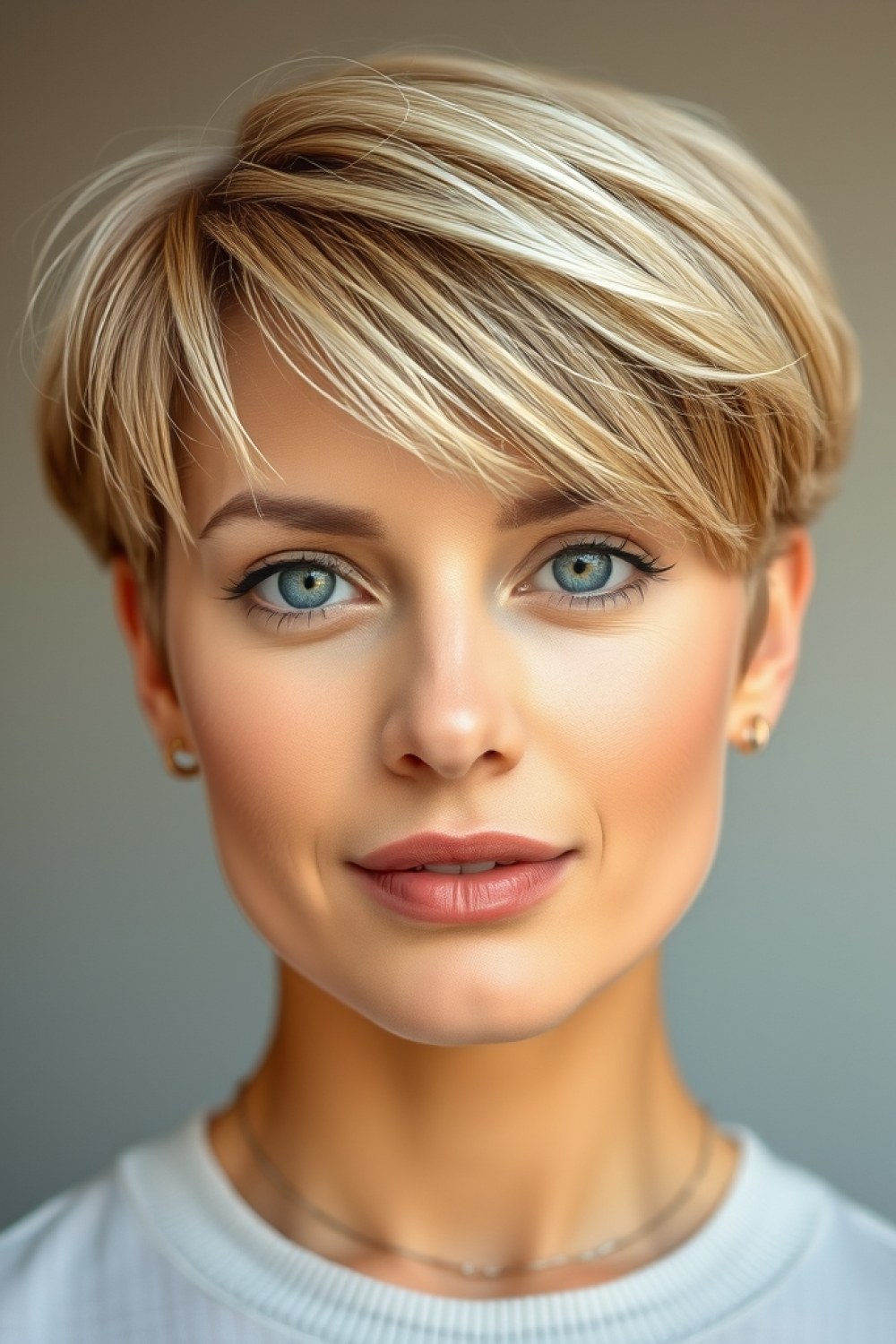
Less “styled,” more “woke up like this.” This finish relies on softness and movement — strands overlap and blur together, so scalp shows through less.
- Technique: Blow-dry each section upward and back with a medium round brush.
- Finish: Brush through with a paddle brush — no pomade, no piecing.
- Product: One drop of lightweight oil, warmed between palms, mid-lengths to ends.
- Time: About 8 minutes on damp hair, 3 to refresh dry.
Resist over-working it. The moment it looks “done,” it looks thinner — stop while it’s still a little soft.
21. Color-Melted Pixie Bob
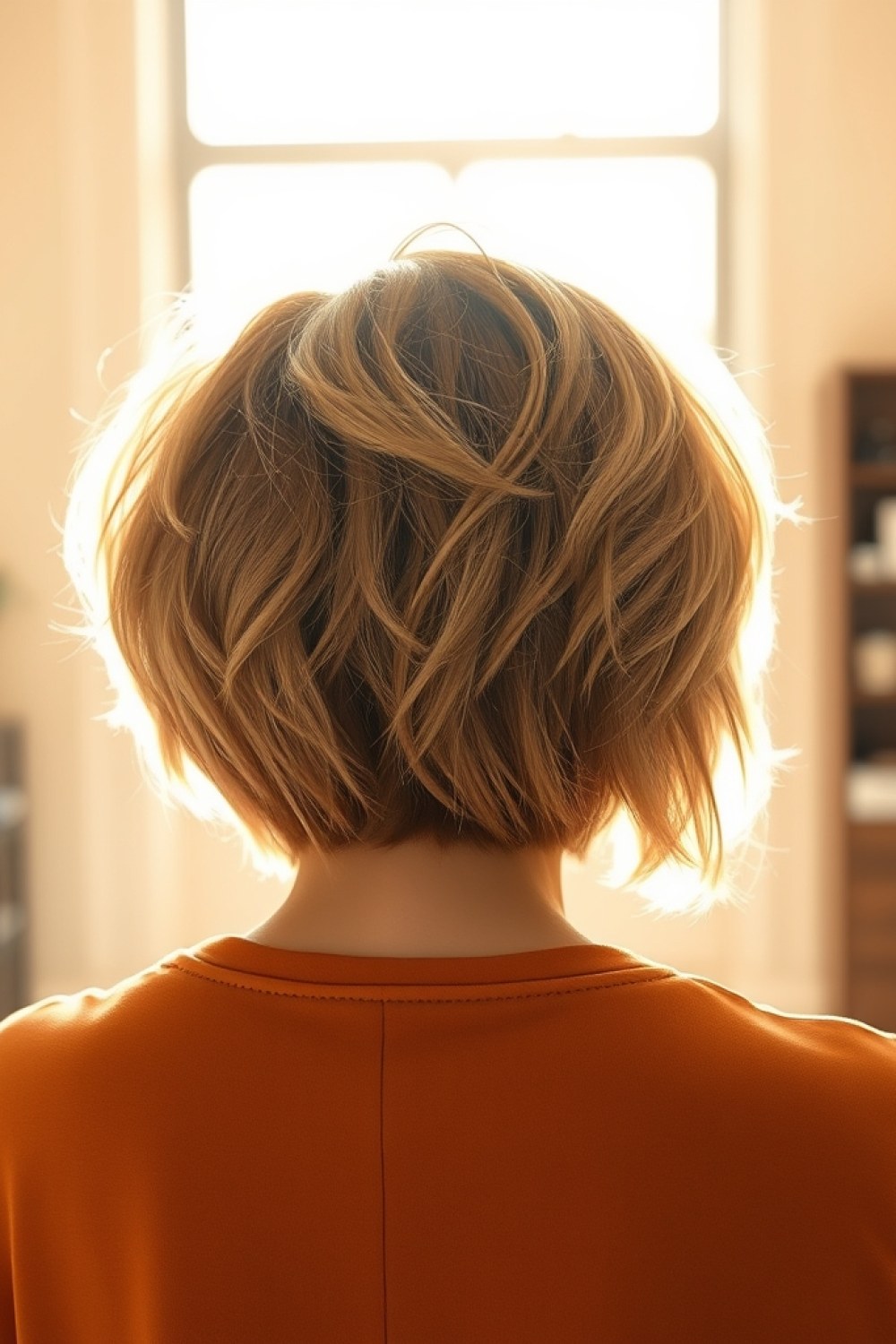
Colour is the fastest volume trick there is. Placing lightness around the face and crown visually widens the head and makes fine hair read as denser.
- Ask for: Balayage or a money-piece, 1-2 shades of lift — not full blonde.
- Keep dark: Ends stay close to your natural colour, where fine hair thins out.
- Why it works: Contrast at the perimeter frames the face and lifts the eye line.
- Maintenance: 8-10 weeks between appointments, gloss in between.
Bring a photo of the placement, not just the colour — where the lightness sits matters more than the shade itself.
22. Root-Shadow Blonde Pixie Bob
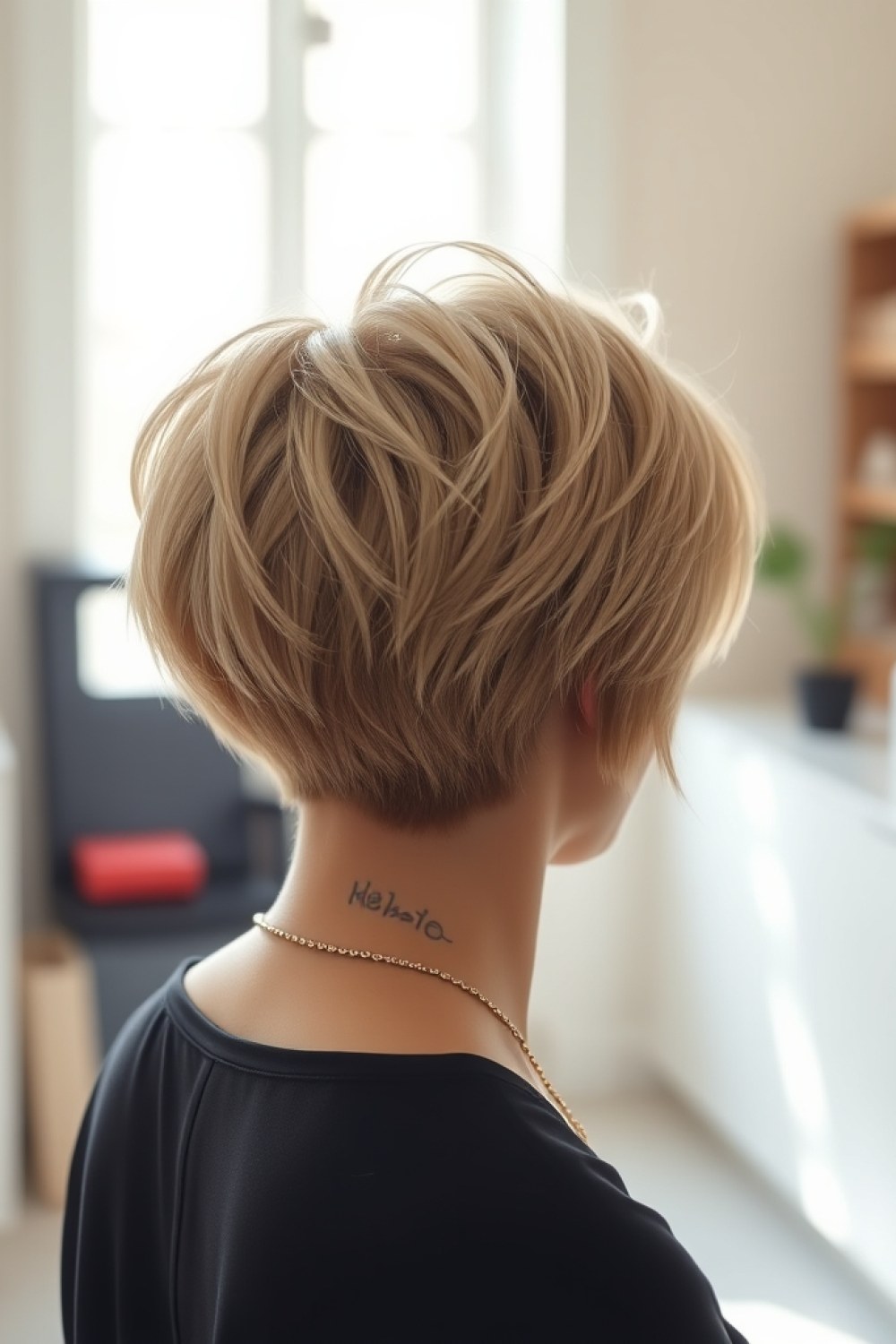
Lived-in blonde with a deliberate soft shadow at the root. It grows out gracefully, so you’re not back in the chair every six weeks chasing a line.
- Ask for: A smudged root two shades deeper, melted into the blonde.
- Timing: Stretch to 10-12 weeks without a harsh regrowth stripe.
- Tone: Warm honey or beige blonde over icy platinum, which can look translucent at the scalp.
- Top-up: Purple-free toning shampoo only, or the warmth turns brassy.
If your stylist reaches for bleach on the roots, pause — fine hair needs the lift kept off the scalp where possible.
23. Copper Gloss Pixie Bob
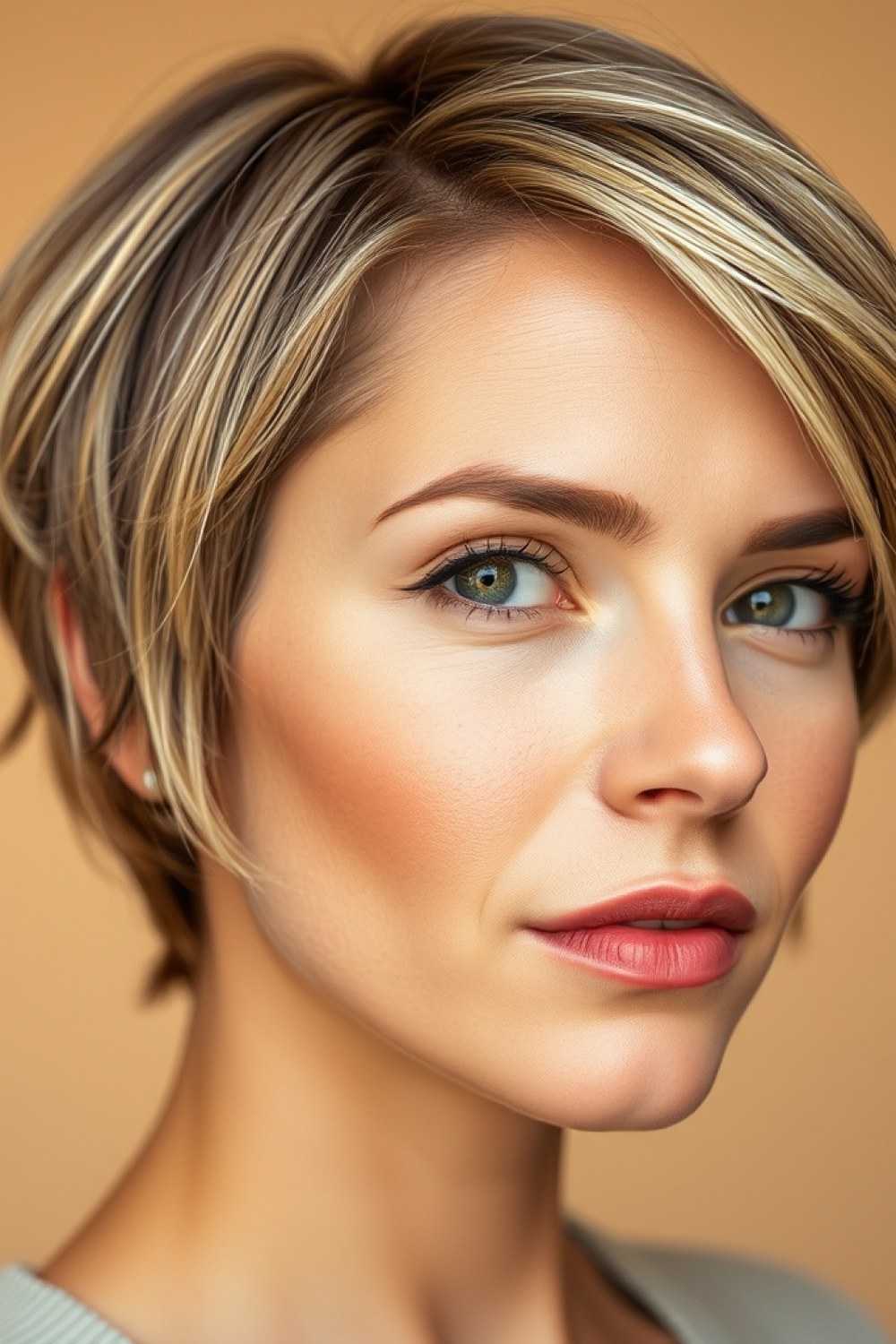
Sheer copper or auburn gloss layered over your natural base. No lifting, no lightening — just rich, reflective shine that makes each strand look fatter.
- What it is: A demi-permanent gloss, not a dye — zero damage to fragile strands.
- Why it works: Shine bounces light off the hair shaft, and light equals thickness to the eye.
- Shades: Warm copper, rust, or deep auburn flatter most skin tones.
- Refresh: Reapply every 6-8 weeks; it fades gradually, never patchy.
Ask for a strand test first if your hair is very porous — copper grabs fast on processed ends.
24. Air-Dry Pixie Bob

The realistic one. Cut to air-dry with zero styling: short and tapered at the back, longer and textured on top, soft fringe. Five minutes, a toddler, and you’re out the door.
- Cut: Tapered nape, textured crown, soft fringe — the shape does the work.
- On soaking-wet hair: Leave-in conditioner plus a lightweight mousse.
- Then: Scrunch once and leave it. No diffuser, no round brush.
- Best for: Wavy and curly fine hair, which self-supports as it dries.
Ask your stylist to cut it dry or half-dry so they can see exactly how it falls without heat — that’s the whole point.
Questions About Pixie Bobs for Fine Hair
Will a pixie bob make my thin hair look thinner?
Not if it’s cut correctly — and that’s the whole game. The danger is a blunt, one-length pixie bob with no interior shaping, because fine hair clumps together and exposes scalp at the crown and part.
Ask for internal layers and a slightly shorter crown. Removing weight from the ends while keeping length on top lets what you have lift instead of cling. A stylist who thins your ends with a razor or thinning shears is working against you; fine hair needs density, not debulking.
What should I ask my stylist for if I have fine, thin hair?
Say these words: “internal layers,” “graduated or stacked back,” and “leave the perimeter solid.” Interior layers create the lift, the stacked back builds the shape at your nape, and a solid perimeter keeps the outline looking thick rather than wispy.
Also ask where the weight line will sit. On fine hair it should be high — around the occipital bone at the back of your head — not dropped down near your neck. And be honest about your styling time. If you won’t blow-dry for ten minutes, say so, because that changes what your stylist should cut.
Which pixie bob length works best for fine hair?
Chin-to-jaw length at the front, with the back tapered to roughly an inch above your hairline, is the sweet spot. It’s long enough to look like a bob from the front and short enough that your hair doesn’t have to travel far to gain height.
Cropped above the ear all over can work, but it demands more frequent trims to stay sharp. Anything past your collarbone tips into bob territory, and those extra inches will drag fine hair flat within an hour.
How do I stop my pixie bob from lying flat by lunchtime?
Start with damp — not soaking — hair and a root-lift spray or mousse applied directly at the scalp, then blow-dry upside down for two minutes. Aim the nozzle at the roots and push hair in the opposite direction of its natural fall.
Finish with a hit of cool air to set the lift, and a light texturizing spray or dry shampoo at the roots rather than the ends. Keep heavy oils, serums and leave-in creams away from your scalp — they’re the number one cause of a mid-morning collapse. A little velcro roller at the crown while you do your makeup is a two-minute fix that genuinely holds.
Are bangs a good idea on a pixie bob with fine hair?
Yes — bangs are one of the best volume tricks available to you, because they cover the hairline where thinning tends to show first. Wispy, piecey fringe that tapers at the edges works far better than a heavy full fringe.
A curtain bang or a slightly swept, brow-skimming fringe gives you movement without a solid block of hair that reads thin. If your hairline is your main concern, ask for a soft, layered fringe you can brush to either side.
How often will I need trims to keep the volume?
Every four to five weeks for a true pixie bob. Fine hair loses its shape faster than thick hair because there’s less bulk to hold the line — once it grows out a half inch, the stacking and internal layers drop and the lift disappears.
If that’s too frequent, ask your stylist to cut the back slightly shorter than ideal so you get a longer window between appointments. You can also stretch it with a root-lift spray and a round brush at home, but no product replaces a fresh cut.
Choosing Your Pixie Bob: What to Take to Your Stylist
Screenshot the two or three ideas that match your actual hair texture and face shape — not the ones you wish you had. A cropped, heavily textured pixie looks nothing like the same cut on straight, fine, thinning hair, and choosing from a photo of someone else’s density is how people end up disappointed.
At your consultation, ask your stylist to show you where the internal layers will sit and exactly how much length is coming off the back, because that’s the decision that determines whether this cut looks full or flat. If you’re nervous, book a 15-minute dry consult first — most stylists will cut a test section so you can see the volume on your own head before committing to the full shape.