
20 Asymmetrical Bob Hairstyles for Black Women That Look Stunning

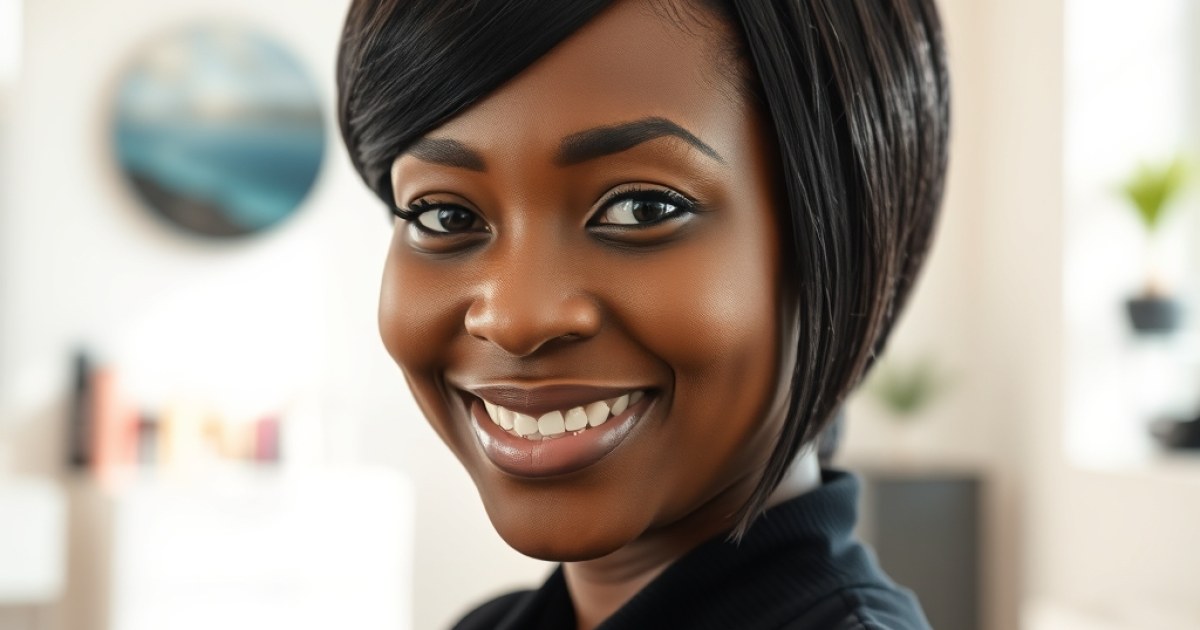
An asymmetrical bob is the fastest way to make a bob feel custom instead of cookie-cutter — and on Black hair it can be sleek, coily, or somewhere in between. Whether you’re working with 4A coils, freshly relaxed strands, or a silk press you want to last, the uneven cut adds movement and edge that a blunt bob just can’t match. Here are 20 standout versions to screenshot before your next salon appointment.
This list covers the full spectrum: chin-grazing stacked cuts, deep side parts with dramatic sweep, curly DevaCut bobs, and even protective versions that let you tuck your ends. You’ll also find real talk on heat training, nightly wrapping, and how to keep two different lengths looking intentional, not accidental. By the end, you’ll know exactly what to say in the chair — and how to keep it looking sharp for weeks after.
Bookmark the ones that speak to your texture and lifestyle, not just the ones that look good on a mannequin. A cut that thrives on your morning routine beats a trendy one you dread maintaining. Let’s get into the styles.
How to Pick the Right Asymmetrical Bob for Your Face and Hair
Start with your texture and your daily time budget, then match the cut to your face shape — that order matters more than any trend list.
- Face shape: Round faces benefit from a steep angle starting at the jaw; oval faces can carry a sharp chin-length drop; heart shapes should keep the longer side past the chin to balance a wider forehead.
- Texture: Fine or relaxed hair can go shorter and sharper with a stacked back; dense coils and kinks need more length on the long side so the shape doesn’t collapse into a triangle.
- Styling time: If you air-dry and go, pick a curly or wash-and-wear cut. If you wrap, flat-iron, or silk press weekly, a sleek angled bob will hold its line beautifully.
- Maintenance: Expect a trim every 6 to 8 weeks to keep the asymmetry intentional. If you can’t commit to that, choose a less dramatic angle.
1. Sleek Side-Part Drama
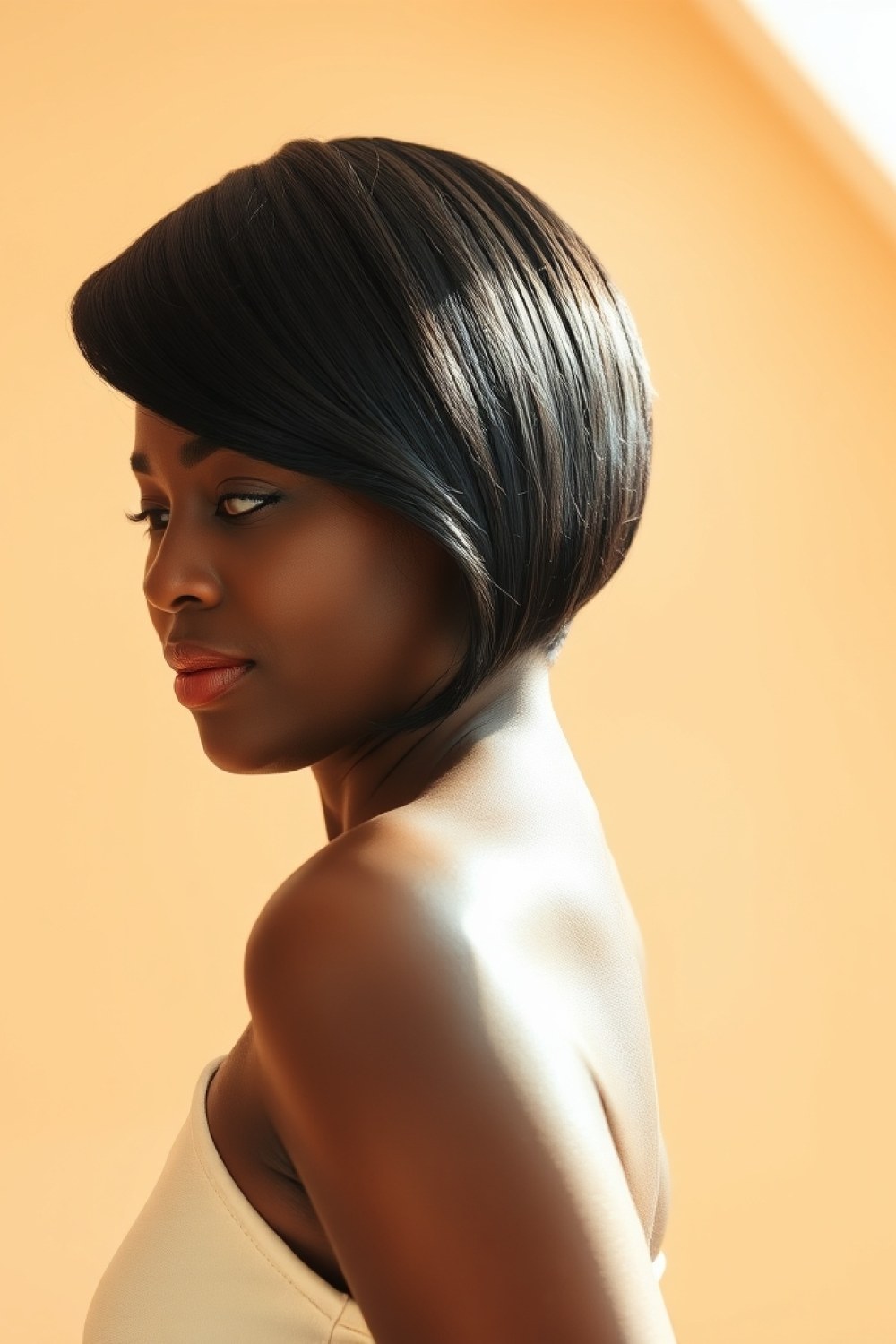
A deep side part with one side grazing the jaw and the other barely past the cheekbone. Works best on relaxed or silk-pressed hair — ask for a blunt perimeter with a soft point-cut through the ends so it still moves. Set with foam wrap and a boar-bristle brush for that glassy finish.
Why it works: The sharp diagonal draws the eye up and across, lifting your features and slimming the face.
Pro tip: Diffuse on low with the nozzle pointing down the hair shaft — high heat ruffles the cuticle and kills the shine.
2. Blunt Front, Coily Back
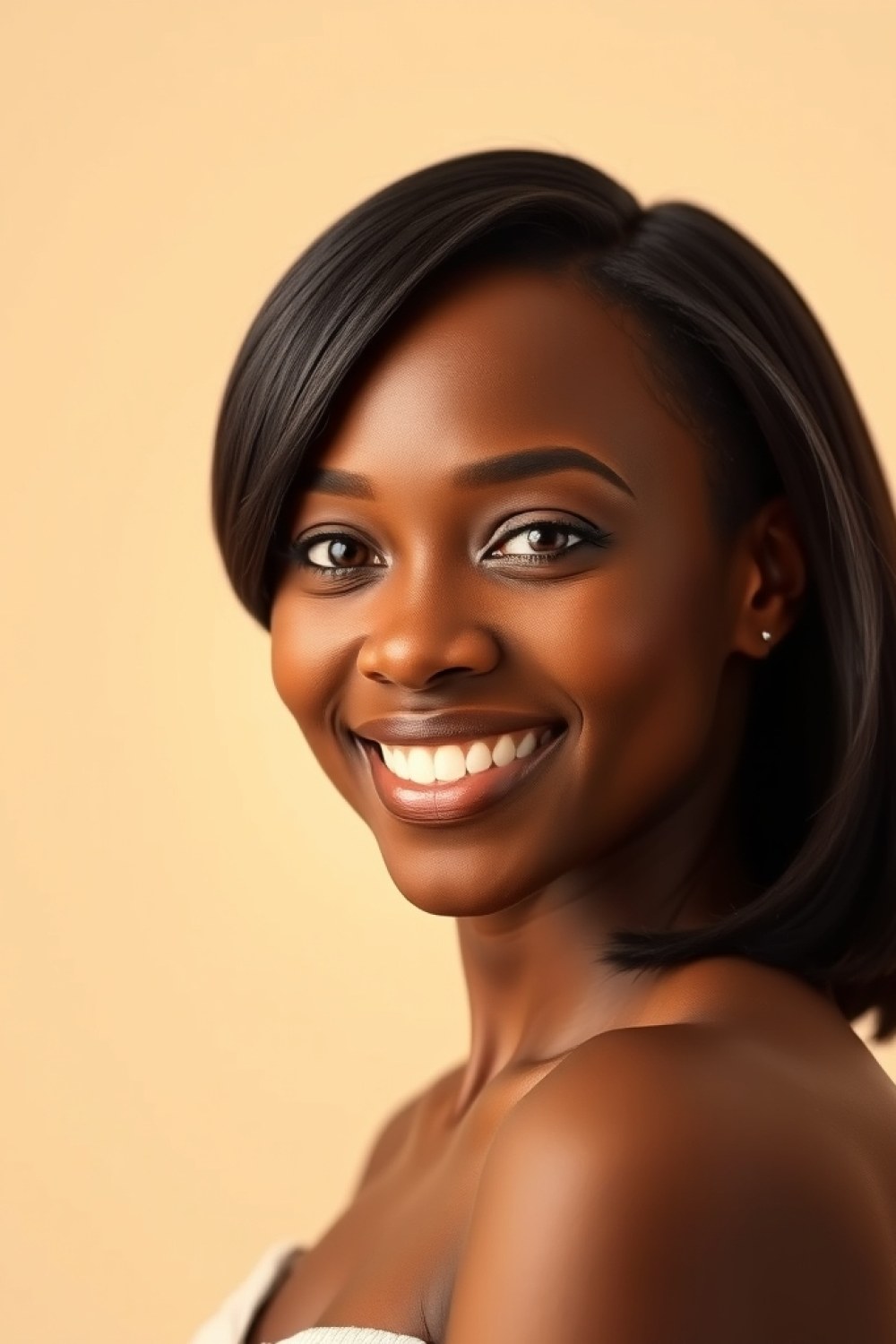
Keep the front perimeter sharp for a crisp face-framing line, then let the back stay in its natural coil pattern. Your stylist should cut it dry in its shrunken state so the shape holds once it reverts. Refresh with a leave-in and a light gel cast.
Why it works: You get the precision of a bob up front without fighting your texture in the back — two looks, one cut.
Pro tip: Always get this cut dry. Wet-cutting coils is how you end up two inches shorter than you asked for.
3. Diagonal Graduation
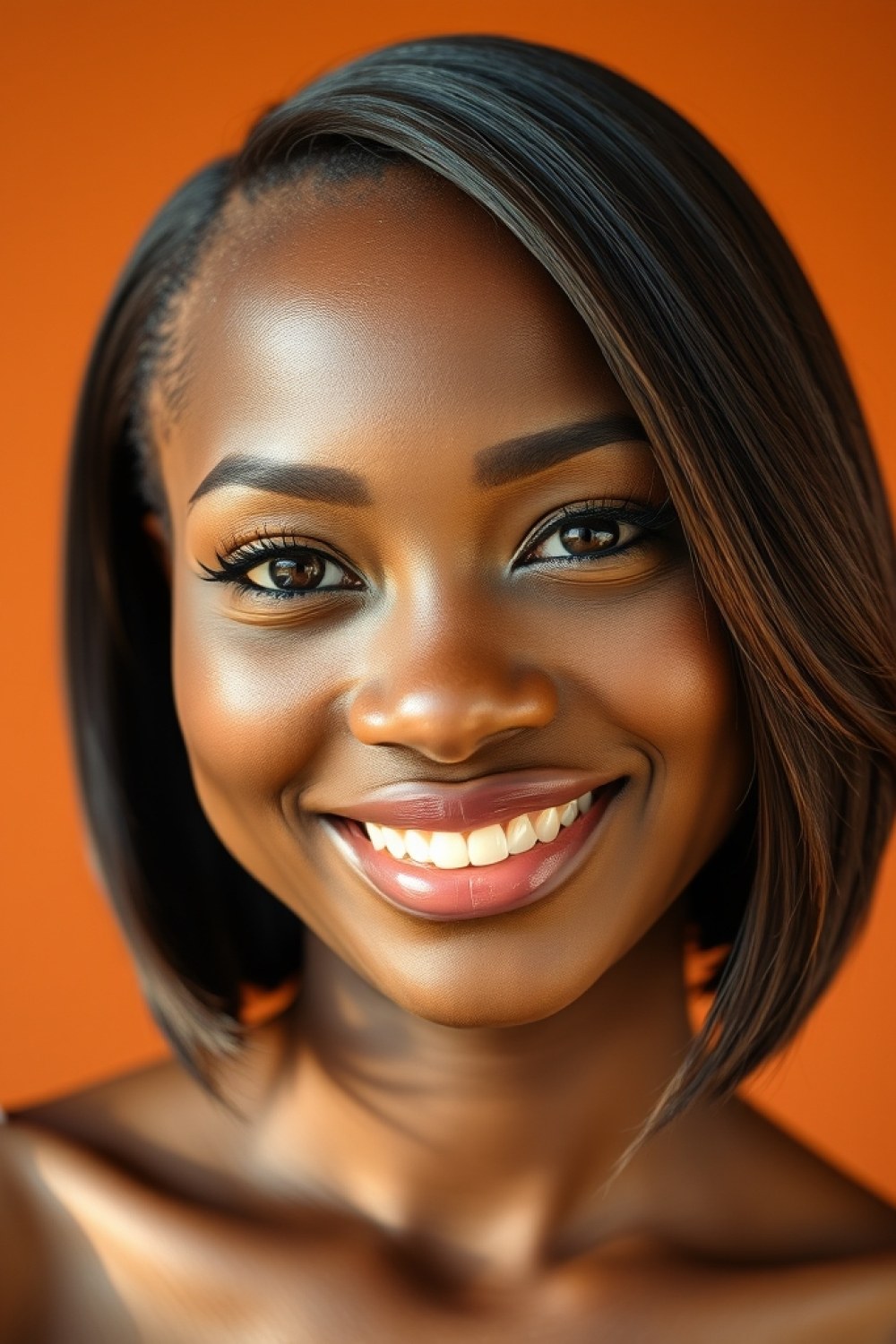
Length builds on a diagonal from nape to chin, giving the illusion of a longer neck and a lifted jawline. Request invisible layers only in the last two inches — no thinning shears, which can make dense hair look patchy.
Why it works: That nape-to-chin slope elongates your neck and sharpens the jaw without a single hard line.
Pro tip: Say “invisible layers, no thinning shears” out loud at consultation. Dense hair thinned out shows every hole.
4. Curly Angled Bob With a Defined Edge

The angle comes from the cut, not from straightening. Ask for a shape cut on wet hair, then refined dry curl by curl. Twist-out sets with a curling cream give you a uniform angle without compromising the coil.
Why it works: Cutting curl by curl means the angle lives in your pattern, so it looks intentional on wash day and day five.
Pro tip: Book a dry curl-by-curl refinement two weeks after the first cut — shrinkage reveals where the line needs tweaking.
5. One-Side Shaved Undercut Bob

The boldest version of the asymmetric bob: hair swept to one side over a tapered or shaved opposite side. Ideal if you already wear protective styles and want low daily manipulation — you can keep the top in two-strand twists between salon visits.
Why it works: Less hair on one side means faster wash days, lighter weight, and an instant edge no styling tool can fake.
Pro tip: Have your barber taper rather than fully shave the first time — you can always take more off, never add it back.
6. Chin-Length With a Sweeping Fringe
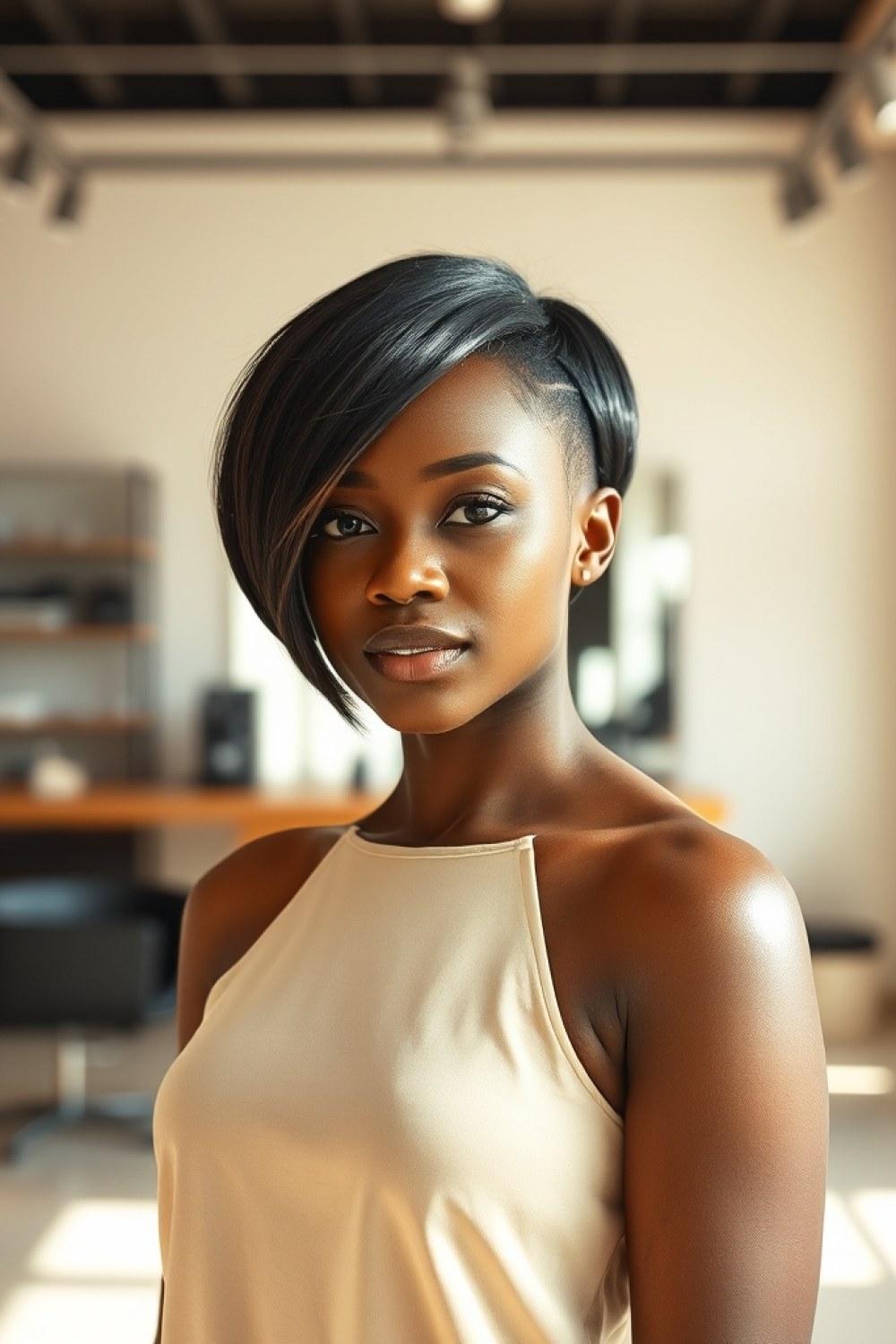
A long, side-swept bang adds asymmetry without chopping too much length. Ask for the fringe to start at the brow and taper toward the temple so it blends into the cut. Wrap the fringe on a small roller overnight to keep the sweep.
Why it works: The fringe creates the diagonal focus up top while the bob keeps your overall length — soft drama, easy grow-out.
Pro tip: Pin the roller with a bobby clip at the root, not the ends, so the sweep holds its direction while you sleep.
7. A-Line Bob With Soft Interior Layers

Classic A-line angle, but cut with a razor instead of shears for a softer, tapered edge. Ideal for medium-density hair that wants movement without losing that clean line.
Why it works: Razor-cutting breaks up the weight so ends flick and flow instead of sitting flat and bulky.
Pro tip: Blow-dry with a round brush, angling the nozzle downward along the cuticle to seal the ends smooth and shiny.
8. Stacked Back, Long Sides
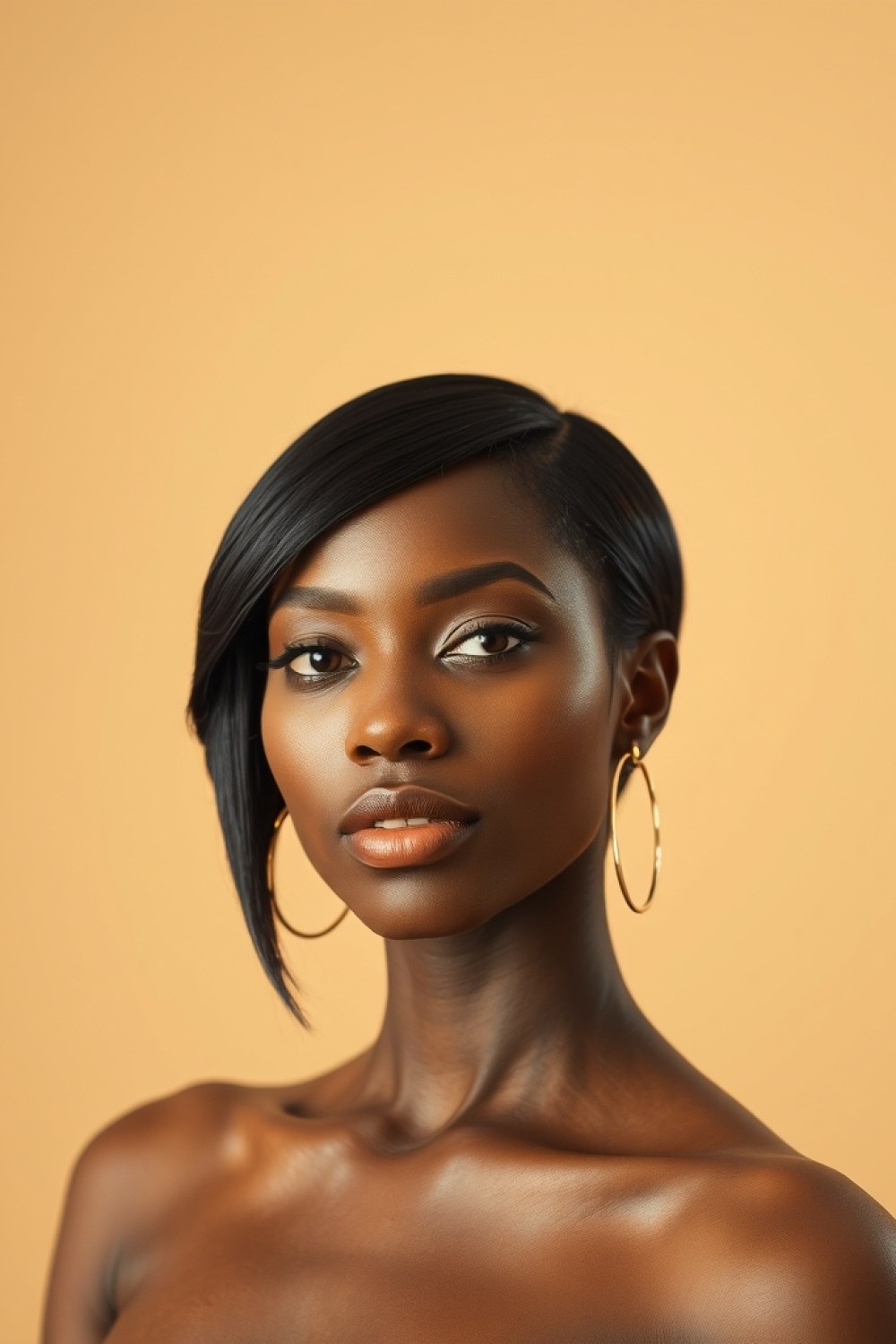
Stacks at the nape build volume exactly where hair runs thinnest, while the front stays long enough to tuck behind an ear. The uneven length does the slimming work.
Why it works: Nape stacking lifts the back for a fuller silhouette without adding bulk to the sides.
Pro tip: Keep the stacking subtle — over-stacking builds a shelf that fights the asymmetric line.
9. Silk Press Asymmetrical Bob
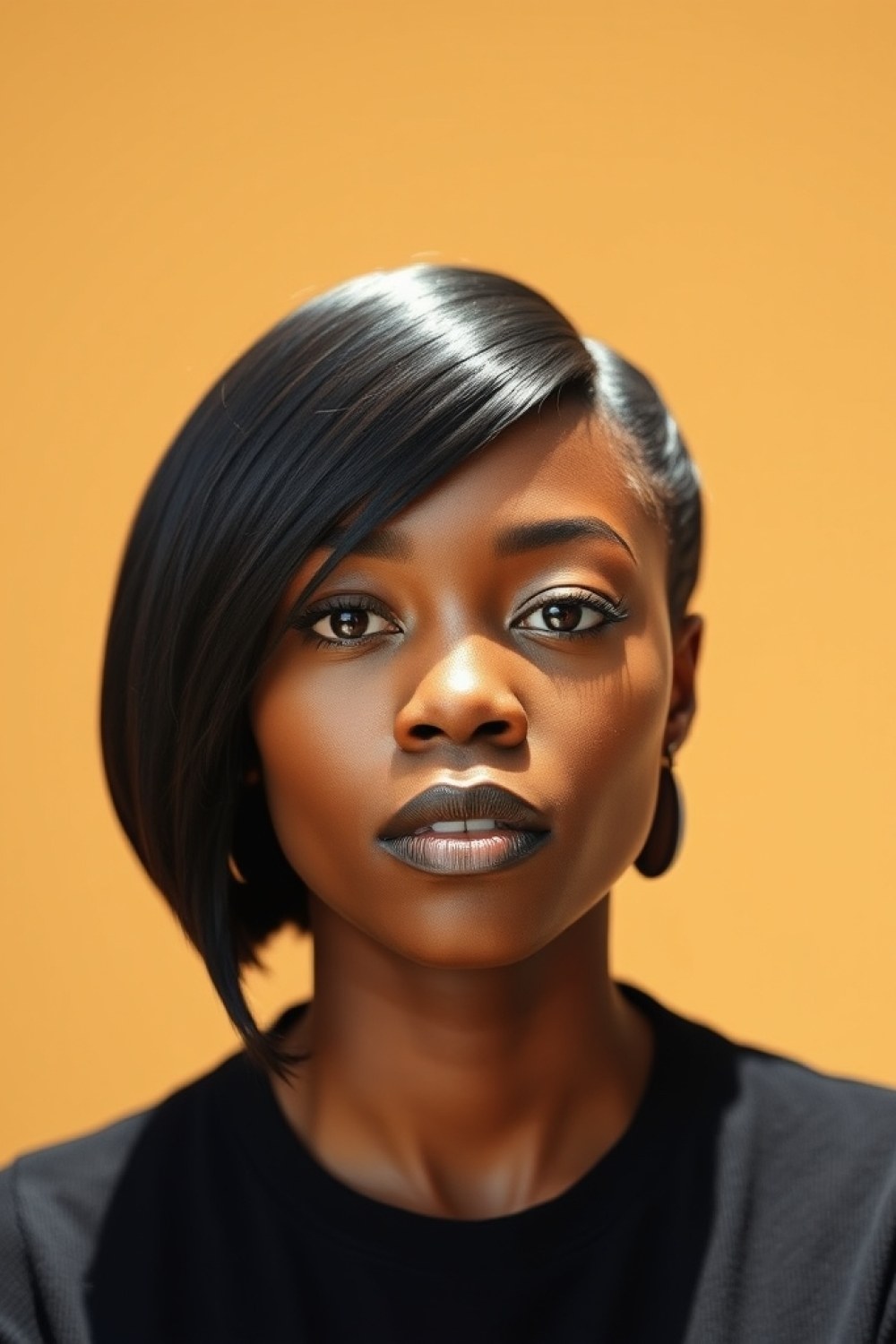
The press is the point. Get the cut while hair is straight so the angle reads clearly, then maintain with a silk press every three to four weeks.
Why it works: A sleek press shows off the sharp diagonal and gives that signature swing.
Pro tip: Use a heat protectant and one single pass per section, then wrap nightly with a satin scarf to protect the bounce.
10. Textured Lob-Bob Hybrid

Not quite a bob, not quite a lob — one side hits the collarbone, the other sits at the jaw. Curls and coils give it instant texture.
Why it works: It’s the easiest length to grow out, making it the smartest pick if you’re testing short hair for the first time.
Pro tip: Style with a curl-defining mousse and diffuse on low heat to keep definition without the crunch.
11. Micro Asymmetrical Bob

Very short on one side, chin-grazing on the other, with a tapered nape. Striking, bold, and completely unapologetic.
Why it works: The dramatic contrast draws attention upward and frames cheekbones beautifully.
Pro tip: Go to a stylist who cuts natural hair short regularly and can show you a dry-cut portfolio before you commit.
12. Wavy Angled Bob With Highlights
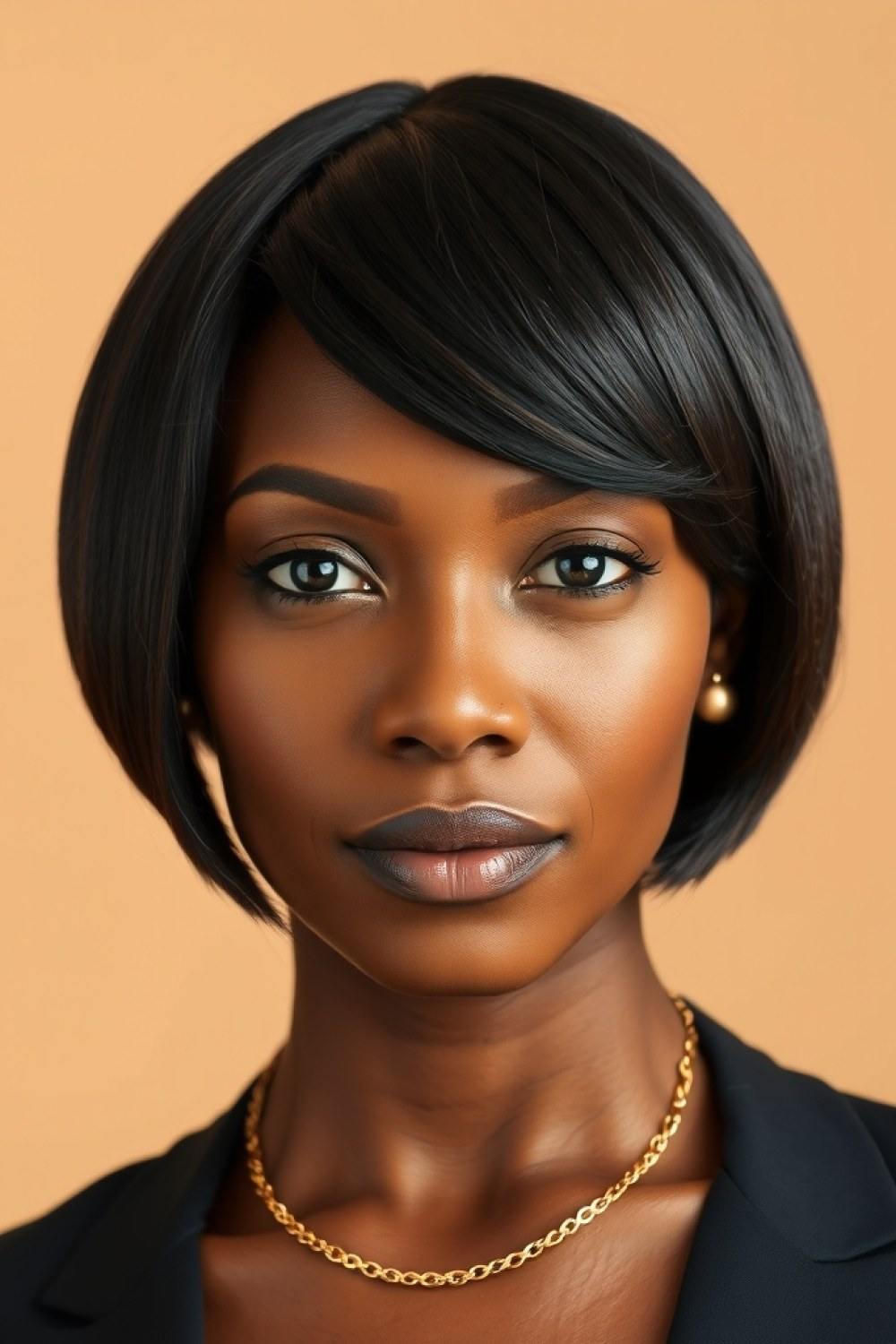
Two or three face-framing highlights on the longer side amplify the asymmetry and catch light as you move. Waves add softness to the sharp angle.
Why it works: Strategic color makes the longer side pop, so the uneven cut looks intentional rather than accidental.
Pro tip: Ask for a demi-permanent gloss so the tone fades gently instead of leaving a hard line at the root.
13. Bob With Curtain Bangs and Uneven Ends
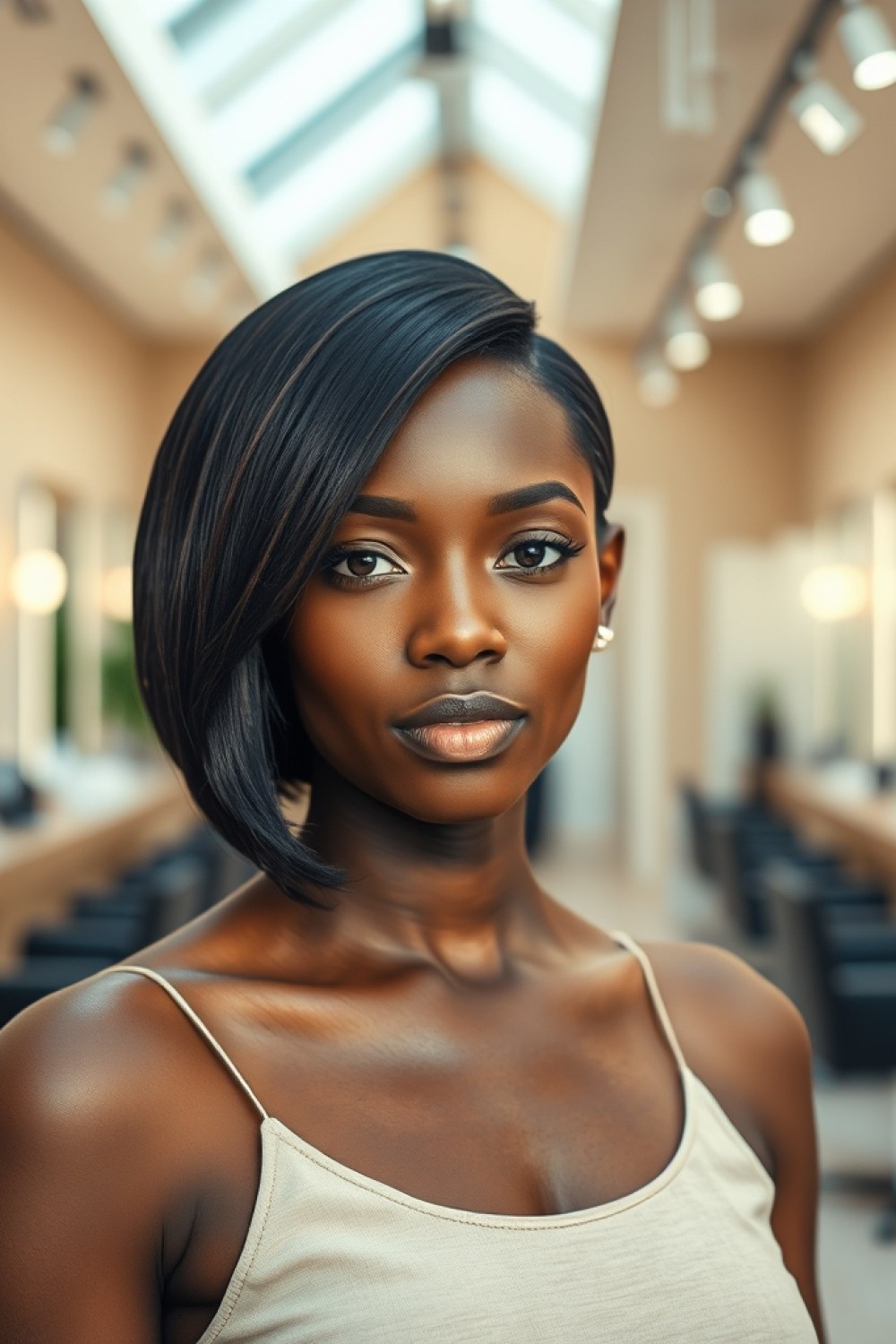
Curtain bangs part down the center, but the lengths underneath stay deliberately uneven. Ask for bangs hitting cheekbone or lip level, with the shorter side grazing your jaw and the longer side sweeping past it. Blow-dry bangs outward with a round brush, then let the ends fall as they wish.
Why it works: The bangs soften the forehead while the uneven ends slim the cheeks — a double win for oval and heart-shaped faces.
Pro tip: Ask your stylist to point-cut the bangs so they sit softly instead of blunt — blunt curtain bangs fight the asymmetry.
14. Protective Two-Strand Twist Bob

Two-strand twists cut into a bob give you the silhouette without daily styling. Have your stylist trim the twist ends while they’re dry and fully formed, not wet — wet twists shrink and spring back, so the line won’t sit right. This usually runs two to three hours depending on length and density.
Why it works: You get a polished shape that lasts weeks, protects your ends, and travels well under a scarf or bonnet.
Pro tip: Re-twist just the perimeter every two weeks with a little gel to keep the outline crisp between full appointments.
15. Feathered Asymmetrical Bob

Soft, feathered ends turn the asymmetry romantic instead of severe. This cut shines on fine to medium hair — your stylist should slide-cut the ends so they taper into wispy points rather than a hard line. Blow-dry with a small round brush, lifting outward at the tips to open the feathering.
Why it works: The tapered ends move with you, so the uneven length reads as intentional softness, not a mistake.
Pro tip: Use a light oil on the ends only — anything heavy will collapse the feathering and leave the tips looking stringy.
16. Sleek Wet-Look Bob
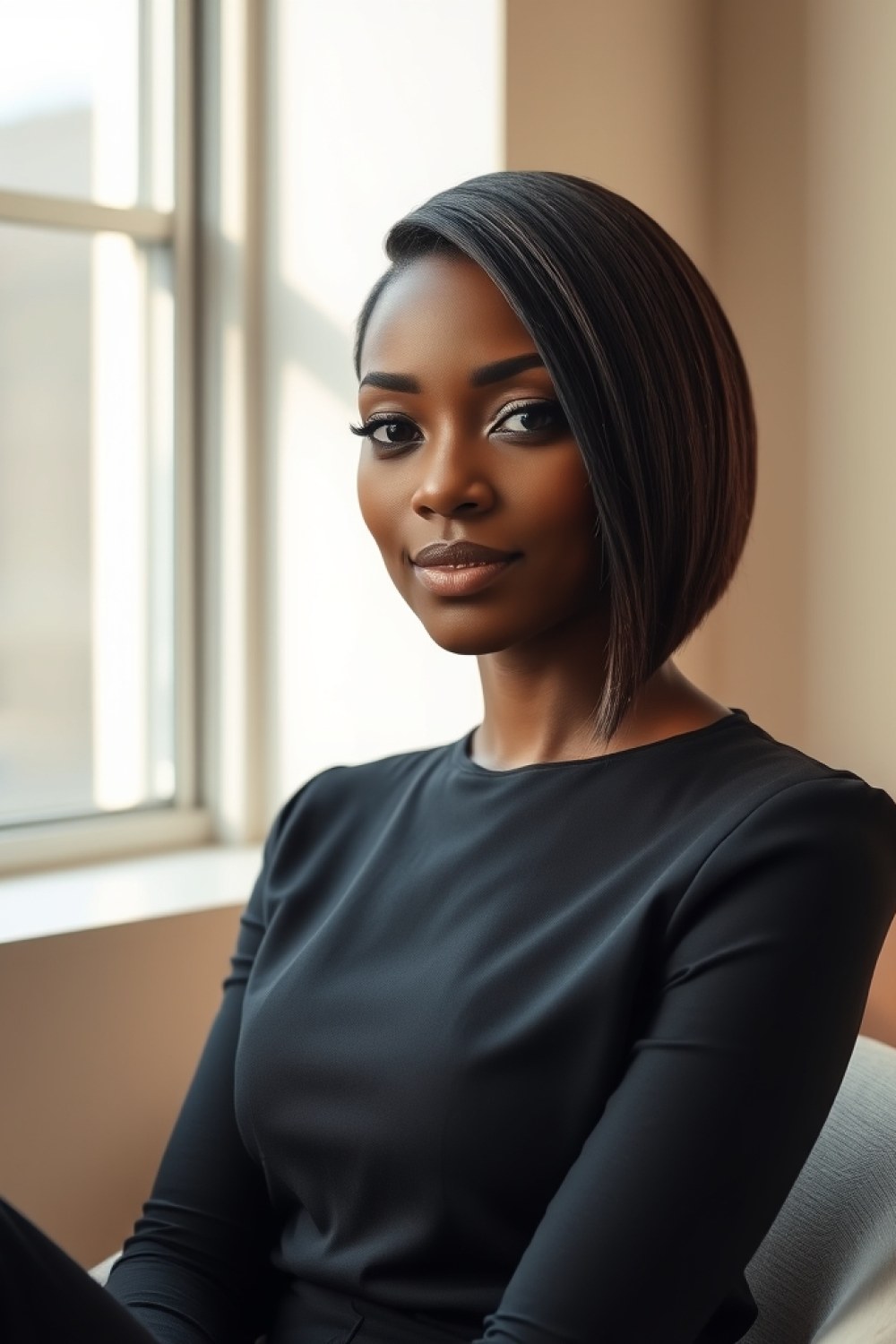
Gel, edge control, and a fine-tooth comb pull everything into one glossy sheet of hair. Apply gel section by section from roots to ends, comb through flat, then smooth the surface once more with a touch of edge control on your palm. Let it air-dry or hit it with a cool shot for extra shine.
Why it works: Because the finish is so polished, the uneven cut becomes the focal point — every angled inch is on display.
Pro tip: Stick to one or two products total. Layering gel over cream over mousse is the fastest route to white flaking at the part.
17. Asymmetrical Bob With Baby Hairs Left Out
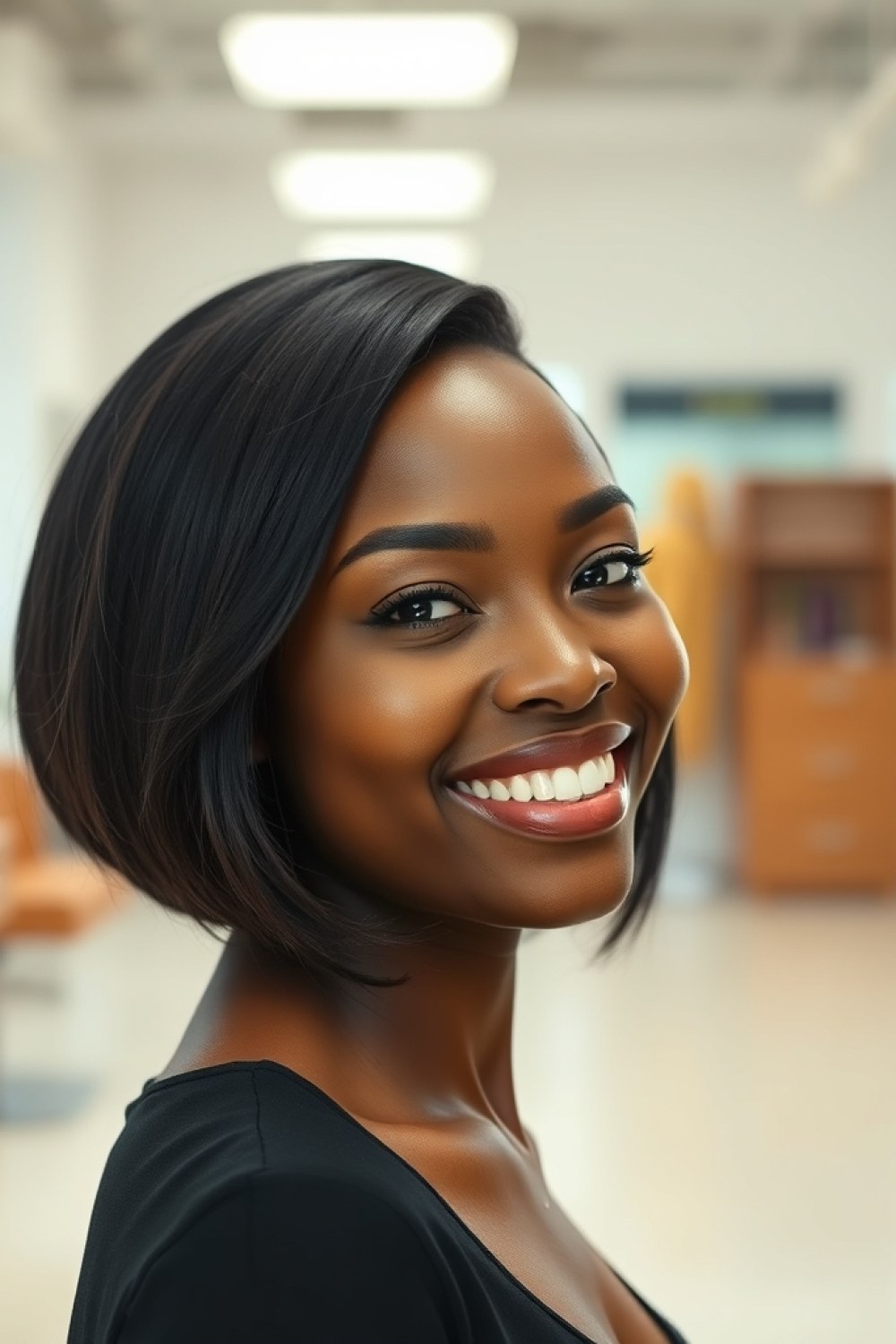
Leave your edges soft and laid instead of slicked flat. Gather the perimeter with a soft-bristle brush, then set your baby hairs into gentle swirls with a tiny amount of edge control on the back of a toothbrush or a small edge brush. Don’t pull them tight or overwax them.
Why it works: The contrast between the sharp, angled cut and your natural baby hairs is the whole charm — polished and real at once.
Pro tip: Use edge control, never glue or heavy gel, and rinse your brush weekly so product buildup doesn’t flake onto your forehead.
18. Angled Bob With Hidden Color Panel
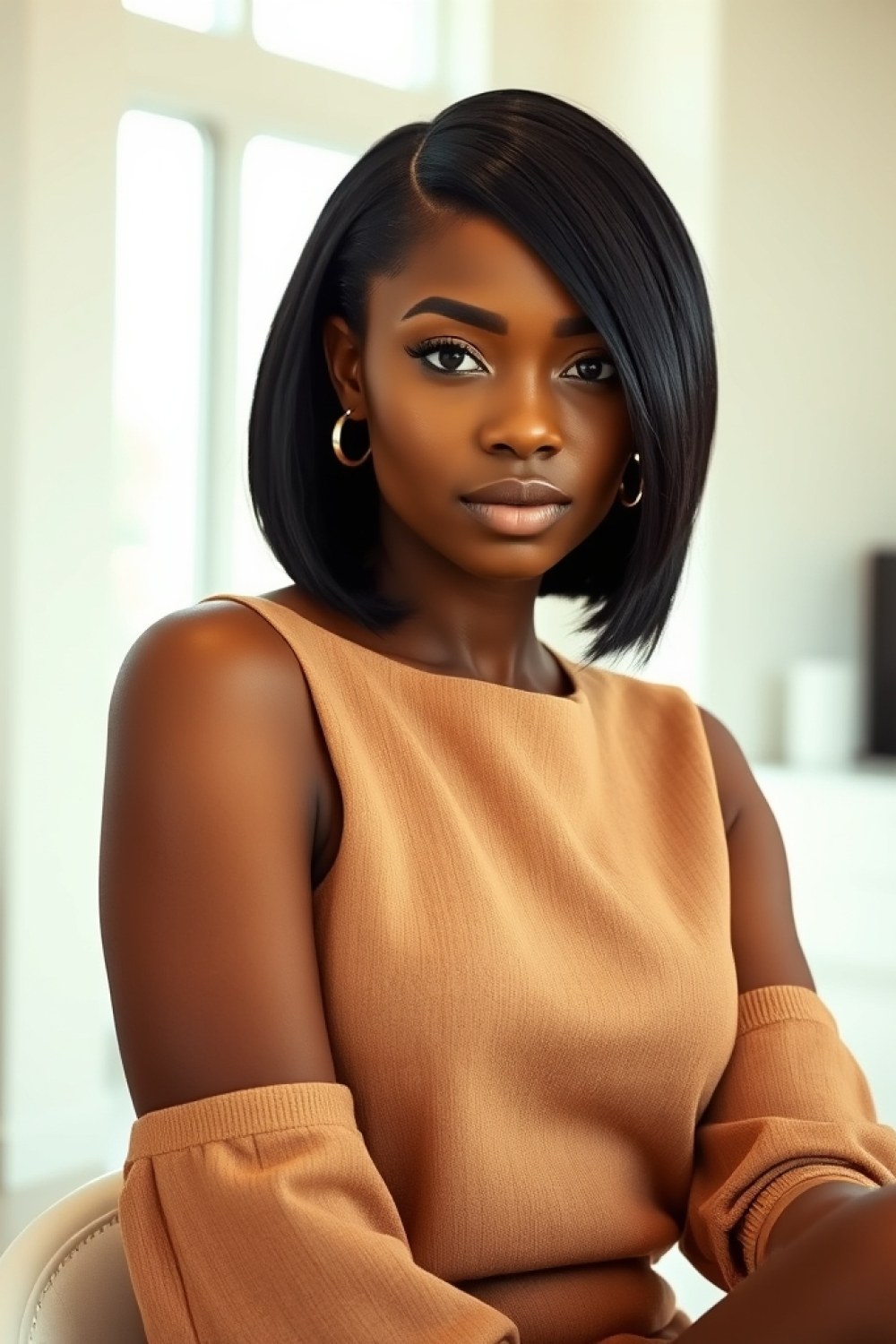
A single slice of color tucked beneath the longer side flashes when you turn or tilt your head. Ask for a panel on the underlayer of the long side, and choose a tone just two shades lighter than your base — think espresso base with a chestnut panel, or jet black with a warm auburn strip. Balayage or a foiled slice both work.
Why it works: The color reads as depth and movement rather than a loud stripe, and it draws the eye down the angled line.
Pro tip: Keep the panel below the crown so it stays hidden when your hair is down — you want it to peek, not announce itself.
19. Relaxed Bob With Roller-Set Volume

Roller sets on relaxed hair give the long side a soft bend and the short side real lift at the root. Set on magnetic rollers, dry under a hooded dryer for about 45 minutes, then brush through for a smooth, bouncy angle.
Why it works: Relaxed hair holds a roller-set bend beautifully, so you get polished volume without flat-ironing the life out of your ends.
Pro tip: Wrap the long side downward and the short side upward — the opposing directions are what make the asymmetry read as intentional.
20. Natural Curls With an Asymmetrical Perimeter

Here the perimeter itself is uneven — no straightening, no stretching, no blowout. Your stylist cuts curl by curl on dry hair and accepts some shrinkage; the shape should look deliberate at its shortest point, not just at its longest.
Why it works: Working with your natural shrinkage instead of fighting it means the cut keeps its shape on wash day and for weeks after.
Pro tip: Ask for the short side to be cut last and checked twice — curly hair springs up an inch or more once it dries completely.
Frequently Asked Questions
Will an asymmetrical bob work on 4C hair?
Yes, but it has to be cut dry and in its natural state so the shape holds after shrinkage. Expect the angle to look softer and rounder than on straight hair — that’s normal, and honestly part of the charm. Plan on a shape touch-up every 8 to 10 weeks.
How do I tell my stylist I want an asymmetrical bob?
Bring two or three photos and point to the exact side that should be shorter and how short — jaw, chin, or cheekbone. Say clearly whether you want a blunt line or soft texture, and ask them to cut dry if you wear your hair natural. A quick consult before the first cut prevents surprises.
Can I wear an asymmetrical bob if my face is round?
Definitely. Ask for the longer side to fall just below the jaw and the shorter side around the cheekbone — the diagonal line visually lengthens the face. Skip a strong horizontal fringe, which can make the face look wider.
How often does an asymmetrical bob need a trim?
Every 6 to 8 weeks for straight, pressed, or relaxed hair, because the angle grows out unevenly and quickly loses its shape. Natural curls can stretch it to 10 to 12 weeks since the cut is done on shrunken hair. Regular dusting of the ends keeps the asymmetry readable.
Does an uneven bob look outdated?
Not at all — it’s one of the most requested shapes right now because it’s customizable to face shape and texture. It only looks dated when the styling is stiff. Keep movement in the ends and it reads modern.
What’s the best way to sleep on an asymmetrical bob?
Wrap with a satin scarf or sleep on a satin pillowcase to protect the cut and cut down on friction. For straight styles, pin the longer side loosely with a couple of clips so it doesn’t crease. Natural textures can go into two loose twists or a pineapple to preserve the shape overnight.
Choosing Your Asymmetrical Bob by Hair Texture
If your hair is relaxed, pressed, or fine, lean toward a blunt or A-line angle with soft interior layers so the line stays crisp. If you’re natural or curly, go for a dry curl-by-curl cut with a softer perimeter that looks intentional at its shrunken length.
Either way, book a stylist who has a portfolio of short natural hair. The cut is only as good as the hands shaping it — and the right hands will give you an angle you’ll want to show off everywhere.