
19 Lob Hairstyles for Thin Hair to Add Volume and Shape


The single most useful thing to know about a lob for thin hair is this: volume comes from the cut, not the styling. If your stylist doesn’t build internal shape — invisible layers, point-cut ends, an undercut — no amount of mousse or backcombing will keep it looking full past noon. Get the structure right, and thin hair suddenly behaves like there’s twice as much of it.
Below are 19 lobs that actually work on fine strands, from a blunt lob with hidden layers to a stacked back that gives you volume from every angle. Each one includes what to ask your stylist for, how to style it at home, and the small mistakes that make thin hair fall flat or go stringy.
You’ll also find the right pick for your face shape, your growth pattern, and how much time you’re honestly willing to spend with a round brush. Bring the one you love to your appointment — the exact wording is included.
Quick Picks: Which Lob Fits You Best?
- Fine hair, all one length, needs lift: Blunt Lob with Invisible Layers (Idea 1) or Blunt Lob with Middle Part (Idea 10) for sleek, fuller-looking shape.
- Over 40, wants softness and movement: A-Line Lob with Gradual Layers (Idea 3) or Lob with Face-Framing Layers (Idea 11) for a flattering, age-proof silhouette.
- Wants a low-maintenance wash-and-go: Wavy Lob with Internal Thinning (Idea 4) or Lob with Beach Waves (Idea 16) for airy, effortless texture.
- Wants a bold change with instant lift: Asymmetrical Lob with Deep Side Part (Idea 6) or Lob with Micro-Bangs (Idea 14) for a fresh, youthful edge.
1. Blunt Lob with Invisible Layers for Weightless Volume
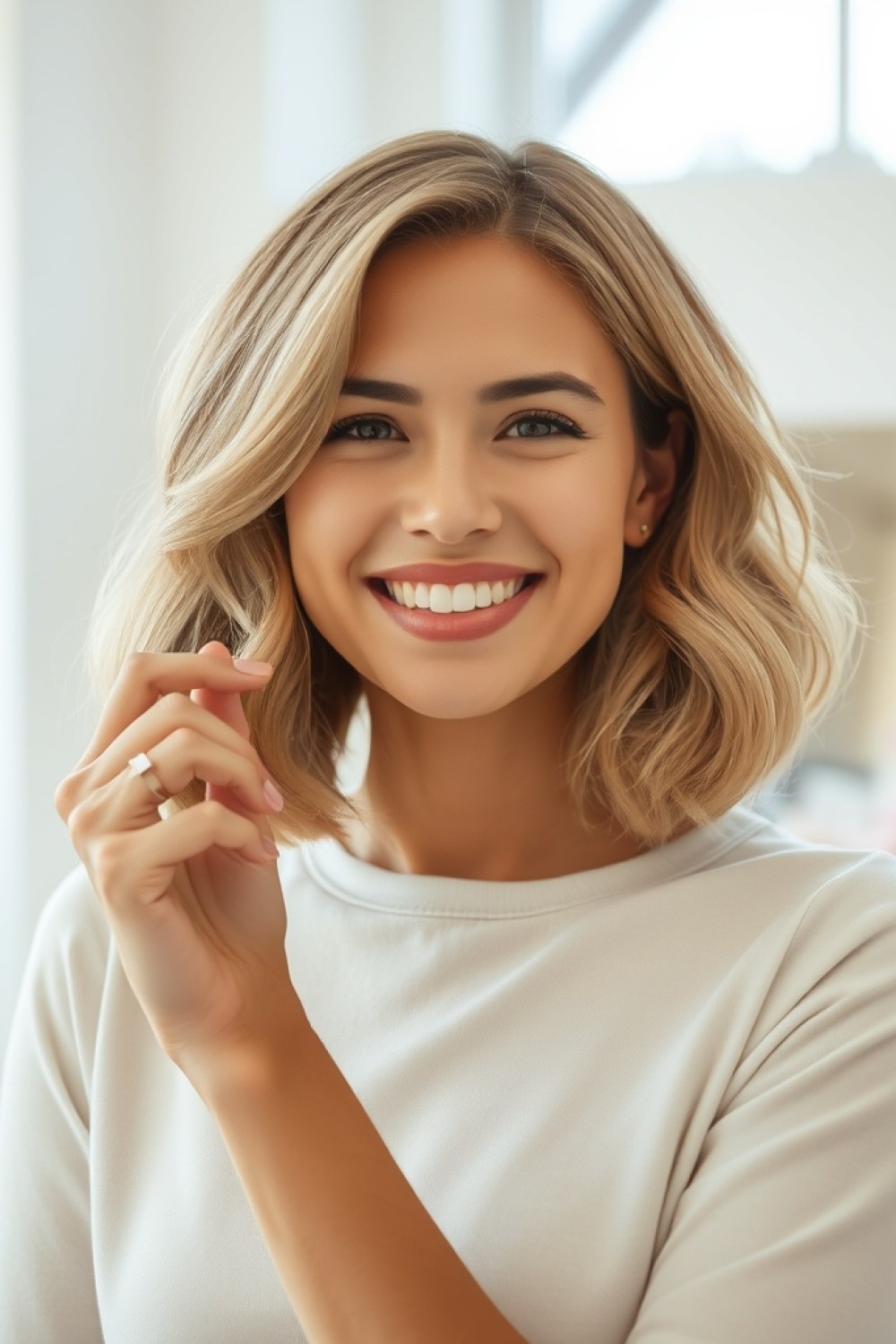
Ask for a blunt line across the ends with internal layers — “invisible layers” cut inside the shape — at a collarbone length. The perimeter stays solid, so hair looks dense. Style with a round brush, lifting roots as you dry for extra volume.
Why it works: the blunt ends keep a thick-looking hemline while interior layers shed bulk, so the cut can move without exposing thin spots.
Pro tip: tell your stylist “internal layers only, no thinning at the edges” — that single sentence protects your ends.
2. Textured Lob with Point-Cut Ends for Airy Fullness

Point-cutting slices the ends at an angle so they don’t all sit in one clump. Each strand stands slightly apart, which reads as fuller hair. Spritz a texturizing spray onto damp mid-lengths and ends, scrunch with your hands, then air-dry.
Why it works: uneven ends create air pockets between strands, so the lob looks wider and softer rather than flat and stringy.
Pro tip: skip the brush entirely on wash day — scrunching alone gives the piecey texture that fakes thickness.
3. A-Line Lob with Gradual Layers for 40+ Women

An A-line lob sits slightly shorter in the back and longer toward the front, so it frames the jaw while building volume through the crown. Gradual layers stop the bottom from looking heavy. Blow-dry with a vent brush, pulling upward at the roots.
Why it works: the angled shape draws the eye upward and inward, giving fine hair lift exactly where thinning shows most.
Pro tip: ask for a gentle angle, not a steep one — too much slope thins the front pieces you rely on for framing.
4. Wavy Lob with Internal Thinning for Fine Hair
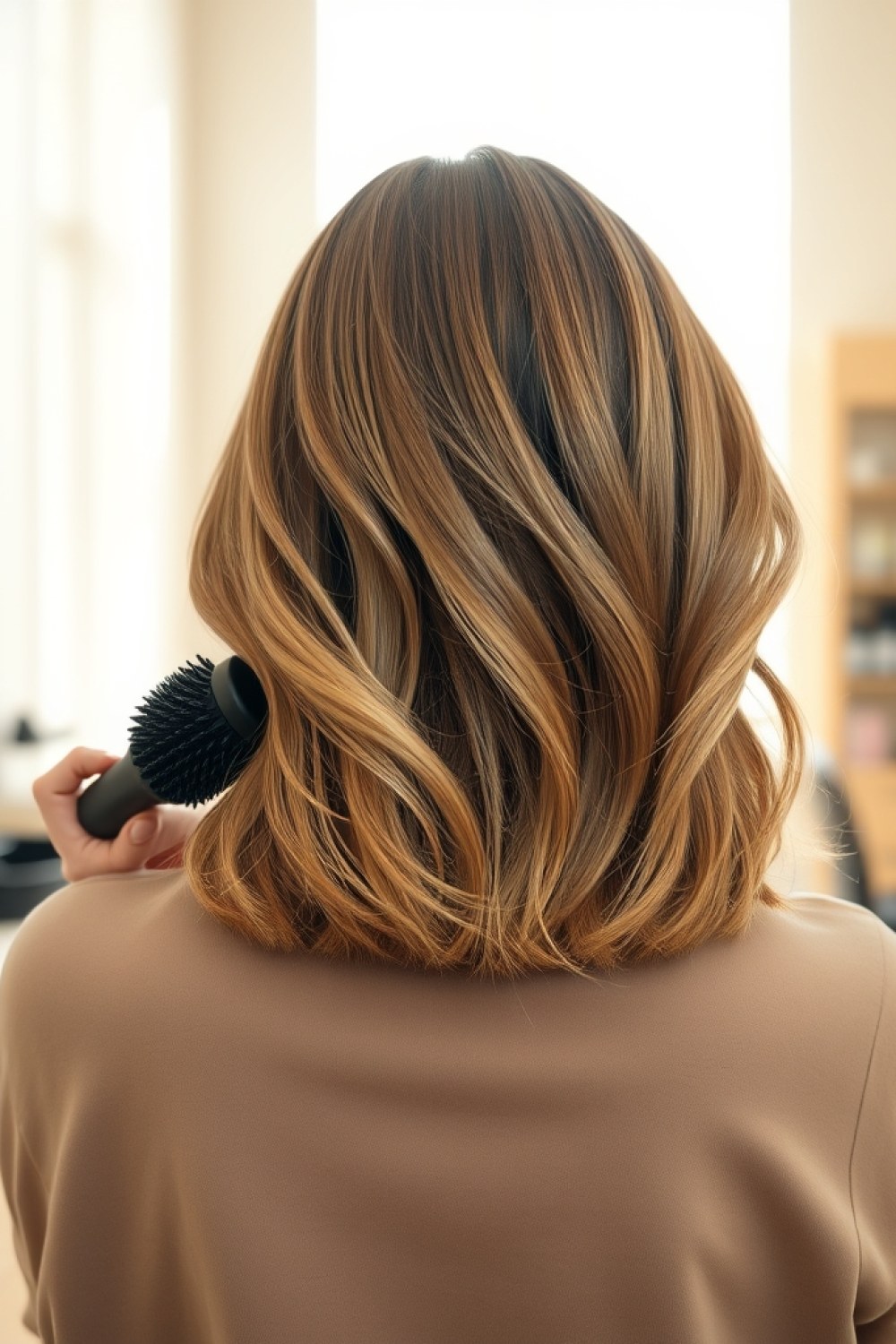
Fine waves collapse when the cut is too heavy. Internal thinning removes weight underneath while leaving the top layer untouched, so curls can spring up. Work a curl-enhancing mousse through damp hair and diffuse on low heat.
Why it works: the surface stays intact for coverage, but the hidden bulk is gone — that’s what lets natural texture actually form.
Pro tip: diffuse until 90% dry, then let the rest air-dry — full diffusing frizzes fine waves.
5. Curtain Bangs Lob for Face-Framing Volume
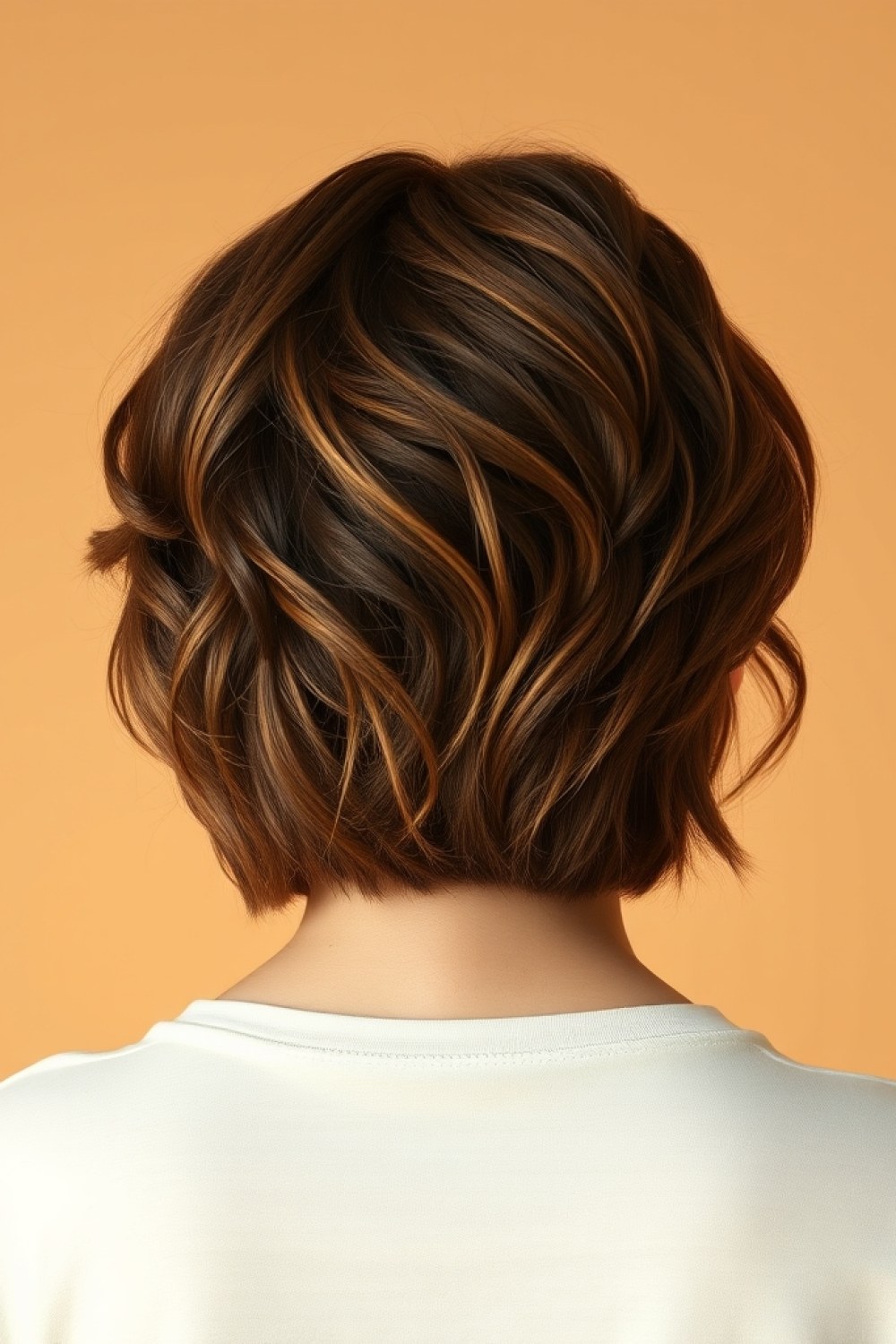
Curtain bangs sweep outward from a center part, adding width right at the temples where fine hair looks thinnest. They blend into the lob with no harsh line. Style with a small round brush, rolling each side away from your face, and finish with light hairspray.
Why it works: the bangs pull attention to your cheekbones and eyes instead of your ends, and the outward curve creates visible fullness.
Pro tip: keep bangs at cheekbone length or longer — shorter curtain bangs pop up and look sparse on fine hair.
6. Asymmetrical Lob with Deep Side Part for Instant Lift
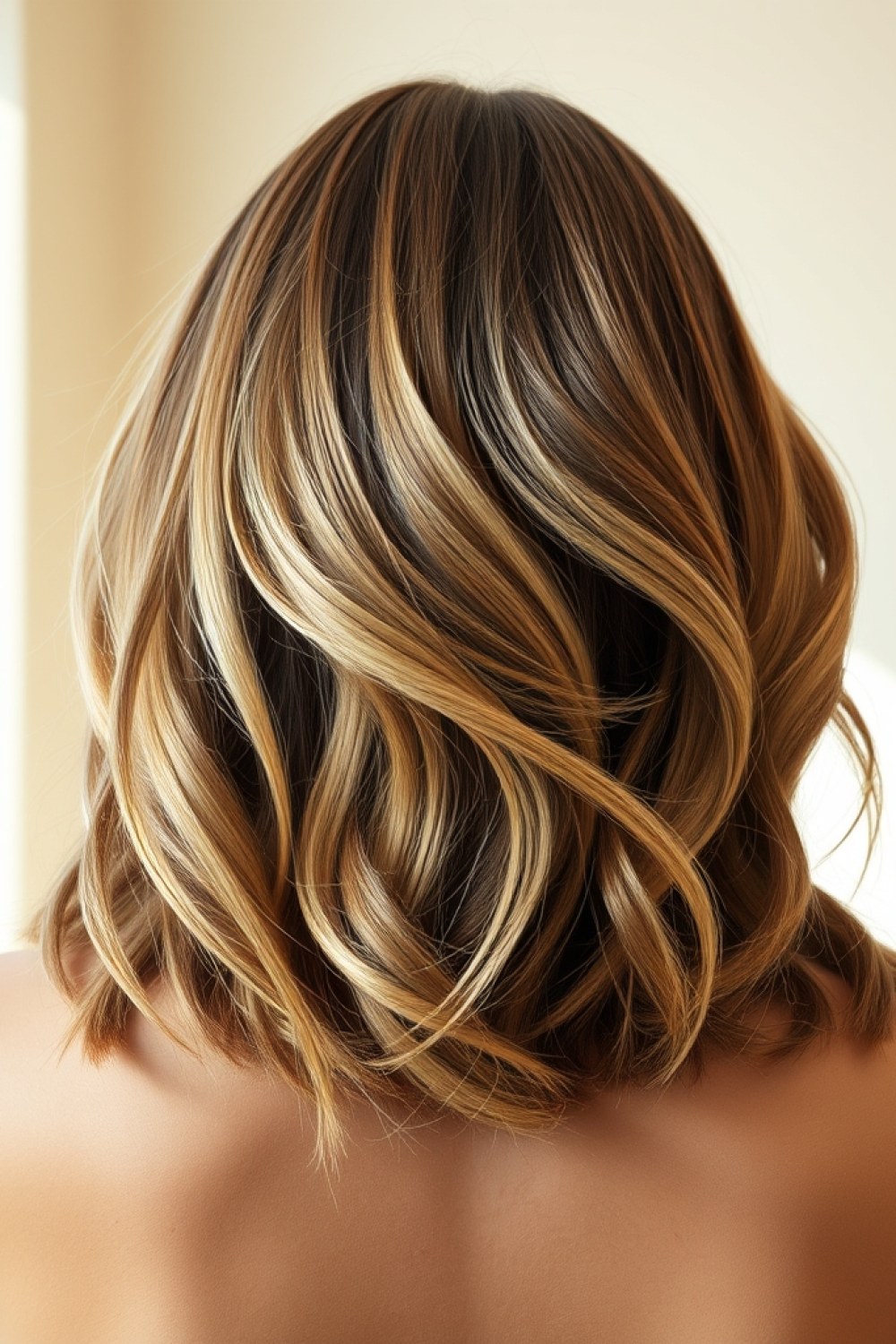
A deep side part piles more hair on one side, which instantly reads as thicker, and the diagonal line adds height at the crown. Keep the cut slightly angled for a modern edge. Blow-dry against your natural part to train the roots upward.
Why it works: the uneven split concentrates volume where you choose it, and a strong part line hides a sparse hairline.
Pro tip: part on the opposite side of your usual one after washing — roots stand up easier when they’re pushed the “wrong” way.
7. Chin-Length Lob with Soft Undercut for Density

An undercut isn’t just for edgy pixies — a soft one hidden beneath a chin-length lob removes the bulk that drags fine hair flat. The length you keep on top reads as denser because there’s less weight pulling it down.
Why it works: Fine hair that’s naturally thick in count but thin in texture loses its bounce when too much hair sits at the nape. Clearing that underside lets the top layers move and sit up higher.
Pro tip: Ask your stylist to keep the undercut “soft” — clipped with a guard, not shaved — and keep the outline visible only when hair is lifted. Finish with a matte texture paste, warmed between fingertips, scrunched into the top layers to define pieces.
8. Lob with Hidden Highlights for Depth and Dimension
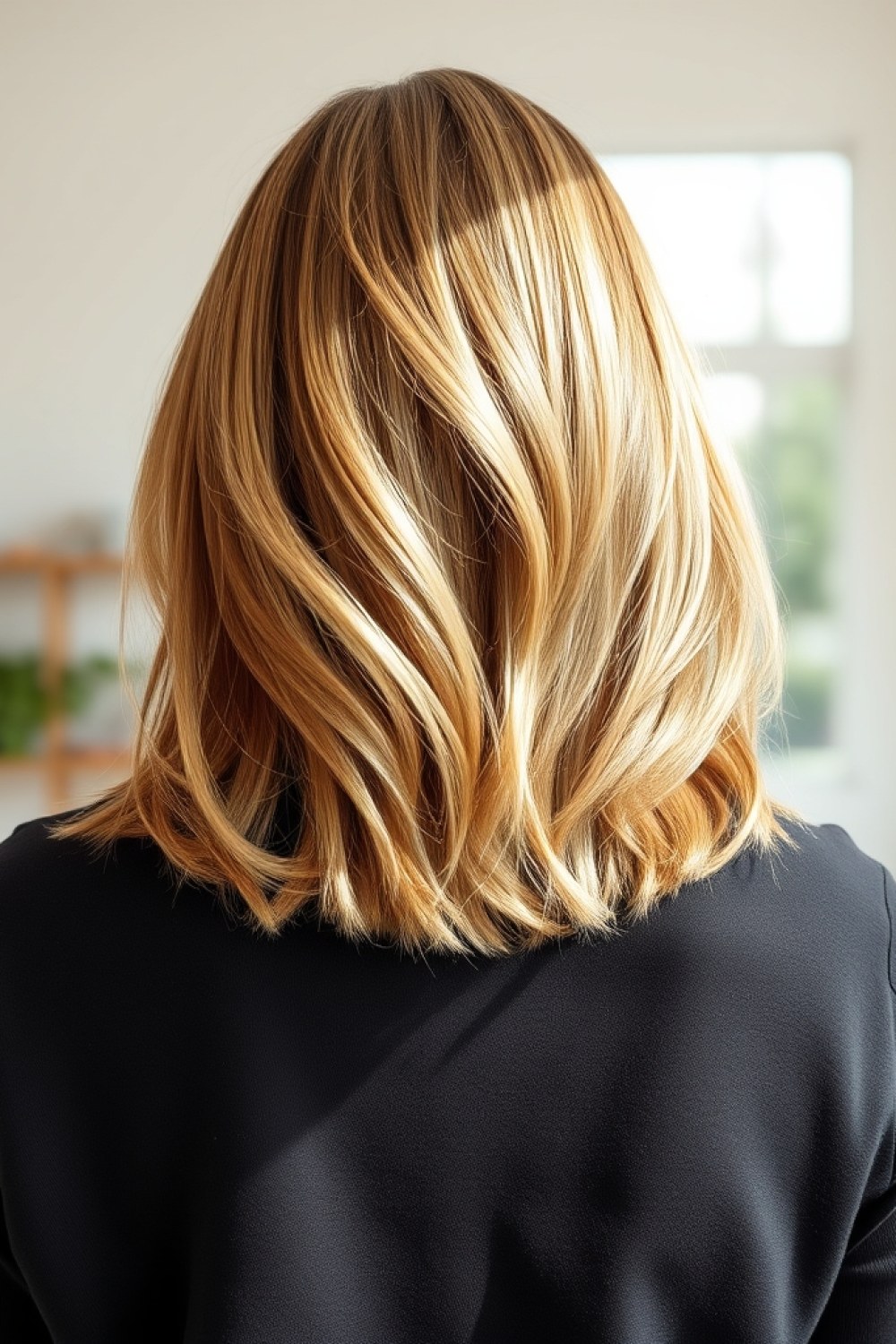
Hidden highlights are placed a layer beneath your top section, so you only see them when hair moves. Those buried strands of light catch the eye and create shadows that make the whole lob read thicker — without any obvious streaks.
Why it works: Contrast creates the illusion of depth. A single flat color makes fine hair look like one thin sheet; subtle light-and-dark layers beneath break up that flatness.
Pro tip: Go two tones lighter than your base — three or more and the grow-out looks stripey. Wash with a color-safe, sulfate-free shampoo and cool water to slow fading, and touch up your part line with a root cover powder between appointments.
9. Micro-Lob with Babylights for Subtle Fullness

Babylights are those ultrafine, densely woven highlights that mimic the way children’s hair catches the sun — no harsh lines, just a soft wash of brightness. Paired with a micro-lob that grazes just above the shoulders, fine hair looks fuller without any stringy ends.
Why it works: The shorter length keeps ends from splitting into thin wisps, while the delicate color melt adds the appearance of more strands and more light bouncing off each one.
Pro tip: Apply two to three drops of a lightweight oil like argan or camellia to damp mid-lengths and ends only — never the roots. It seals the cuticle for shine without weighing down the micro-lob’s natural swing.
10. Blunt Lob with Middle Part for Sleek Volume

A sharp middle part sounds counterintuitive for volume, but on a blunt-cut lob it works. The crisp line splits the hair into two symmetrical panels, and each one reads as a solid, thick sheet of hair.
Why it works: Blunt ends mean no tapering, so the perimeter looks dense. A center part frames the face evenly and lets light hit both sides, doubling the visual weight of your hair.
Pro tip: This cut shines on straight, fine hair — if you have waves, part it while damp and pin each side flat until dry. Run a flat iron down the lengths, then flick a slight bend at the ends for movement instead of a dead-straight fall.
11. Lob with Face-Framing Layers for Round Faces
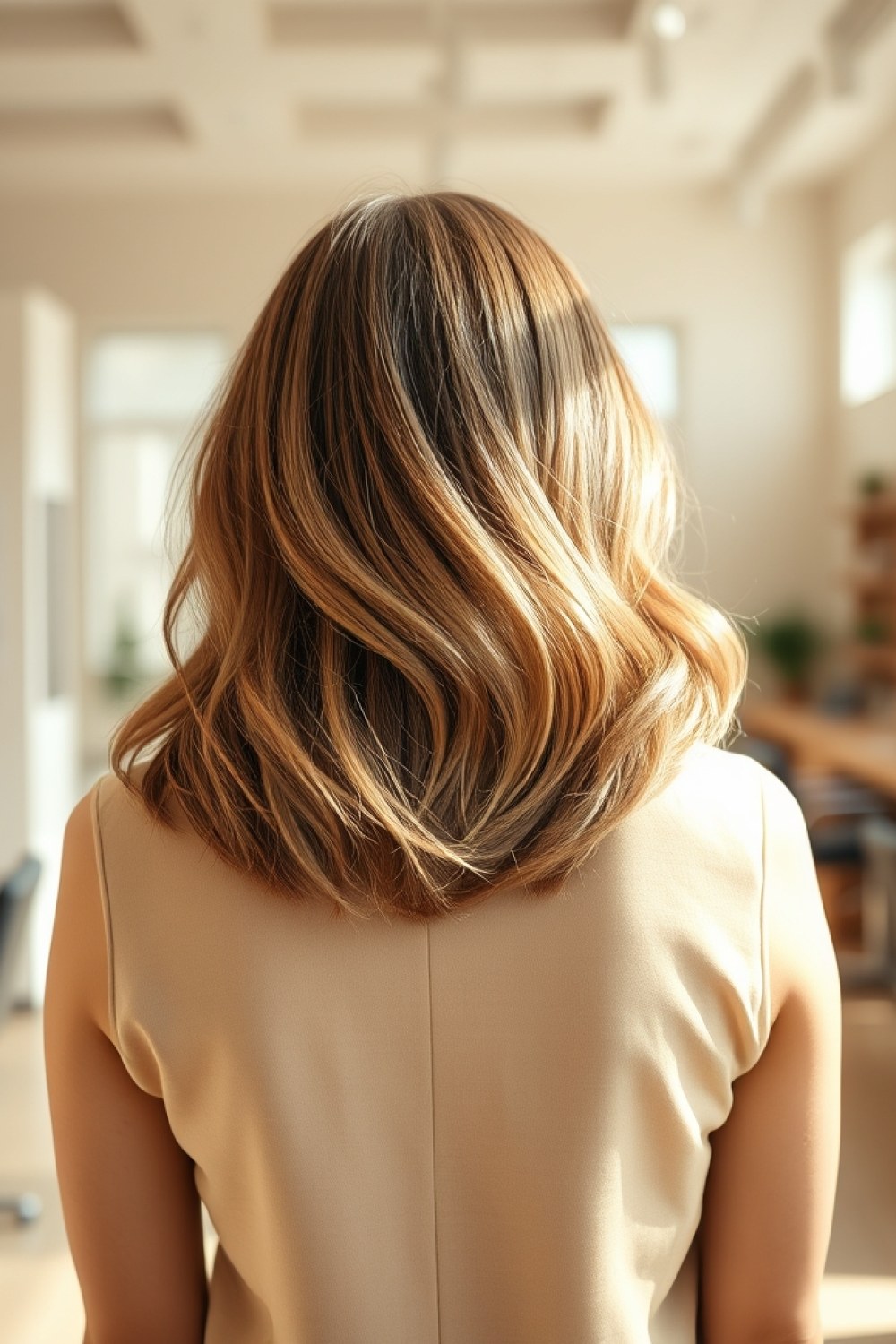
Layers that begin at the cheekbone and angle down toward the jaw do two jobs at once: they elongate a round face and pump volume exactly where fine hair needs it. The angle draws the eye downward, creating length.
Why it works: Starting layers at the cheekbone adds width at the right spot without puffing out the sides, while the downward angle carves a slimming diagonal line across the face.
Pro tip: Avoid layers that start above the cheekbone — they’ll round the face out instead of elongating it. Blow-dry with a round brush, pulling each section up and away from the face to lift the roots and sweep the layers back.
12. Wet-Look Lob with Gel for Edgy Volume

The wet-look lob is a cheat code for fine hair. When you clump strands together with gel, they stop separating into see-through wisps and read as one glossy, substantial mass. It’s also one of the lowest-effort styles here.
Why it works: Clumping is the opposite of stringiness — grouped strands reflect light as a surface rather than scattering it, which makes the lob look thicker and more deliberate.
Pro tip: Use a strong-hold gel on damp hair, scrunch from ends to roots, then resist touching it while it air-dries. If you want more definition, rake a little extra gel through the front pieces and let them set without a diffuser.
13. Lob with Stacked Back for 360-Degree Volume

Stacked layers at the nape build roundness and lift at the back, while the front strands stay long and swingy. It’s the answer for fine hair that collapses flat the moment you turn your head. Ask your stylist for graduation—shorter at the bottom, longer on top—so the back looks pillowy from every angle, not just face-on.
Why it works: The stacked back acts like internal scaffolding, holding shape without weight dragging the crown down.
Pro tip: Blow-dry the back sections with a small round brush, over-directing them upward at the root for two extra seconds before releasing.
14. Lob with Micro-Bangs for Youthful Fullness

Micro-bangs sit a couple of inches below your hairline—very short, blunt, and deliberately bold. They build instant volume right where fine hair often looks sparsest and pull the eye upward. Oval and heart-shaped faces wear them best, since the width balances a narrower chin.
Why it works: Blunt-cut bangs read as a solid block of hair, which visually thickens the hairline area.
Pro tip: Keep them sharp with a mini flat iron on low heat, pressing downward in one pass—never curl micro-bangs under.
15. Lob with Balayage for Lived-In Thickness

Balayage paints lighter tones onto the surface strands, creating shadow and depth. On fine hair, that gradient reads as density—two colors where there’s really one. It grows out with a soft line, so you can stretch appointments to three or four months without an obvious root.
Why it works: Contrast between darker roots and lighter mid-lengths tricks the eye into seeing more hair than there is.
Pro tip: Ask for a root smudge: your colorist melts the lightener into your natural shade so there’s no harsh band.
16. Lob with Beach Waves for Effortless Volume

Beach waves give thin hair bulk and grip without a polished, “styled” look. Work a 1-inch curling iron through the lengths, alternating the direction of each wrap—toward your face on one piece, away on the next. This broken pattern is what keeps waves from clumping into thin ribbons.
Why it works: The bent, textured shape opens up the cuticle and creates air pockets, so the whole head looks bigger.
Pro tip: Finish with sea salt spray, scrunching as it dries—the grit adds lasting hold without weighing strands down.
17. Lob with Curled Ends for Bouncy Shape

Skip the whole-head curl and focus just on the ends. A small curling iron wrapped through the last two inches gives movement, shape, and a soft flick—no limp, straggly finish. Thin hair holds this style quickly because there’s less length to heat.
Why it works: Curling only the ends adds direction and bounce to the silhouette without flattening the roots.
Pro tip: Wrap each section away from your face, then hold the iron vertically so the curl spirals instead of creasing.
18. Lob with Top Knot for Instant Root Lift

A half-up top knot pulls a small section from above the ears and pins it at the crown, lifting everything below. It’s the MVP of second-day hair—hides thinning spots up top while the loose back keeps the lob length visible. Takes about ninety seconds flat.
Why it works: Gathering and pinning hair at the crown creates a visual bump that reads as fullness, instantly.
Pro tip: Tease the crown section lightly with a fine-tooth comb before pinning, then loosen the knot with your fingers for a softer look.
19. Lob with Accessories for Added Dimension

Accessories are the fastest volumizer you own. A wide fabric headband set just behind the hairline pushes roots up and hides any sparse patches along the part. A tortoiseshell or neutral clip at the temple lifts one side, while a slim scarf tied low adds soft bulk at the crown. Choose shades close to your hair color so the accessory blends rather than highlights thin spots.
Why it works: Accessories redirect the eye to texture and detail instead of density, and headbands physically lift roots off the scalp for instant height.
Pro tip: Put the headband on before you fully dry your roots, then hit them with 10 seconds of cool air — the band holds the lift in place.
Quick Questions
What length lob is best for thin hair?
A lob that lands right at or just above the collarbone is the sweet spot. It’s long enough to pull back on a bad hair day, but short enough that the weight doesn’t drag your roots flat. Going shorter than chin-length is risky for fine hair — it can look sparse rather than full — though a jaw-grazing cut can work if you’ve got a rounder face and want the length to elongate it. If you’re on the fence, ask for collarbone-length first. You can always take more off at your next appointment.
How can I make my lob look thicker without extensions?
Start at the roots, because that’s where fine hair loses the battle. Blow-dry upside down with a volumizing mousse or root-lift spray, then hit the crown with a round brush once you flip back up. Add subtle layers or a few face-framing highlights — both break up the flat surface and trick the eye into seeing more density. Skip heavy conditioners and silicone-laden serums; they coat fine strands and pull them down. And dry shampoo at the roots isn’t just for day-two hair. It adds real grit and grip.
Should I get bangs with a lob for thin hair?
Yes — if they’re cut right. Curtain bangs and side-swept bangs are your friends: they add movement and volume across the forehead without demanding more density than you have. Avoid blunt, heavy, straight-across bangs. On fine hair they separate into gaps within an hour and draw attention to thinness instead of hiding it. Ask your stylist for soft, point-cut bangs with a little texture so they sit like a curtain, not a wall.
Choosing Your Perfect Lob for Thin Hair
Here’s the thing: the difference between a lob that looks limp and one that looks full usually isn’t the cut itself — it’s whether the cut was chosen for your face shape and texture. A stylist who works with fine hair every day will know exactly how much layering your strands can take before they look stringy, where to place the volume, and what length your growth pattern actually supports. That consultation is worth more than any Pinterest photo.
And keep those trims on schedule. Every six to eight weeks, even if you’re growing your lob out. Fresh ends reflect light and read as thickness — frayed, split ends read as thin, no matter how good the cut is.